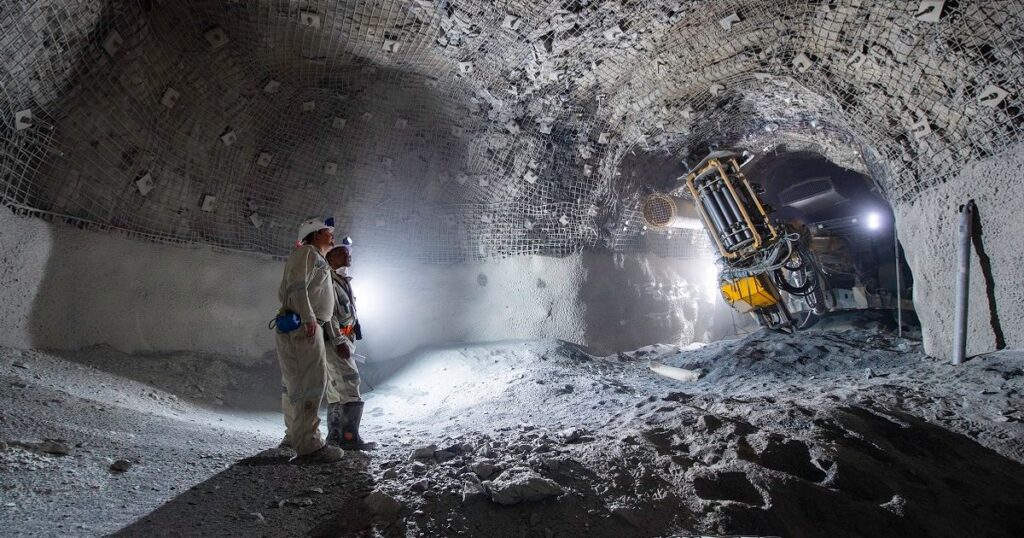
Reef in Mining is one of the most important geological terms used in hard rock gold mining and economic geology, and it is a concept that every mining student, geologist, and mine professional working in gold-producing regions must clearly understand from the very beginning of their technical education.
From the legendary gold reefs of the Witwatersrand Basin in South Africa to the famous quartz reef goldfields of Victoria in Australia, the concept of Reef in Mining has shaped the history and economics of global gold production for well over 150 years.
In this complete guide by MiningGyan, we cover everything about Reef in Mining – from its clear definition and geological formation to its types, key characteristics, the difference between Reef and Vein, Gold Reef mining, Saddle Reef, Quartz Reef, underground extraction methods, and competitive exam MCQs – all in one structured and detailed article.
By the end of this article, you will have a thorough, structured, and exam-ready understanding of Reef in Mining and every related concept that accompanies it in textbooks and examinations across India and globally.
What is Reef in Mining?
A Reef in Mining is a provincial or regional term most commonly used in Australian and South African gold mining to describe a metalliferous mineral deposit – specifically a gold-bearing quartz vein or a gold-bearing sedimentary conglomerate horizon – that is found within solid bedrock in its original position of geological formation.
In the strictest sense, a Reef in Mining refers to any well-defined, tabular, and economically mineable zone of mineralisation within solid rock, and the term is used almost interchangeably with the terms “vein” and “lode” in practical mining usage, though it carries specific regional connotations in Australia and South Africa.
| Key Term | Definition |
|---|---|
| Reef in Mining | A gold-bearing or metalliferous tabular deposit in solid bedrock – quartz vein or conglomerate horizon |
| Quartz Reef | A reef composed primarily of quartz that carries gold or other valuable minerals |
| Reef Horizon | A specific stratigraphic level within a sedimentary sequence where the gold-bearing reef is located |
| Saddle Reef | A reef formed at the hinge of an anticlinal fold, shaped like an inverted saddle |
| Conglomerate Reef | A gold-bearing sedimentary conglomerate layer, as found in the Witwatersrand Basin of South Africa |
| Reef Outcrop | A section of the reef that is exposed at the surface due to erosion of the overlying rock |
| Auriferous Reef | A reef that contains economically significant gold concentrations – “auriferous” means gold-bearing |
| Reef Drive | An underground tunnel driven along the reef horizon to access and extract the ore |
Reef in Mining – Origin and History of the Term
The word “Reef” as used in Mining is a provincial term that originated in the goldfields of Australia and South Africa in the mid-19th century, where early prospectors and miners adopted it to describe the gold-bearing quartz veins and sedimentary conglomerate horizons they were following underground.
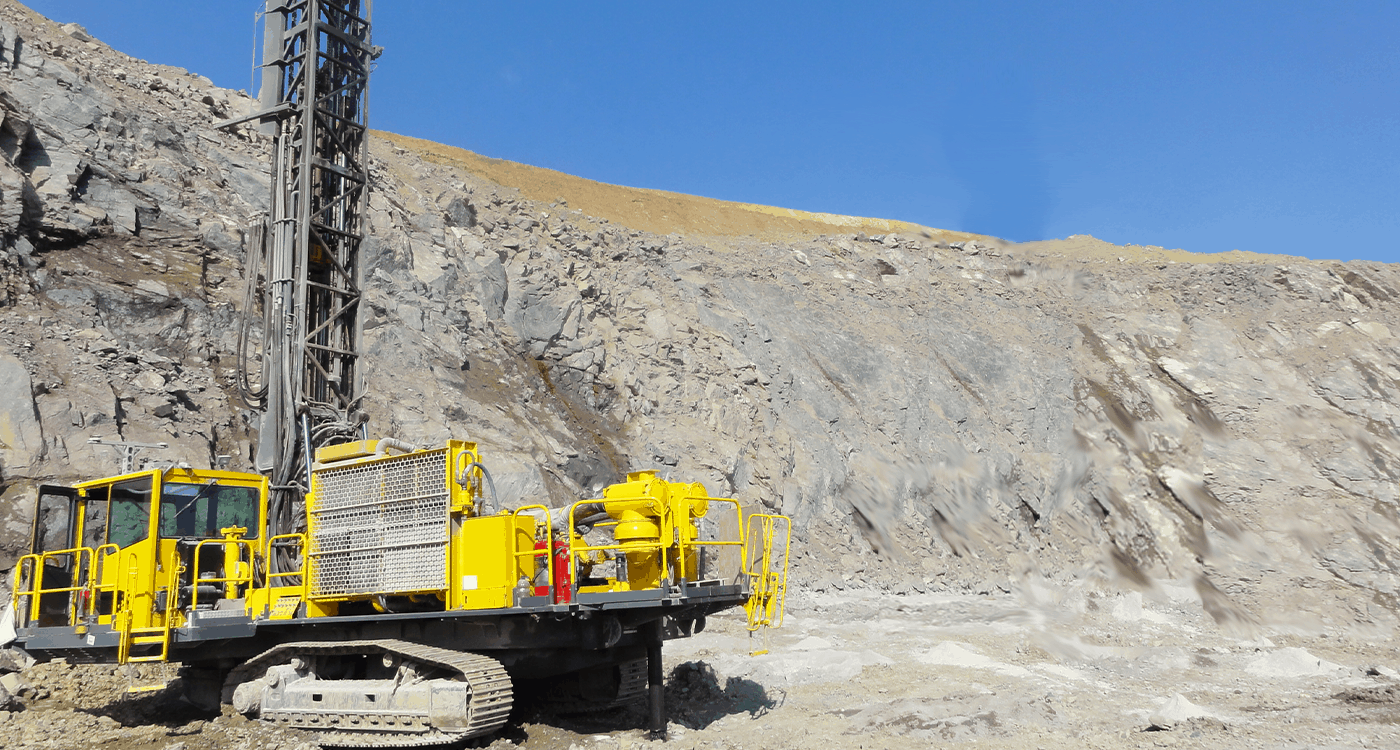
The term was originally borrowed from its nautical meaning – a reef in the ocean is a ridge of rock or coral near the surface – and was applied by miners to describe the ridges and outcrops of gold-bearing quartz rock that they could see projecting above the ground surface in the goldfields of Victoria, Australia and later in the Witwatersrand Basin of South Africa.
| Era | Development of Reef Mining | Key Region |
|---|---|---|
| 1851 | Gold rush begins in Victoria, Australia – quartz reef mining starts at Ballarat and Bendigo | Victoria, Australia |
| 1863 | Deep quartz reef mining develops as shallow reefs are exhausted in Victoria | Bendigo, Victoria |
| 1886 | Gold discovered in the Witwatersrand conglomerate reefs of South Africa | Johannesburg, South Africa |
| 1890s | Witwatersrand Reef becomes the world’s largest gold mining operation | South Africa |
| 1900–Present | Deep reef mining technology advances – shafts reach over 4 km depth in South Africa | Worldwide |
Reef in Mining – Formation Process
The formation process of a Reef in Mining depends entirely on the type of reef – a quartz reef forms through hydrothermal processes similar to vein formation, while a conglomerate reef forms through ancient sedimentary processes and subsequent chemical enrichment over billions of years of geological time.
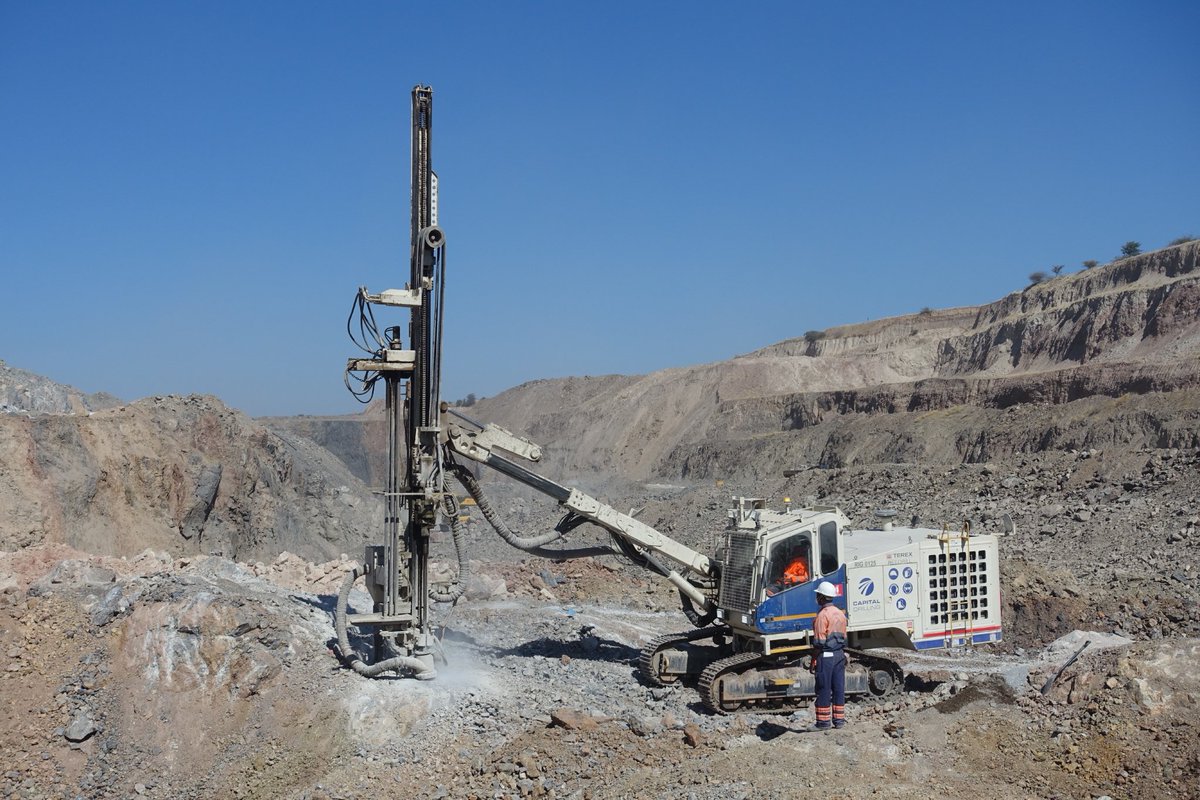
Understanding how each type of Reef in Mining forms is essential for geologists conducting exploration programs and for mining engineers who need to predict the geometry, continuity, and grade distribution of the reef at depth.
Hydrothermal Quartz Reef Formation in Mining
A Quartz Reef in Mining forms through the same hydrothermal process that creates all vein-type mineral deposits – hot, gold-bearing fluids generated deep in the Earth’s crust circulate upward through fractures and fault zones in the host rock and deposit quartz and gold as the fluids cool and their chemistry changes on contact with the surrounding rock.
The gold in a Quartz Reef in Mining occurs either as visible free gold grains trapped within the quartz matrix, or as microscopic particles locked within sulphide minerals such as pyrite and arsenopyrite that require chemical processing to extract commercially.
Sedimentary Conglomerate Reef Formation in Mining
A Conglomerate Reef in Mining forms through a fundamentally different geological process – ancient river systems carrying eroded gold from primary lode deposits deposited their sediment load in ancient fluvial fans and river deltas, creating gold-bearing gravel and conglomerate beds that were subsequently buried, compacted, and lithified into the hard conglomerate reefs that are mined today in the Witwatersrand Basin of South Africa.
The Witwatersrand Conglomerate Reef in Mining represents the world’s single largest gold deposit and has produced more than one-third of all the gold ever mined in human history since its discovery in 1886.
Saddle Reef Formation in Mining
A Saddle Reef in Mining forms when folding of the host rock sequence creates open spaces at the crests of anticlinal folds – these spaces are subsequently filled by hydrothermal fluids that deposit quartz and gold in the arch-shaped void, creating the distinctive saddle or inverted arch geometry that gives this reef type its name.
Ore Body in Mining | Definition, Types, Formation, Shapes & Complete Guide 2026
Saddle reefs are classically developed in regularly folded sedimentary sequences such as those found in the Bendigo Goldfield of Victoria, Australia, where multiple saddle reefs occur one above the other in vertical succession at the crests of the same anticlinal fold.
| Reef Formation Type | Mechanism | Resulting Reef Geometry | Famous Example |
|---|---|---|---|
| Hydrothermal Quartz Reef | Hot fluids deposit quartz and gold in rock fractures as they cool | Tabular vein-like, follows fracture direction | Bendigo Quartz Reefs, Victoria Australia |
| Sedimentary Conglomerate Reef | Ancient rivers deposit gold-bearing gravel beds later lithified into conglomerate | Flat-lying to gently dipping sedimentary horizon | Witwatersrand Reefs, South Africa |
| Saddle Reef | Open spaces at anticlinal fold crests filled by hydrothermal quartz and gold | Arch or saddle shape at fold hinge | Bendigo Saddle Reefs, Victoria Australia |
| Fault-Related Reef | Minerals deposited in dilatational zones along faults during movement | Irregular, follows fault geometry | Various goldfields worldwide |
Types of Reef in Mining – Complete Classification
Reef in Mining can be classified into several distinct types based on their geological origin, structural setting, mineral composition, and the geometry of the ore body – and a clear understanding of each reef type is essential for correct method selection, resource estimation, and safe underground design.
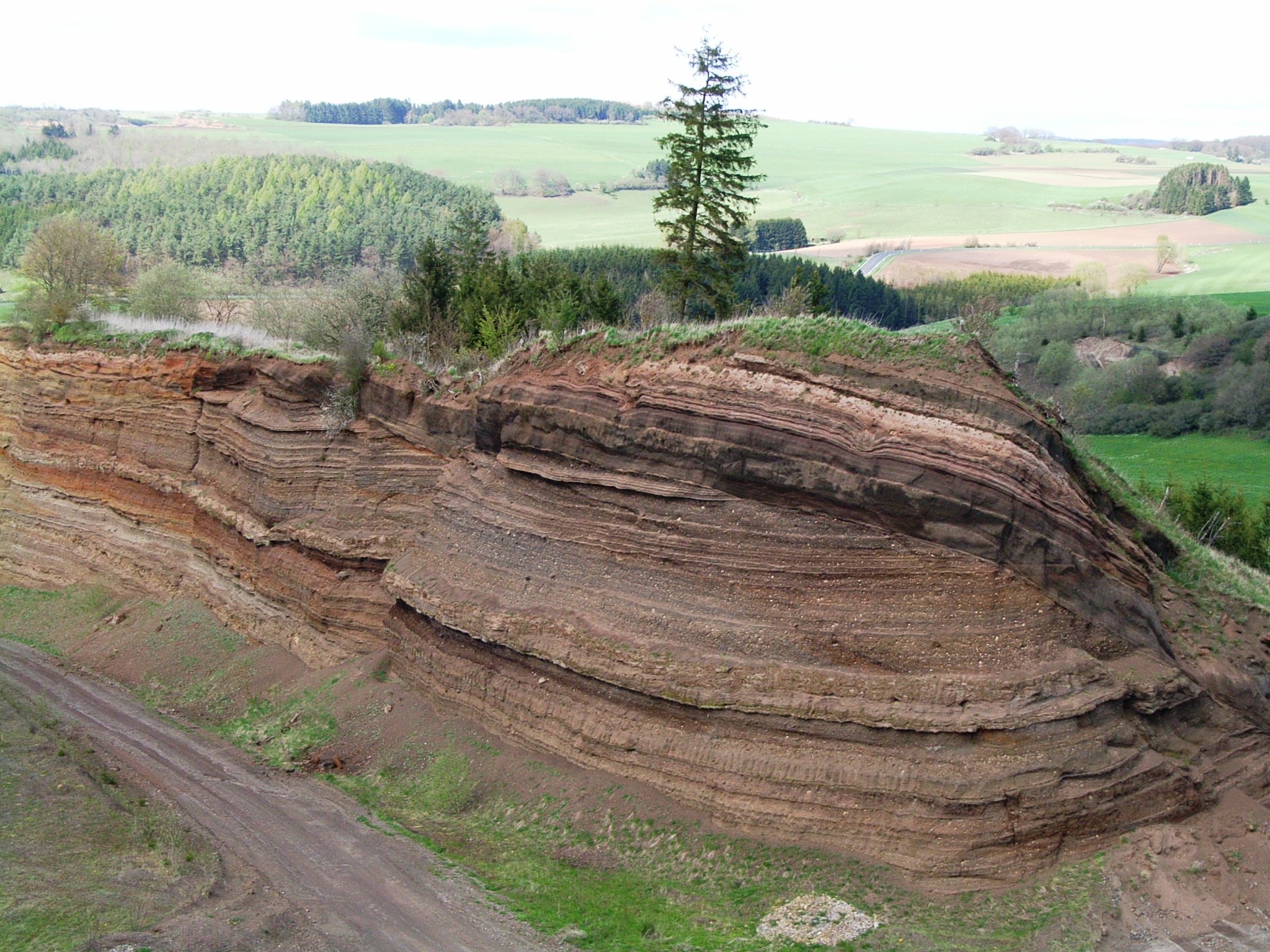
The four most important and widely recognised types of Reef in Mining are the Quartz Reef, the Conglomerate Reef, the Saddle Reef, and the Fault-Related Reef – each of which has a distinct geological character and requires a specific approach to exploration and extraction.
Quartz Reef in Mining
A Quartz Reef in Mining is the most widely recognised and historically celebrated type of reef deposit – it is a gold-bearing or metalliferous quartz vein that occurs within solid bedrock as a well-defined, tabular body of white to grey quartz rock carrying variable concentrations of gold, silver, and sulphide minerals.
Quartz Reef in Mining is the primary target of hard rock gold mining operations across Australia, West Africa, South America, and India, and it is the type of reef deposit most commonly referred to in Australian goldfield history and geological literature.
Conglomerate Reef in Mining
A Conglomerate Reef in Mining is a gold-bearing sedimentary conglomerate horizon consisting of rounded pebbles of quartz and quartzite cemented together in a matrix that carries fine-grained gold and uranium mineralisation deposited by ancient river systems over two to three billion years ago.
The Witwatersrand Conglomerate Reef in Mining is the world’s greatest example of this deposit type – it is a series of flat-lying to gently dipping gold-bearing conglomerate bands at depths of up to 4,000 metres below the surface in the greater Johannesburg region of South Africa.
Saddle Reef in Mining
A Saddle Reef in Mining is a unique and visually striking type of reef deposit that forms at the crest of an anticlinal fold where the rock has arched upward and a void has opened at the fold hinge, which is subsequently filled by hydrothermal quartz and gold, creating a reef shaped like an inverted saddle or an arch when viewed in cross-section.
Saddle Reefs in Mining are classically found in the Bendigo Goldfield of Victoria, Australia, where they occur in regular vertical succession at the same fold crest – miners at Bendigo followed these saddle reefs to depths exceeding 1,400 metres during the Victorian gold rush era.
Fault-Related Reef in Mining
A Fault-Related Reef in Mining forms in the dilatational zones and pressure shadows that develop along faults during periods of tectonic movement, where open spaces created by fault geometry are filled by gold and quartz-bearing hydrothermal fluids circulating along the fault plane and its subsidiary fractures.
Lode in Mining | Definition, Types, Formation, Lode vs Placer & Complete Guide 2026
Fault-related reefs in Mining are common in greenstone belt gold provinces worldwide and are often associated with major shear zones and fault systems that acted as the primary conduits for gold-bearing hydrothermal fluids during ancient tectonic events.
| Reef Type | Primary Composition | Geometry | Key Example | Mining Method |
|---|---|---|---|---|
| Quartz Reef | Quartz with gold and sulphides | Tabular vein, steeply dipping | Bendigo, Victoria Australia | Cut and Fill, Shrinkage Stoping |
| Conglomerate Reef | Gold-bearing pebble conglomerate | Flat to gently dipping horizon | Witwatersrand, South Africa | Longwall, Scattered Pillar |
| Saddle Reef | Quartz with gold at fold crests | Arch-shaped at anticlinal hinges | Bendigo Goldfield, Australia | Sub-level Stoping, Cut and Fill |
| Fault-Related Reef | Quartz, sulphides, altered host rock | Irregular, follows fault geometry | Greenstone belt goldfields | Selective underground methods |
Reef in Mining – Key Characteristics
Every Reef in Mining has a set of physical and geological characteristics that define its nature, control its shape and orientation, and directly determine how it should be explored, drilled, sampled, and extracted using the most appropriate underground mining method.
Understanding the key characteristics of a Reef in Mining is essential for every mining student and professional because these characteristics form the basis of all resource estimation, mine design, and production planning decisions made throughout the life of a reef gold mine.
| Characteristic | Definition | Significance in Reef Mining |
|---|---|---|
| Reef Horizon | The specific geological horizon or stratigraphic level where the reef is located | Guides drilling, development, and production planning |
| Strike of Reef | Horizontal compass direction along which the reef extends through the rock | Controls direction of underground reef drives and exploration |
| Dip of Reef | Angle of inclination of the reef from the horizontal | Determines mining method and equipment selection |
| Reef Width | True perpendicular thickness of the mineralised reef zone | Controls stope height and dilution management |
| Reef Grade | Concentration of gold or other valuable metal within the reef | Primary determinant of economic viability |
| Reef Continuity | How consistently the reef maintains its grade and geometry along strike and dip | Controls resource confidence and production scheduling |
| Reef Outcrop | Surface exposure of the reef where it has been exposed by erosion | Primary starting point for exploration and historical mining |
| Reef Contact | The boundary between the reef and the surrounding host rock | Defines the exact ore limits for mining and reserve estimation |
Gold Reef in Mining – Definition and Importance
Gold Reef in Mining is the most historically important and economically significant category of reef deposit, representing the primary geological target of hard rock gold mining operations across Australia, South Africa, West Africa, India, and the Americas since the mid-19th century gold rush era.
A Gold Reef in Mining can be either a quartz-hosted hydrothermal vein reef or a sedimentary conglomerate reef – both types carry gold as their primary economic mineral, but they have very different geological characters, mining methods, and ore processing requirements.
| Gold Reef Type | Host Rock | Gold Occurrence | Typical Grade | Processing Method |
|---|---|---|---|---|
| Quartz Vein Gold Reef | Greenstone, metamorphic, granite | Free gold in quartz, sulphide-hosted gold | 2 – 20 g/t Au | Gravity separation + Cyanidation |
| Witwatersrand Conglomerate Gold Reef | Ancient sedimentary conglomerate | Fine gold in matrix with uranium minerals | 5 – 15 g/t Au | Flotation + Carbon-in-leach (CIL) |
| Saddle Gold Reef | Folded sedimentary sequences | Free gold in quartz at fold hinges | 5 – 30 g/t Au | Gravity + Cyanidation |
| Deep Reef Gold Mining | Deep buried conglomerate or quartz veins | Fine to coarse gold, variable occurrence | 4 – 12 g/t Au | Complex multi-stage processing |
Quartz Reef Mining – Australia
Quartz Reef Mining in Australia has a rich and important history that began during the Victorian Gold Rush of 1851 and continues to this day, with the Bendigo and Ballarat goldfields of Victoria representing some of the most intensively worked and historically significant quartz reef gold mining districts in the world.
Vein in Mining | Definition, Types, Formation, Vein vs Lode & Complete Guide 2026
In the Australian goldfields context, a Quartz Reef in Mining refers specifically to a vein of quartz rock that carries gold either as visible free gold or as microscopic particles, and miners historically followed these reefs from surface outcrops downward into the ground to depths exceeding 1,400 metres in the Bendigo field.
The Saddle Reef in Mining is the most distinctive and unique reef type found in the Bendigo Goldfield, where the regular anticlinal folding of the host Ordovician sedimentary sequence created a series of arch-shaped voids filled with gold-bearing quartz that were mined in vertical succession from shallow to great depth.
Modern Australian gold mining continues to target quartz reef systems across Western Australia, Victoria, Queensland, and the Northern Territory, with some of the world’s largest and most productive hard rock gold mines operating on reef-type deposits in the Yilgarn Craton of Western Australia.
| Australian Reef Mining District | State | Primary Reef Type | Historical Significance |
|---|---|---|---|
| Bendigo Goldfield | Victoria | Saddle Reef and Quartz Reef | Deepest Victorian reefs – over 1,400 m depth |
| Ballarat Goldfield | Victoria | Quartz Reef and Alluvial | One of Australia’s richest historical goldfields |
| Kalgoorlie Goldfield | Western Australia | Quartz Reef (Golden Mile) | World’s richest square mile of gold – still active today |
| Charters Towers | Queensland | Quartz Reef | Major gold producer in the 1880s–1920s era |
Witwatersrand Reef Mining – South Africa
The Witwatersrand Reef in Mining is the world’s most extraordinary and economically significant gold reef system – a series of ancient gold-bearing conglomerate horizons deposited by river systems approximately 2.7 to 3.1 billion years ago and now found at depths ranging from surface outcrops to over 4,000 metres below ground in the greater Johannesburg region of South Africa.
Footwall in Mining | Definition, Meaning, Difference with Hanging Wall & Complete Guide 2026
Since the first discovery of gold on the Witwatersrand Reef in 1886, this remarkable reef system has produced more than two billion troy ounces of gold – equivalent to more than one-third of all the gold ever mined in human history – making it by far the single most productive gold mining region the world has ever known.
| Parameter | Detail |
|---|---|
| Location | Witwatersrand Basin, Gauteng Province, South Africa |
| Reef Type | Gold and uranium-bearing conglomerate horizon |
| Age of Formation | 2.7 – 3.1 billion years old |
| Basin Dimensions | 300 km long by 160 km wide |
| Maximum Depth Mined | Over 4,000 metres below surface |
| Total Gold Produced | Over 2 billion troy ounces since 1886 |
| Key Reef Horizons | Carbon Leader Reef, Vaal Reef, Basal Reef, VCR (Ventersdorp Contact Reef) |
| Mining Method Used | Longwall mining and scattered pillar method |
Reef vs Vein in Mining – Key Difference
The difference between Reef and Vein in Mining is a subtle but important distinction that mining students frequently encounter in both examination papers and technical literature – and understanding the relationship between these two terms is essential for any well-rounded mining education.
In practical usage, Reef and Vein in Mining are broadly interchangeable terms for a mineralised tabular body in solid bedrock, but the term Reef carries a strong regional connotation associated with Australian and South African gold mining, while Vein is the more universally used geological and mining engineering term worldwide.
| Parameter | Reef in Mining | Vein in Mining |
|---|---|---|
| Origin of Term | Regional – Australian and South African gold mining | Universal – used worldwide in all mining regions |
| Primary Commodity | Most commonly associated with gold deposits | Associated with gold, silver, copper, lead, zinc, and others |
| Deposit Types | Includes quartz veins AND sedimentary conglomerate horizons | Specifically refers to fracture-filling mineralised bodies only |
| Geological Setting | Can be hydrothermal or sedimentary in origin | Always hydrothermal or metamorphic in origin |
| Geometry | Tabular to arch-shaped (Saddle Reef) | Primarily tabular, sheet-like geometry |
| Width Range | Centimetres to several metres | Centimetres to several metres |
| Usage in Literature | Predominantly in Australian and South African texts | Used in all geological and mining engineering literature globally |
| Exam Relevance | Important for GATE, DGMS, and mining geology exams | Important for all mining and geology examinations |
Reef vs Lode in Mining – Key Difference
The difference between Reef and Lode in Mining is similar to the difference between Reef and Vein – both Reef and Lode describe mineralised zones in solid bedrock, but Lode is the term most commonly used by miners to describe the complete mineralised zone while Reef specifically refers to the visible and well-defined ore body as mined.
In South African gold mining terminology, the Lode concept is less commonly used, while in Australian and European mining, both terms appear regularly in technical literature and the distinction between them is largely one of regional usage rather than strict geological difference.
| Parameter | Reef in Mining | Lode in Mining |
|---|---|---|
| Regional Usage | Australia and South Africa primarily | Europe, Americas, and global usage |
| Scope | Specific ore-bearing body as defined for mining | Complete mineralised zone including adjacent altered rock |
| Deposit Type Covered | Quartz veins and conglomerate horizons | All types of in-place primary ore deposits |
| Legal Term | Used in Australian mining tenement terminology | Used in USA lode mining claim law |
| Exam Frequency | Common in GATE Mining and geology exams | Common in GATE Mining and DGMS exams |
Reef in Mining – Underground Extraction Methods
The underground mining method selected to extract a Reef in Mining depends critically on the dip angle of the reef, the true width of the ore zone, the strength of the reef rock and surrounding host rock, and the depth at which the reef is being mined.
Hanging Wall in Mining – Definition, Meaning, Difference with Foot Wall & Complete Guide 2026
Because most quartz reef and saddle reef deposits are relatively narrow and often steeply dipping, selective underground methods that minimise dilution from the Hanging Wall and Footwall are almost always preferred over bulk methods for hard rock reef gold mining operations.
Cut and Fill Stoping for Quartz Reef Mining
Cut and Fill Stoping is one of the most widely used underground methods for extracting moderate to steeply dipping Quartz Reef in Mining deposits because it gives excellent control over the reef contact boundaries, minimises dilution from waste wall rock, and allows the stope to be continuously adjusted to follow the reef as its geometry changes with depth.
After each horizontal cut of reef is extracted, the mined-out space is filled with waste rock or hydraulic fill before the next cut is started above, providing continuous Hanging Wall support and preventing large-scale collapse in the steeply dipping reef workings.
Longwall Mining for Conglomerate Reef Mining
Longwall Mining is the primary method used for extracting the flat-lying to gently dipping Conglomerate Reef in Mining found in the Witwatersrand Basin of South Africa, where the thin but extensive gold-bearing reef horizons at great depth require a high-productivity, continuous extraction method to be economically viable.
In Witwatersrand Reef Mining, the longwall face advances along the reef horizon while hydraulic support systems hold the immediate Hanging Wall above the working miners, and the mined-out area behind the face is allowed to cave progressively as the face advances.
| Mining Method | Best Reef Type | Key Advantage | Key Limitation |
|---|---|---|---|
| Cut and Fill Stoping | Steeply dipping Quartz and Saddle Reefs | Excellent grade control, low dilution | Higher cost due to fill requirement |
| Shrinkage Stoping | Steep dipping competent Quartz Reefs | Simple, low capital cost | Slow recovery, limited to strong rock |
| Longwall Mining | Flat Witwatersrand Conglomerate Reefs | High productivity on thin flat reefs | Requires deep mining infrastructure |
| Sub-level Stoping | Wide competent Quartz Reef systems | Mechanised, high production rate | Less suited to narrow irregular reefs |
| Scattered Pillar Method | Flat Witwatersrand-type Conglomerate Reefs | Simple extraction of shallow flat reefs | Pillar recovery hazardous at depth |
Reef in Mining – Advantages and Disadvantages
Reef in Mining operations – particularly hard rock quartz reef gold mines – offer important advantages in terms of ore grade, geological predictability, and long mine life, but they also present significant operational challenges related to narrow working widths, deep mining conditions, and the ever-present risk of underground rock falls and seismic events in deep reef mines.
A balanced understanding of both the advantages and disadvantages of Reef in Mining is important for project evaluation, feasibility studies, and method selection decisions at every stage of a reef mining project’s development.
| Advantages of Reef in Mining | Disadvantages of Reef in Mining |
|---|---|
| Typically high gold grade – strong economics per tonne | Narrow reef width makes mechanisation challenging |
| Well-defined reef contacts minimise dilution from waste | Hanging Wall instability is a constant safety concern |
| Reef continuity at depth allows long mine life planning | Deep reef mining creates severe ground pressure and seismic risk |
| Saddle and quartz reefs have predictable structural geometry | High infrastructure cost for shaft sinking to great depth |
| Selective reef mining maximises gold recovery and grade | Labour-intensive extraction in narrow reef workings |
| Conglomerate reefs offer very large total gold inventory | Witwatersrand reefs require expensive deep mining at 3–4 km depth |
Reef in Mining – Diagram Explanation
A standard Reef in Mining diagram clearly shows the key structural components of a typical reef system including the reef itself, the Hanging Wall and Footwall contacts, the surrounding host rock, and the underground drive and stope workings used to extract the reef ore.
The table below explains each key element that appears in a standard Reef in Mining diagram as used in mining geology and underground mining engineering textbooks and training materials worldwide.
| Diagram Label | Position | Description |
|---|---|---|
| Reef / Ore Zone | Central mineralised band | Gold-bearing quartz vein or conglomerate horizon being mined |
| Hanging Wall | Above the reef | Upper host rock forming the ceiling of the stope or reef drive |
| Footwall | Below the reef | Lower host rock forming the floor of the stope |
| Reef Width | Perpendicular across reef | True thickness of the reef used in resource calculation |
| Reef Horizon | Stratigraphic level of reef | Specific rock layer where reef is located within the sequence |
| Reef Outcrop | Surface expression | Where the reef intersects the surface – starting point for exploration |
| Reef Drive | Along the reef horizon | Tunnel driven along the reef to access ore over its strike length |
| Stope | Within reef width | Underground void created by removing ore from reef zone |
| Saddle Shape (Saddle Reef) | Arch at fold hinge | Distinctive arch-shaped geometry of a Saddle Reef at anticlinal crest |
Reef in Mining – Important for Competitive Exams
The topic of Reef in Mining is regularly tested in GATE Mining, DGMS examinations, Mining Foreman, Overman, Mine Surveyor, and Junior Mining Engineer competitive examinations across India, as well as in mining engineering university courses at both undergraduate and diploma levels throughout the country.
The MCQ table below contains the most important and most frequently asked exam-oriented facts about Reef in Mining that will directly and immediately help you score better in your next competitive mining examination.
| Exam Question Pattern | Correct Answer |
|---|---|
| What is a Reef in Mining? | A gold-bearing quartz vein or conglomerate horizon found in solid bedrock, mainly used in Australian and South African gold mining terminology |
| What is Reef in Mining called in Hindi? | Dhatu Shila Patti or Swarnadhatu Shira |
| What is a Quartz Reef in Mining? | A gold-bearing reef composed primarily of quartz minerals deposited by hydrothermal fluids in rock fractures |
| What is a Saddle Reef in Mining? | A reef formed at the crest of an anticlinal fold where open space has been filled by hydrothermal quartz and gold |
| What is a Conglomerate Reef in Mining? | A gold-bearing sedimentary conglomerate horizon formed by ancient river systems, as found in the Witwatersrand Basin of South Africa |
| Where is the world’s most famous Conglomerate Reef found? | Witwatersrand Basin, South Africa – it has produced over two billion troy ounces of gold since 1886 |
| What is an Auriferous Reef in Mining? | A reef that contains economically significant concentrations of gold – “auriferous” means gold-bearing |
| Which mining method is used for flat Witwatersrand Conglomerate Reefs? | Longwall Mining and Scattered Pillar Method |
| What is the difference between Reef and Vein in Mining? | Reef is a regional term (Australia and South Africa) for a gold-bearing quartz or conglomerate deposit; Vein is the universal geological term for any fracture-filling mineral deposit |
| What is a Reef Horizon in Mining? | The specific stratigraphic level or geological horizon within the rock sequence where the gold-bearing reef is located |
| In which famous Australian goldfield are Saddle Reefs found? | Bendigo Goldfield, Victoria, Australia |
| What underground method is best for steeply dipping narrow Quartz Reefs? | Cut and Fill Stoping – provides best grade control and minimum Hanging Wall dilution |
MiningGyan – Your Trusted Mining Education Platform
MiningGyan is a dedicated mining education platform built specifically for mining engineering students, diploma candidates, working mine professionals, and competitive exam aspirants across India who need accurate, complete, and well-structured technical knowledge delivered in clear and readable English.
At MiningGyan, complex and important topics like Reef in Mining are explained with clear simple definitions, geological formation process descriptions, complete type-by-type classifications, detailed comparison tables, diagram label explanations, real-world examples from Australia and South Africa, and ready-to-use competitive exam MCQ notes – all in one comprehensive article.
MiningGyan covers the complete spectrum of mining engineering and geology – from underground mining methods, ore body types, and geological deposit classifications to mine safety regulations, ventilation engineering, mining equipment, and mineral exploration techniques – making it the single most comprehensive and freely accessible resource for mining education in India today.
Every article on MiningGyan is carefully researched, accurately written, and clearly structured to bridge the gap between textbook theory and real-world underground mining practice, ensuring that students preparing for examinations and professionals working in operating mines both receive maximum practical value from every article they read on the platform.
| What MiningGyan Covers | Who It Is Most Helpful For |
|---|---|
| Reef in Mining, Vein, Lode, Ore Body and Geological Deposit Types | Mining Engineering and Geology Students |
| Underground Mining Methods – Complete Step-by-Step Guides | B.Tech and Diploma Mining Engineering Students |
| Mining Equipment Working Principles and Operational Details | Junior Mining Engineers and Graduate Trainees |
| Mine Safety, Legislation, and Ventilation Engineering Topics | Supervisors, Overmen, Safety Officers, and Managers |
| Competitive Exam Notes, MCQ Tables, and Revision Guides | GATE, DGMS, Foreman, Overman, and Surveyor Aspirants |
| Gold Reef Geology, Witwatersrand Reefs, and Australian Goldfield Concepts | Economic Geologists and Gold Mine Planning Engineers |
MiningGyan’s mission is simple and unwavering – “To deliver accurate, complete, and accessible mining knowledge to every mining student and professional in India, completely free of charge.”
If you are building a career in mining engineering, exploration geology, hard rock gold mining, or mine management, MiningGyan is the most reliable, well-structured, and student-friendly educational platform available to you today.
Frequently Asked Questions – Reef in Mining
A Reef in Mining is a gold-bearing or metalliferous mineral deposit found within solid bedrock – either as a quartz vein or as a gold-bearing conglomerate horizon. The term is most commonly used in Australian and South African gold mining and is broadly equivalent to the terms “vein” and “lode” used in other parts of the world.
The main types of Reef in Mining are Quartz Reef, Conglomerate Reef, Saddle Reef, and Fault-Related Reef. Each type has a distinct geological origin, geometry, and mining method requirement – from Cut and Fill Stoping for narrow quartz reefs to Longwall Mining for flat conglomerate reefs.
A Reef in Mining is a regional term predominantly used in Australian and South African gold mining to describe both quartz vein and conglomerate-type gold deposits, while Vein is the universal geological term used worldwide specifically for fracture-filling mineral deposits of hydrothermal origin.
A Saddle Reef in Mining is a gold-bearing quartz reef that forms at the crest of an anticlinal fold where the arching of rock layers creates an open space that is subsequently filled by hydrothermal quartz and gold. Saddle reefs are classically found in the Bendigo Goldfield of Victoria, Australia, where they occur in regular vertical succession.
The Witwatersrand Reef in Mining is the world’s greatest gold-bearing conglomerate reef system – a series of ancient gold-bearing pebble conglomerate horizons found at depths of up to 4,000 metres in the Witwatersrand Basin of South Africa. Since its discovery in 1886, it has produced over two billion troy ounces of gold, making it the most prolific gold mining region in human history.
Conclusion – Reef in Mining
Reef in Mining is a foundational concept in economic geology and hard rock gold mining engineering that connects the history of the global gold industry with the geology of the world’s most important gold-producing regions across Australia, South Africa, West Africa, and beyond.
Whether you are studying quartz reef systems in the Victorian goldfields of Australia, the legendary conglomerate reefs of the Witwatersrand Basin in South Africa, or the saddle reefs of Bendigo, a clear and complete understanding of Reef in Mining is absolutely essential for any serious mining student or professional.
This complete guide by MiningGyan has covered all major aspects of Reef in Mining – from its definition and historical origin to its formation processes, complete type classification, key characteristics, Gold Reef types, Quartz Reef Mining in Australia, Witwatersrand Reef Mining in South Africa, Reef vs Vein and Lode comparison, underground extraction methods, advantages and disadvantages, diagram label explanations, and a comprehensive competitive exam MCQ table.
Explore more such free, detailed, and exam-ready mining guides on MiningGyan and continue building the strong technical foundation that every successful mining career requires.