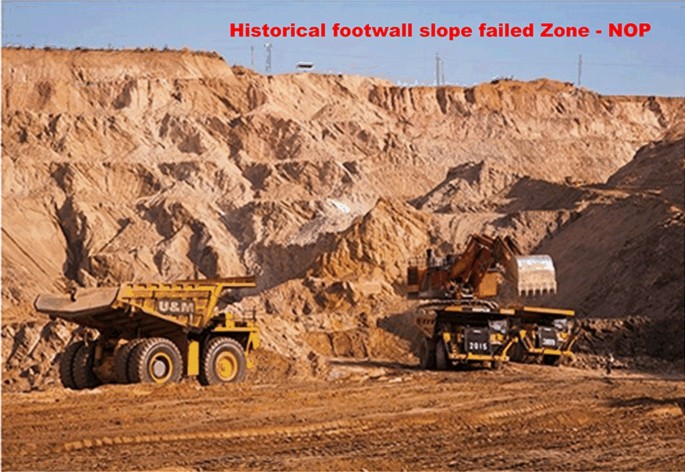
Footwall in Mining is one of the most essential concepts in mining geology and underground mining engineering that every student and professional must have a clear understanding of.
From fault analysis and stope design to ore body exploration and mine safety, the concept of Footwall in Mining appears at every level of mining education and practice.
In this complete guide by MiningGyan, we will cover the Footwall in Mining definition, its meaning in geology, its difference with the Hanging Wall, Footwall drive, Footwall lode, Footwall contact, and its importance in competitive exams – all in one place.
By the end of this article, you will have a thorough and exam-ready understanding of Footwall in Mining and all the related concepts that go with it.
What is Footwall in Mining?
Footwall in Mining is defined as the block of rock that lies on the lower side of an inclined fault plane, ore vein, or mineral deposit – in simple terms, it is the rock on which a miner’s feet rest when working inside an inclined underground excavation.
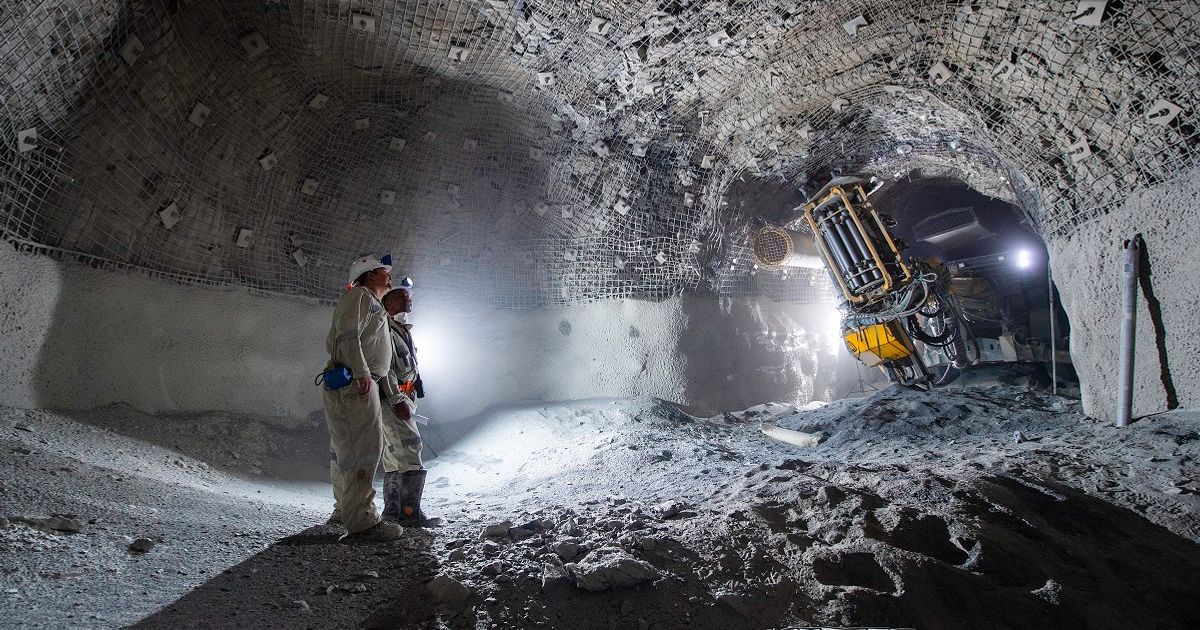
Whenever a fault or ore vein is tilted at an angle, the rock mass that falls below that inclined surface is always referred to as the Footwall in Mining.
The Footwall in Mining is always found in pairs with the Hanging Wall – you cannot have one without the other, and understanding both together gives the complete picture of fault and vein geometry.
The Footwall in underground mining plays a critical role in determining where access drives are placed, how stopes are designed, and where ore contacts are mapped during exploration.
Footwall in Mining – Origin of the Term
The term Footwall has a very practical and historical origin that comes directly from the experience of early European miners who worked manually inside steeply inclined ore veins hundreds of years ago.
When a miner entered an inclined vein to extract ore, the lower wall of the vein was the surface on which his feet naturally rested – and so it was called the “Foot Wall,” meaning the wall beneath the feet.
| Term | Origin Language | Original Word | Meaning in Mining |
|---|---|---|---|
| Footwall | Old German | Liegendus | Lower side of an inclined fault or vein |
| Hanging Wall | Old German | Hangendus | Upper side of an inclined fault or vein |
| Fault Plane | Latin | Fallo (to fail) | Surface along which rock displacement occurs |
| Stope | Old English / German | Stope / Stoep | Underground excavation where ore is extracted |
Footwall Definition in Geology
In structural geology, the Footwall definition refers to the rock block that lies below a non-vertical fault surface – and this definition is consistent whether you are studying tectonics, ore deposits, or underground mining engineering.
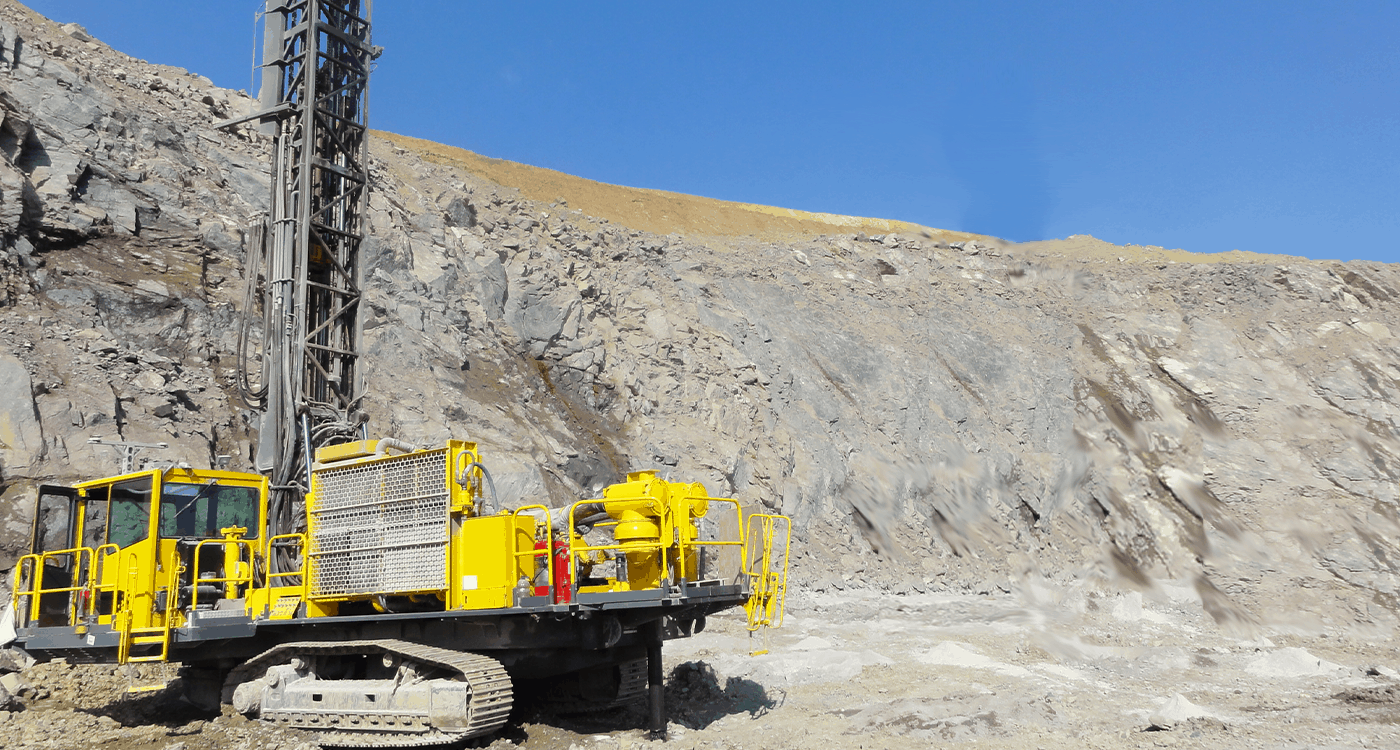
Geologists use the Footwall in geology to understand the displacement history of faults, the geometry of ore bodies, and the structural controls on mineral deposits.
| Parameter | Footwall in Geology | Footwall in Mining |
|---|---|---|
| Primary Use | Fault analysis and tectonic interpretation | Stope design and mine planning |
| Focus | Rock displacement and structural history | Stability, access, and ore extraction |
| Scale | Regional to outcrop scale | Mine scale and excavation level |
| Key Concern | Understanding fault movement direction | Worker safety and support design |
| Used By | Geologists and structural engineers | Mining engineers and mine planners |
Footwall and Hanging Wall in Mining – Key Terms Explained
To fully understand the concept of Footwall in Mining, it is important to be clear on all four key terms that are always used together when discussing faults, veins, and underground excavations.
These four terms together form the complete vocabulary needed to describe the geometry of any inclined ore body or fault zone.
What is Footwall in Mining
The Footwall in Mining is the lower rock mass beneath the fault plane or ore vein, and it acts as the natural floor for miners working in an inclined excavation such as a stope or drive.
Because gravity pushes it downward and into place, the Footwall in underground mining is inherently more stable and requires less artificial support compared to the Hanging Wall.
What is Hanging Wall in Mining
The Hanging Wall in Mining is the upper rock mass that lies above the fault plane or ore vein, and it acts as the natural ceiling above the miner’s head during underground operations.
The Hanging Wall is less stable because gravity tends to pull it away from the surrounding rock and into the excavated space below it.
What is Fault Plane in Mining
The Fault Plane in Mining is the inclined surface that separates the Footwall below from the Hanging Wall above, and it is the exact surface along which the two rock masses have moved relative to each other over geological time.
The angle of the fault plane, known as the dip angle, is one of the most important parameters in determining both Footwall and Hanging Wall behaviour in underground mines.
What is Dip Angle in Mining
The Dip Angle is the angle that the fault plane or ore vein makes with the horizontal – a higher dip angle means a steeper fault, which generally results in greater Hanging Wall instability and more complex Footwall access design.
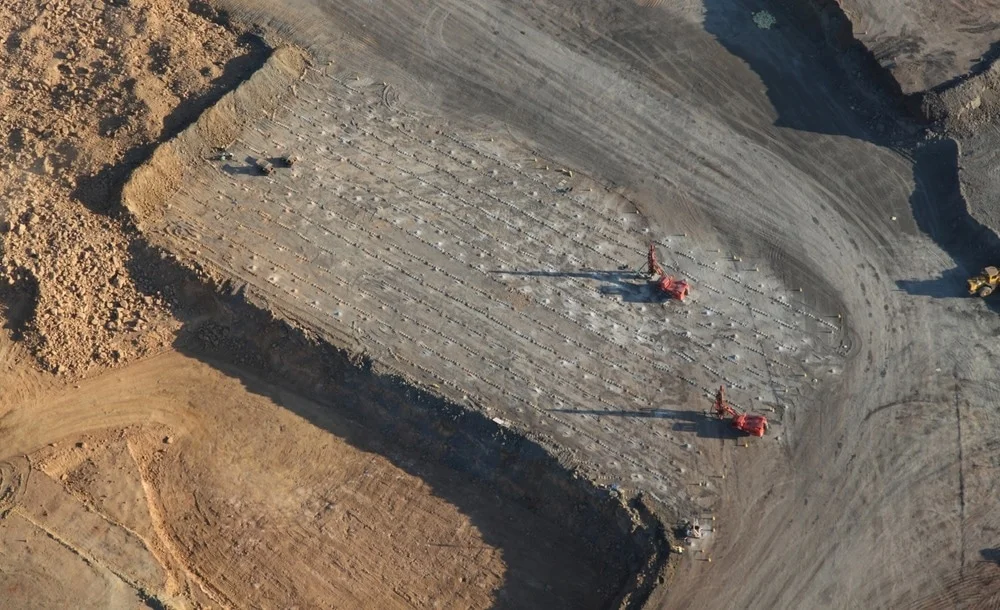
Dip angle is always measured in degrees from horizontal, and it directly influences the mining method chosen for extracting the ore body.
Footwall and Hanging Wall Difference in Mining
The difference between Footwall and Hanging Wall in Mining is one of the most commonly asked topics in mining engineering examinations, and it is also a fundamental concept in practical mine design and safety planning.
The table below provides a comprehensive and exam-ready comparison between the Footwall and the Hanging Wall across all major parameters.
| Parameter | Footwall in Mining | Hanging Wall in Mining |
|---|---|---|
| Position | Below the fault plane or ore vein | Above the fault plane or ore vein |
| Location Relative to Miner | Beneath the miner’s feet | Above the miner’s head |
| Stability | More stable | Less stable |
| Effect of Gravity | Gravity supports and holds it in place | Gravity pulls it downward into excavation |
| Support Requirement | Requires less support | Requires more support |
| Risk of Rock Fall | Lower risk | Higher risk |
| Role in Stope | Acts as the floor of the stope | Acts as the ceiling of the stope |
| Movement in Normal Fault | Moves upward relative to Hanging Wall | Moves downward relative to Footwall |
| Movement in Reverse Fault | Moves downward relative to Hanging Wall | Moves upward relative to Footwall |
| Hindi Name | Pad Bhitt | Lalat Bhitt |
| Drive Preference | Footwall drive preferred for access | Hanging Wall drive less preferred |
Footwall in Different Types of Faults in Mining
The behaviour and movement of the Footwall in Mining changes depending on the type of fault – and this is one of the most important distinctions that mining and geology students must clearly understand.
The four main fault types in which Footwall behaviour is studied are Normal Fault, Reverse Fault, Thrust Fault, and Strike-Slip Fault.
Footwall in Normal Fault
In a Normal Fault, the Hanging Wall moves downward relative to the Footwall – which means the Footwall in a normal fault effectively moves upward in a relative sense as the two blocks separate under tensional forces.
Normal faults are the most common type encountered in coal mining regions, rift valleys, and sedimentary basins across India and the world.
Footwall in Reverse Fault
In a Reverse Fault, the Hanging Wall moves upward over the Footwall, which means compressional forces are dominant and the Footwall in a reverse fault is being pushed downward in a relative sense.
Reverse faults are commonly found in orogenic belts and mountain ranges, and they create complex ore body geometries that make mine planning more challenging.
Footwall in Thrust Fault
A Thrust Fault is a low-angle reverse fault where the Hanging Wall travels a very large horizontal distance over the Footwall due to extreme compressional forces acting over geological time.
In thrust fault zones, the Footwall in thrust fault settings often contains the root zone of the ore body, making it a critical target for deep exploration drilling.
Footwall in Strike-Slip Fault
In a Strike-Slip Fault, the two rock masses move horizontally past each other rather than vertically, which means the traditional concept of Footwall and Hanging Wall does not strictly apply in the same way.
However, in cases where a strike-slip fault has a slight dip component, the lower block is still referred to as the Footwall in standard geological terminology.
| Fault Type | Footwall Movement | Hanging Wall Movement | Dominant Force | Common Region |
|---|---|---|---|---|
| Normal Fault | Relatively upward | Moves downward | Tensional | Rift valleys, coal fields |
| Reverse Fault | Relatively downward | Moves upward | Compressional | Mountain belts |
| Thrust Fault | Stays below | Moves far horizontally | High Compression | Himalayan region |
| Strike-Slip Fault | Horizontal movement | Horizontal movement | Shear Force | Transform boundaries |
Footwall in Stope Mining
In stope mining, the Footwall in Mining forms the natural floor of the stope excavation, and understanding its properties is essential for planning safe and efficient ore extraction.
The condition and angle of the Footwall directly affects how broken ore moves within the stope, how access is designed, and what type of support system is installed.
| Stope Type | Footwall Role | Footwall Stability | Key Consideration |
|---|---|---|---|
| Open Stope | Acts as unsupported natural floor | Generally stable | Footwall angle affects ore flow |
| Cut and Fill Stope | Floor of each lift as mining progresses upward | High stability | Fill placed on Footwall after each cut |
| Shrinkage Stope | Miners stand on broken ore above Footwall | Moderate | Footwall contact must be clearly identified |
| Sub-level Stope | Sub-level drives developed in Footwall rock | Controlled and stable | Footwall drives used for access and drilling |
| Longhole Stope | Footwall contact guides drill hole design | High stability | Accurate Footwall contact mapping critical |
Footwall Drive in Mining – Definition and Importance
A Footwall drive in Mining is a horizontal underground tunnel that is developed entirely within the Footwall rock, parallel to the ore body – and it is one of the most preferred access methods in underground hard rock mines around the world.
The Footwall drive in Mining is specifically positioned in the stable Footwall rock rather than in the weaker ore zone or the unstable Hanging Wall rock, which makes it significantly safer and more durable as a permanent access way.
The Footwall access drive in underground mining provides a stable platform from which cross-cuts can be driven into the ore body at regular intervals to access different levels of the deposit.
Because the Footwall rock is generally stronger and less fractured than the ore zone, tunnels developed within it require less maintenance and support over the life of the mine.
| Parameter | Footwall Drive in Mining | Hanging Wall Drive in Mining |
|---|---|---|
| Location | Developed in stable Footwall rock | Developed in unstable Hanging Wall rock |
| Stability | High – less support needed | Low – more support required |
| Maintenance Cost | Lower over mine life | Higher due to rock movement |
| Access to Ore | Via cross-cuts driven from Footwall | Directly adjacent to ore – more disruption |
| Preferred Choice | Yes – widely preferred in hard rock mines | Rarely preferred due to instability |
| Safety Level | Higher – away from ground movement | Lower – close to active pressure zones |
Footwall Lode in Mining
A Footwall lode in Mining refers to a secondary ore lode or mineralised zone that is located within or very close to the Footwall rock of the main ore body.
Footwall lodes are important exploration targets because they often carry significant grades of ore that were not included in the original resource estimate for the main deposit.
| Parameter | Footwall Lode in Mining | Hanging Wall Lode in Mining |
|---|---|---|
| Location | Within or adjacent to Footwall rock | Within or adjacent to Hanging Wall rock |
| Stability of Host Rock | More stable – easier to mine | Less stable – higher mining risk |
| Access | Accessible from Footwall drive | Requires separate Hanging Wall access |
| Exploration Priority | High – often overlooked in early stages | Medium – identified earlier in exploration |
| Economic Significance | Can significantly increase total ore reserve | Adds value but with higher mining cost |
Footwall Contact in Ore Body
The Footwall contact in an ore body is the boundary line or surface that separates the ore zone from the underlying Footwall rock, and it is one of the most critical geological boundaries that must be accurately mapped during mine exploration and development.
Geologists and mine geologists pay close attention to the Footwall contact because it defines the lower limit of the ore body and directly controls the amount of ore that can be recovered from any given section of the deposit.
| Parameter | Footwall Contact | Hanging Wall Contact |
|---|---|---|
| Definition | Boundary between ore and Footwall rock below | Boundary between ore and Hanging Wall rock above |
| Geological Significance | Marks the lower limit of the ore body | Marks the upper limit of the ore body |
| Mapping Importance | Critical for accurate ore reserve estimation | Equally critical for resource definition |
| Drill Hole Targeting | Drill holes must intersect Footwall contact | Drill holes must intersect Hanging Wall contact |
| Mining Impact | Controls dilution from Footwall waste rock | Controls dilution from Hanging Wall waste rock |
Footwall Stability in Underground Mining
Footwall stability in underground mining is generally high compared to the Hanging Wall – however, there are specific conditions and geological factors that can significantly reduce Footwall stability and create safety hazards in underground operations.
Understanding the factors that control Footwall stability is essential for designing safe stopes, drives, and other underground excavations in any type of orebody.
| Factor | Stable Footwall Condition | Unstable Footwall Condition |
|---|---|---|
| Rock Strength (UCS) | High – above 60 MPa | Low – below 30 MPa |
| Joint Spacing | Wide joint spacing (1 m or more) | Closely spaced and interconnected joints |
| Water Presence | Dry and well-drained conditions | Active water seepage or flooding |
| Dip Angle of Ore Body | Moderate dip (30° – 50°) | Very steep dip (above 70°) |
| Rock Type | Massive competent rock (granite, quartzite) | Weak or altered rock (clay, schist, shale) |
| Blasting Effects | Controlled blasting with low vibration | Heavy blasting causing fracture propagation |
| Support Installed | Adequate bolting and lining in place | No support or deteriorating support |
Footwall Support in Underground Mining
Although the Footwall in Mining is naturally more stable than the Hanging Wall, there are many situations in underground mines where Footwall support becomes necessary – particularly in weak rock conditions, high-stress environments, or steeply dipping ore bodies.
The type of Footwall support selected depends on the rock mass quality, the depth of the mine, the span of the excavation, and the expected loading conditions over the life of the mine.
| Support Method | How It Works | When It Is Used |
|---|---|---|
| Rock Bolting | Steel bolts tensioned into Footwall rock to hold fractured zones together | Fractured or jointed Footwall rock at any depth |
| Shotcrete Lining | Concrete sprayed onto Footwall surface to seal and stabilize weak zones | Weak, altered, or closely jointed Footwall rock |
| Steel Sets | Steel arch frames installed along the tunnel profile to carry Footwall loads | Squeezing ground and high-stress conditions |
| Drain Holes | Holes drilled into Footwall to relieve water pressure and reduce weakening | Water-bearing or saturated Footwall rock |
| Grouting | Cement or chemical grout injected into Footwall fractures to fill and strengthen them | Highly fractured or permeable Footwall zones |
Footwall in Mining – Diagram Explanation
A standard Footwall in Mining diagram clearly shows the relative positions of the Footwall, Hanging Wall, fault plane, ore vein, and the underground excavation – and understanding each label in this diagram is essential for both students and practicing engineers.
The table below explains every key label that appears in a standard Footwall and Hanging Wall diagram as used in mining geology and underground mining engineering textbooks.
| Diagram Label | Position in Diagram | Description |
|---|---|---|
| Footwall | Below the fault plane | Lower rock mass forming the floor of the excavation |
| Hanging Wall | Above the fault plane | Upper rock mass forming the ceiling of the excavation |
| Fault Plane | Between Footwall and Hanging Wall | Inclined surface along which the two blocks have moved |
| Dip Angle | Angle of fault plane from horizontal | Determines steepness – higher angle means greater Hanging Wall pressure |
| Ore Vein | Along or adjacent to fault plane | Zone of valuable mineral concentration within or near the fault |
| Footwall Contact | Lower boundary of ore zone | Exact line where ore ends and Footwall rock begins |
| Hanging Wall Contact | Upper boundary of ore zone | Exact line where ore ends and Hanging Wall rock begins |
| Footwall Drive | Tunnel within Footwall rock | Access tunnel developed parallel to ore body in stable Footwall rock |
Footwall in Mining – Important for Competitive Exams
The topic of Footwall in Mining is regularly tested in GATE Mining, DGMS examinations, Mining Foreman, Overman, Mine Surveyor, and Junior Mining Engineer competitive exams conducted across India every year.
The table below contains the most important MCQ-oriented facts on Footwall in Mining that will directly and immediately help you in your exam preparation.
| Exam Question Pattern | Correct Answer |
|---|---|
| What is the position of Footwall in Mining? | Below the fault plane or ore vein |
| What is Footwall called in Hindi? | Pad Bhitt |
| Which is more stable – Footwall or Hanging Wall? | Footwall is more stable |
| In which fault does the Hanging Wall move downward over the Footwall? | Normal Fault |
| In which fault does the Hanging Wall move upward over the Footwall? | Reverse Fault |
| What is a Footwall drive in Mining? | A tunnel developed in stable Footwall rock parallel to the ore body |
| What role does the Footwall play in a stope? | It acts as the natural floor of the stope |
| What is Footwall contact in an ore body? | The boundary between the ore zone and the underlying Footwall rock |
| Why is Footwall drive preferred over Hanging Wall drive? | Because Footwall rock is more stable and requires less maintenance support |
| What is a Footwall lode in Mining? | A secondary ore zone located within or adjacent to the Footwall rock |
MiningGyan – Your Trusted Mining Education Platform
MiningGyan is a dedicated mining education platform that has been built specifically for mining engineering students, diploma candidates, working mine professionals, and competitive exam aspirants across India and beyond.
At MiningGyan, every topic – including Footwall in Mining – is explained in simple, structured, and complete English so that any reader can fully understand the concept in a single reading without needing to search multiple sources.
MiningGyan goes beyond simple definitions – every article on MiningGyan includes working principles, diagram explanations, real-world examples, detailed comparison tables, and exam-ready notes that are directly useful in competitive examinations.
Each topic is carefully written to connect theoretical mining knowledge with practical underground applications, making MiningGyan genuinely useful for both classroom learning and on-site professional development.
| What MiningGyan Covers | Who It Is Most Helpful For |
|---|---|
| Underground Mining Methods – Complete Step-by-Step Guides | Mining Engineering Students (B.Tech and Diploma) |
| Mining Geology Concepts – Simple and Structured Explanation | GATE Mining and DGMS Exam Aspirants |
| Mining Equipment Working Principles and Types | Junior Mining Engineers and Graduate Trainees |
| Mine Safety, Legislation, and Ventilation Topics | Mine Supervisors, Overmen, and Safety Officers |
| Competitive Exam Notes, MCQs, and Revision Tables | Foreman, Overman, Surveyor, and Manager Exam Candidates |
| Fault Geology, Ore Body Geometry, and Structural Mining Topics | All Mining Students and Exploration Professionals |
MiningGyan’s mission is clear and unwavering – “To deliver accurate, complete, and accessible mining knowledge to every mining student and professional in India, completely free of charge.”
If you are building a career in mining engineering, exploration geology, or mine management, MiningGyan is the most reliable, student-friendly, and professionally relevant platform available to you today.
Frequently Asked Questions – Footwall in Mining
Footwall in Mining is the lower rock mass that lies beneath an inclined fault plane or ore vein. It forms the floor of underground excavations like stopes and drives, and it is more stable than the Hanging Wall above it.
The Footwall lies below the fault plane and is more stable, while the Hanging Wall lies above the fault plane and is less stable. The Footwall acts as the floor and the Hanging Wall acts as the ceiling in underground excavations.
A Footwall drive is a horizontal access tunnel developed inside the stable Footwall rock, parallel to the ore body. It is preferred over Hanging Wall drives because of its greater stability and lower maintenance cost.
The Footwall is more stable because gravity acts in its favor and holds it firmly in place. The Hanging Wall, on the other hand, is pulled downward by gravity away from the surrounding rock, which makes it prone to rock falls and instability.
Conclusion – Footwall in Mining
Footwall in Mining is a foundational concept that is deeply connected to structural geology, fault mechanics, underground excavation design, ore body exploration, and mine safety – making it one of the most important topics across the entire field of mining engineering.
Whether you are a student preparing for a competitive examination or a professional designing an underground mine, a clear and complete understanding of Footwall in Mining is absolutely indispensable.
In this complete guide, MiningGyan has covered the full definition of Footwall in Mining, its geological meaning, the key difference between Footwall and Hanging Wall, Footwall behaviour in different fault types, Footwall drive, Footwall lode, Footwall contact, stability analysis, support methods, diagram explanation, and competitive exam MCQs – all in one detailed and structured article.
Explore more such free, complete, and exam-ready mining guides on MiningGyan and build the strong technical foundation that your mining career deserves.