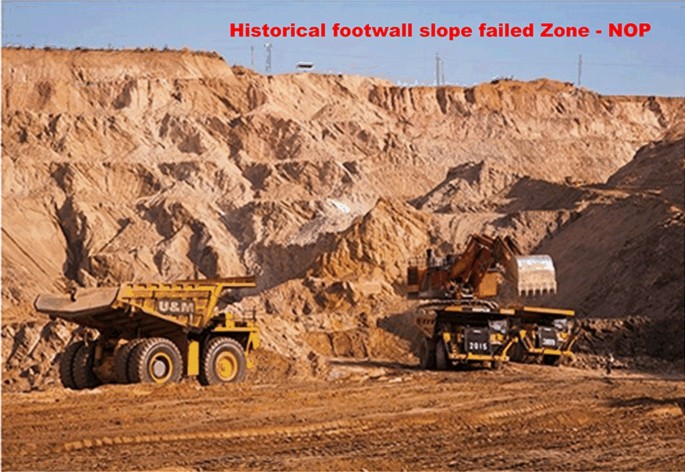
Country Rock in Mining is one of the most fundamental concepts in mining geology and economic geology that every mining student, geologist, and underground mine professional must clearly understand before working with any ore body, vein, lode, or igneous intrusion in a practical mining or exploration setting.
From understanding how ore veins interact with their surrounding rock to predicting the stability of underground excavations and estimating ore dilution, the concept of Country Rock in Mining appears at every level of mining education and practical mine planning worldwide.
In this complete guide by MiningGyan, we cover everything about Country Rock in Mining – from its precise definition and geological meaning to its types, the difference between Country Rock and Wall Rock, contact alteration effects, xenoliths, Country Rock stability, dilution impact, relationship with ore deposits, and competitive exam MCQs – all in one structured and detailed article.
By the end of this guide, you will have a thorough, structured, and exam-ready understanding of Country Rock in Mining and every related concept that accompanies it in textbooks and competitive examinations across India and globally.
What is Country Rock in Mining?
Country Rock in Mining is defined as the pre-existing, native rock of an area that surrounds, encloses, and hosts a mineral deposit, ore vein, lode, or igneous intrusion – it is essentially the background rock of the region into which the ore body or intrusion has been emplaced, and it forms the geological framework within which all mining and geological activity takes place.
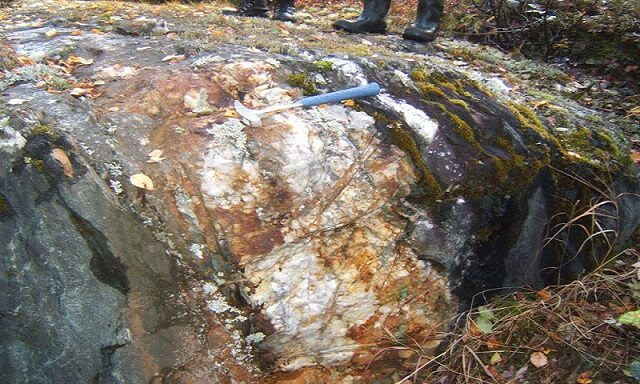
The Country Rock in Mining is always the rock that was there first – it pre-dates the ore body, the vein, or the intrusion that it surrounds, and it forms the immediate geological environment that directly controls the shape, stability, alteration, and economic character of the mineralised body within it.
| Key Term | Definition |
|---|---|
| Country Rock in Mining | Pre-existing native rock surrounding and hosting a mineral deposit, vein, or intrusion |
| Host Rock | The specific rock body that contains or hosts the ore mineralisation – broadly synonymous with Country Rock |
| Wall Rock | The rock immediately adjacent to a vein or ore body on both sides – Hanging Wall and Footwall rocks |
| Intrusion | A body of igneous rock that has been forced into existing Country Rock from below |
| Xenolith | A fragment of Country Rock that has been broken off and incorporated into an igneous intrusion |
| Contact Zone | The boundary between the Country Rock and the intruding igneous body or ore deposit |
| Gangue | The worthless minerals within the ore body, often derived from the surrounding Country Rock |
| Dilution | The contamination of ore grade by waste Country Rock material accidentally mined with the ore |
Country Rock in Mining – Origin and History of the Term
The term Country Rock in Mining has a long and well-established history in geological and mining literature, with its origins traced to the early days of organised metal mining in Europe where miners needed a practical term to describe the rock surrounding the valuable veins they were following underground.
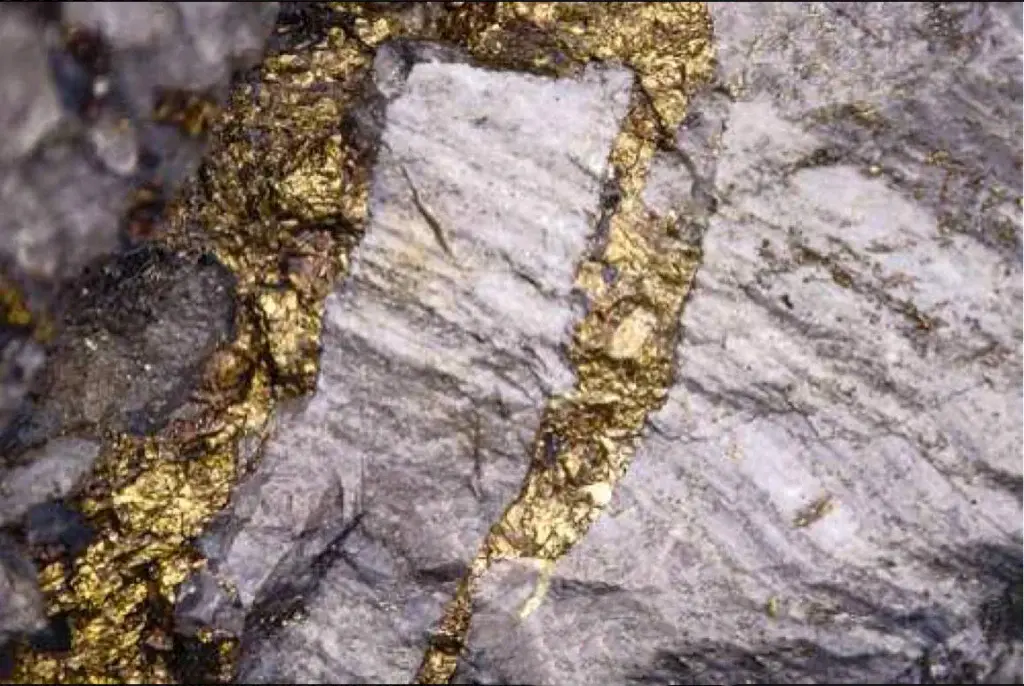
The word “country” in Country Rock refers to the native or local rock of the region – just as a “countryman” is a person native to a particular place, the “country rock” is the rock native to the geological area, as distinguished from the foreign material – such as an intruding magma body or a hydrothermal ore vein – that has been introduced into it from elsewhere.
| Era | Development in Country Rock Understanding | Key Contribution |
|---|---|---|
| 1500s–1600s | Early European miners use “country rock” to describe wall rock around ore veins | Practical mining vocabulary established |
| 1700s–1800s | Geological mapping identifies country rock as distinct from ore bodies and intrusions | Systematic geological classification begins |
| 1800s | Contact metamorphism of country rock around igneous intrusions formally described | Thermal alteration effects documented |
| 1900s | Country Rock properties recognised as key control on ore deposit formation and mining safety | Rock mechanics and mine stability science develops |
| Present | Country Rock characterisation is standard practice in all mineral exploration and mine planning | Geotechnical assessment integral to mine design |
Country Rock in Mining – Types Based on Composition
Country Rock in Mining can be any rock type that was present in the geological area before the ore-forming event or igneous intrusion occurred – and since all three major rock classes can occur as Country Rock, understanding the properties of each type is essential for predicting how the Country Rock will behave during mining operations.
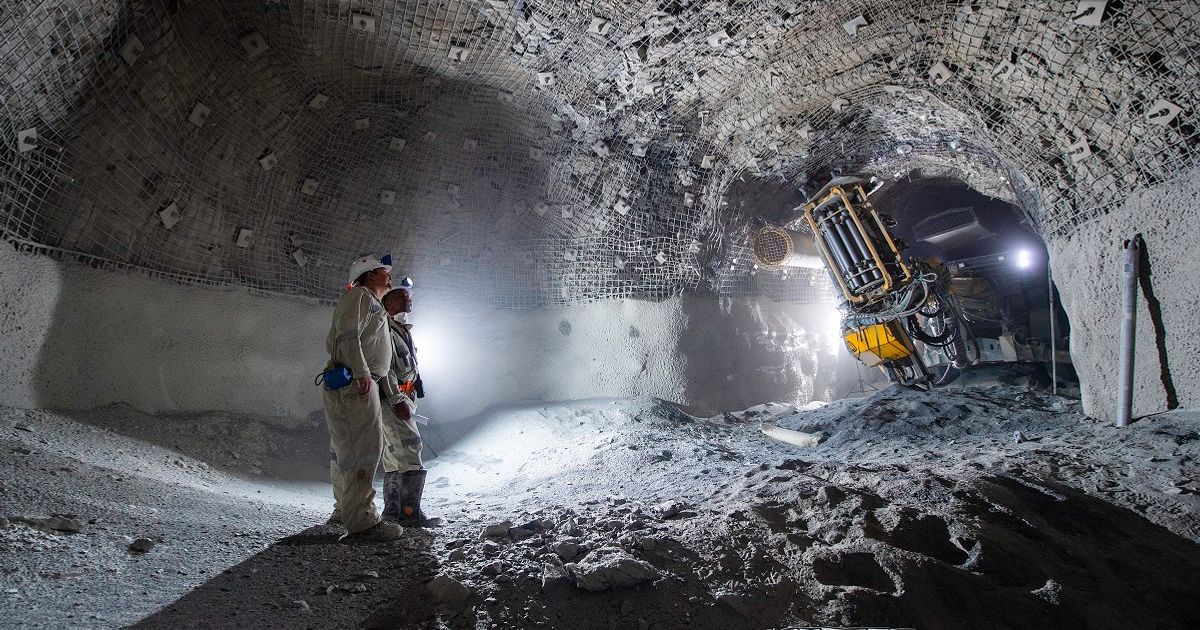
The composition and mechanical properties of the Country Rock in Mining directly control underground excavation stability, rock fall risk, support system design, ore dilution levels, and the type and extent of alteration that occurs at the contact zone with the ore body or intrusion.
Sedimentary Country Rock in Mining
Sedimentary rocks are among the most commonly encountered Country Rock types in Mining, particularly in coal fields, sediment-hosted mineral deposits, and stratiform ore bodies where the host sequence consists of layered sedimentary rocks such as sandstone, limestone, shale, and dolomite.
Sedimentary Country Rock in Mining is typically layered and anisotropic – meaning its mechanical strength and stability vary significantly depending on the direction of loading relative to the bedding planes, which has important implications for underground roof stability and support design in mines hosted in sedimentary sequences.
Igneous Country Rock in Mining
Igneous rocks – both intrusive varieties like granite and gabbro, and extrusive varieties like basalt and rhyolite – frequently occur as Country Rock in Mining in hard rock gold, copper, nickel, and platinum group element deposits hosted within or adjacent to igneous rock bodies.
Igneous Country Rock in Mining is generally stronger and more competent than sedimentary equivalents, with interlocking crystal textures that provide good mechanical stability for underground excavations – however, jointing patterns in igneous country rocks can create significant Hanging Wall and sidewall instability if joints are unfavourably oriented relative to the excavation geometry.
Metamorphic Country Rock in Mining
Metamorphic rocks – including schist, gneiss, quartzite, marble, and slate – are extremely common Country Rock types in the world’s great hard rock mining districts, where ancient mountain-building events have converted original sedimentary or igneous rocks into crystalline metamorphic sequences that now host important gold, base metal, and gemstone deposits.
Metamorphic Country Rock in Mining presents particular challenges because of its strong foliation – the parallel alignment of minerals produced during metamorphism – which creates planes of weakness along which underground excavations can fail if not properly supported and oriented to avoid adverse intersections with the foliation direction.
| Country Rock Type | Common Rock Examples | Typical Ore Deposits Hosted | Key Mining Challenge |
|---|---|---|---|
| Sedimentary Country Rock | Limestone, sandstone, shale, dolomite | Coal, lead-zinc, phosphate, iron ore | Bedding plane instability in roof |
| Igneous Country Rock | Granite, basalt, gabbro, rhyolite | Gold, copper, nickel, PGE | Jointing patterns in Hanging Wall |
| Metamorphic Country Rock | Schist, gneiss, quartzite, marble | Gold, gemstones, base metals | Foliation-controlled instability |
Country Rock vs Wall Rock vs Host Rock in Mining
The terms Country Rock, Wall Rock, and Host Rock in Mining are closely related and frequently used interchangeably in geological and mining literature, but there are important technical distinctions between them that every mining student must understand clearly for both examination purposes and practical application.
Understanding the precise meaning of each term and the relationship between them is fundamental to reading and writing geological reports, interpreting drill hole logs, and designing underground mine excavations correctly.
| Parameter | Country Rock in Mining | Wall Rock in Mining | Host Rock in Mining |
|---|---|---|---|
| Definition | All pre-existing native rock of the region surrounding any geological feature | Rock immediately adjacent to a vein on both sides – Hanging Wall and Footwall | Rock that directly contains or hosts the ore mineralisation |
| Scale | Broadest – refers to the regional native rock background | Specific – only the rock directly touching the vein contacts | Intermediate – the rock body containing the ore |
| Usage | Geology, petrology, intrusion studies | Vein and lode mining, stope design | Economic geology, resource estimation |
| Relationship to Ore | May or may not directly contact the ore | Always directly contacts the ore at vein margins | Directly contains the ore mineralisation |
| Includes Hanging Wall? | Yes – Hanging Wall is part of Country Rock | Yes – Hanging Wall is one of the two wall rocks | Yes – if ore is disseminated in the rock |
| Includes Footwall? | Yes – Footwall is part of Country Rock | Yes – Footwall is the other wall rock | Yes – if ore occurs in Footwall rock |
| Exam Relevance | Very High – GATE Mining and DGMS exams | Very High – underground mining design exams | High – economic geology and resource estimation |
Country Rock Alteration in Mining
Country Rock alteration in Mining is one of the most important and practically significant aspects of Country Rock in Mining – it refers to the chemical, mineralogical, and textural changes that occur in the Country Rock as a result of its interaction with hot magmatic fluids, hydrothermal solutions, or the heat from an adjacent igneous intrusion.
Understanding Country Rock alteration in Mining is critically important for exploration geologists because the alteration halo around an ore body is typically much larger than the ore body itself, making alteration patterns detectable through surface sampling and mapping even where the ore is deeply buried and not directly accessible.
Contact Metamorphism of Country Rock in Mining
Contact metamorphism of Country Rock in Mining occurs when an igneous intrusion heats the surrounding Country Rock to temperatures sufficient to recrystallise and transform its original minerals into new high-temperature mineral assemblages without the rock melting completely.
The zone of contact metamorphism around an intrusion is called the contact aureole or metamorphic aureole, and its width and intensity depends on the size and temperature of the intrusion, the thermal conductivity of the Country Rock, and the presence or absence of hydrothermal fluids circulating through the system during cooling.
Hornfels – Contact Metamorphic Country Rock
Hornfels is the most common contact metamorphic rock produced when fine-grained sedimentary or volcanic Country Rock in Mining is baked and recrystallised by an adjacent igneous intrusion, producing a very hard, fine-grained, and texturally homogeneous rock that is completely different from the original Country Rock in its mineralogy and physical properties.
In mining, hornfels contact zones around intrusions are important because they are often associated with mineralisation – many gold, copper, and tungsten skarn deposits form at the contact between granitic intrusions and carbonate country rocks that have been converted to hornfels and skarn mineral assemblages.
Skarn – Metasomatic Country Rock Alteration
Skarn is a distinctive type of Country Rock alteration in Mining that forms when magmatic hydrothermal fluids react with carbonate Country Rock – particularly limestone and dolomite – and replace the original carbonate minerals with a new assemblage of calc-silicate minerals such as garnet, pyroxene, epidote, and wollastonite.
Skarn alteration zones in Country Rock in Mining are economically extremely important because they are frequently associated with significant ore mineralisation – major iron, copper, gold, zinc, lead, and tungsten skarn deposits form where granitic intrusions contact carbonate country rocks at depth.
Hydrothermal Alteration of Country Rock in Mining
Hydrothermal alteration of Country Rock in Mining occurs when hot, chemically active fluids circulate through the Country Rock adjacent to ore veins and intrusions, changing the mineralogy of the Country Rock through chemical reactions that can extend metres to hundreds of metres from the actual ore body contact.
The major types of hydrothermal alteration seen in Country Rock in Mining include silicification, sericitisation, argillic alteration, potassic alteration, and propylitic alteration – each of which produces a distinctive mineral assemblage that is used by exploration geologists as a pathfinder guide toward the ore body at depth.
| Alteration Type | Process | Country Rock Changed | New Minerals Produced | Associated Ore Deposit |
|---|---|---|---|---|
| Contact Metamorphism | Heat from intrusion recrystallises Country Rock | Any rock type | Hornfels minerals – andalusite, cordierite | Skarn, porphyry, greisen deposits |
| Skarn Formation | Fluids replace carbonate Country Rock with silicates | Limestone, dolomite | Garnet, pyroxene, wollastonite | Iron, copper, gold, tungsten skarns |
| Silicification | Quartz flooding of Country Rock by hot fluids | Any rock type | Quartz – chert-like texture | Epithermal gold and silver veins |
| Sericitisation | Feldspars converted to fine white mica | Granite, andesite | Sericite (muscovite) | Mesothermal gold, porphyry copper |
| Argillic Alteration | Feldspars converted to clay minerals | Volcanic Country Rock | Kaolinite, illite, smectite | Epithermal gold-silver systems |
| Potassic Alteration | K-feldspar and biotite replace other minerals | Granite, diorite | K-feldspar, biotite | Porphyry copper-gold deposits |
| Propylitic Alteration | Low-temperature fluid alters Country Rock outer zone | Any rock type | Chlorite, epidote, calcite | Outer zone of all hydrothermal systems |
Xenolith in Country Rock Mining
A xenolith is a fragment of Country Rock in Mining that has been physically broken off from the surrounding country rock and incorporated into an igneous intrusion during its emplacement – the word “xenolith” comes from the Greek words “xenos” meaning foreign and “lithos” meaning rock, literally meaning “foreign rock.”
Xenoliths are important in mining geology because their presence within an igneous intrusion confirms the nature of the original Country Rock that existed before the intrusion, provides information about the depth of emplacement, and can sometimes carry ore mineralisation if the Country Rock fragment was already mineralised before being incorporated into the magma.
| Parameter | Detail |
|---|---|
| Definition | Fragment of Country Rock enclosed within an igneous intrusion |
| Origin | Broken from Country Rock walls during magma emplacement |
| Composition | Same as surrounding Country Rock – may be any rock type |
| Size Range | Millimetres to hundreds of metres across |
| Geological Significance | Confirms Country Rock type; indicates magma emplacement mechanism |
| Mining Significance | Can indicate proximity to Country Rock contact; affects ore grade calculations |
| Texture | Often rounded or partially melted by magma heat |
Country Rock Stability in Underground Mining
The stability of Country Rock in underground Mining is one of the most critical geotechnical factors in underground mine design – the mechanical properties of the Country Rock directly determine how large excavations can safely be made, what type and density of support is required, and what is the overall risk of rock fall and ground failure in any underground working.
Country Rock stability in Mining is assessed using a combination of rock quality measurements, including the Rock Mass Rating (RMR), the Q-system, and the Geological Strength Index (GSI), which together evaluate the intact strength of the rock, the spacing and orientation of joints, the condition of joint surfaces, and the groundwater conditions.
| Stability Factor | What It Measures | Effect on Underground Mining |
|---|---|---|
| Intact Rock Strength (UCS) | Compressive strength of unjointed Country Rock | Controls maximum unsupported excavation span |
| Joint Frequency (RQD) | How closely jointed the Country Rock is | Higher jointing = smaller safe excavation spans |
| Joint Orientation | Direction of joint planes relative to excavation | Adverse joints cause Hanging Wall and sidewall failure |
| Joint Condition | Roughness, infilling, and weathering of joint surfaces | Smooth clay-filled joints are most dangerous |
| Groundwater | Presence of water in Country Rock joints and fractures | Water weakens joints and increases rock fall risk |
| Rock Mass Rating (RMR) | Combined assessment of all above factors | Guides support design and excavation span limits |
| In-situ Stress | Natural stress field in Country Rock before mining | High stress causes spalling and rockburst in deep mines |
Country Rock Dilution in Mining
Country Rock dilution in Mining is the contamination of the mined ore stream with waste Country Rock material that is accidentally or unavoidably extracted along with the valuable ore during mining operations – and it is one of the most important operational and economic factors in any underground or open pit mining project.
When Country Rock is mixed with ore during extraction, it reduces the average grade of the mined material below the in-situ grade of the ore body, increasing the tonnage that must be processed through the mill to recover the same amount of metal and directly increasing the processing cost per unit of metal produced.
| Dilution Type | Cause | Effect on Operations | Control Method |
|---|---|---|---|
| Internal Dilution | Low-grade or barren zones within the ore body boundary | Reduces average ore grade mined | Detailed geological modelling and grade control |
| External Dilution | Country Rock mined outside the true ore boundary | Reduces head grade to mill; increases processing cost | Accurate blast design and tight ore boundary control |
| Hanging Wall Dilution | Country Rock falls from Hanging Wall into stope | Unplanned dilution – difficult to predict | Adequate Hanging Wall support and conservative stope spans |
| Footwall Dilution | Country Rock excavated below the ore contact | Planned or unplanned – increases tonnes mined | Accurate survey control and Footwall blasting design |
| Pillar Dilution | Low-grade pillars left in place within the ore zone | Reduces overall ore recovery | Optimised pillar recovery at end of stope life |
Country Rock in Porphyry Copper Deposits
Porphyry copper deposits are one of the world’s most economically important mineral deposit types, and the Country Rock in Mining surrounding these deposits plays a critically important role in controlling both the mineralisation pattern and the alteration zonation that is used to explore for and define these giant ore bodies.
In a typical porphyry copper system, the Country Rock surrounding the central porphyry intrusion is progressively and concentrically altered outward from the intrusion contact, creating a series of distinctive alteration zones in the Country Rock that reflect the decreasing temperature and changing fluid chemistry with increasing distance from the magmatic heat source.
| Alteration Zone | Distance from Intrusion | Country Rock Minerals | Ore Association |
|---|---|---|---|
| Potassic Core | Innermost zone – within or adjacent to intrusion | K-feldspar, biotite, magnetite | Chalcopyrite, bornite – highest copper grade |
| Phyllic / Sericitic Zone | Intermediate zone in Country Rock | Sericite, quartz, pyrite | Chalcopyrite with pyrite – economic copper grade |
| Argillic Zone | Outer Country Rock zone | Kaolinite, smectite, illite | Lower copper grade – transitional zone |
| Propylitic Zone | Outermost Country Rock zone | Chlorite, epidote, carbonate | Subeconomic copper – outer margin of system |
Country Rock Fracturing in Mining
Country Rock fracturing in Mining refers to the development of new fractures and the opening of existing joints and faults in the Country Rock surrounding underground excavations as a result of the redistribution of in-situ rock stresses caused by the mining activity itself.
When an underground excavation is created, the Country Rock that previously supported the stress field across the now-open void must redistribute those stresses around the excavation boundary – and if the Country Rock strength is insufficient to carry the redistributed stresses, fracturing and eventual failure of the Country Rock occurs.
| Fracturing Type | Cause | Location | Mining Impact |
|---|---|---|---|
| Stress-induced Fracturing | Stress concentration at excavation boundaries exceeds rock strength | Corners and shoulders of excavation | Spalling, rock falls, excavation damage |
| Blast-induced Fracturing | Shock wave from blasting extends beyond intended blast zone | Country Rock adjacent to blast | Weakens Hanging Wall and reduces support effectiveness |
| Relaxation Fracturing | Country Rock decompresses into excavated void | Hanging Wall and sidewalls | Progressive loosening and potential block falls |
| Hydraulic Fracturing | Water pressure in joints exceeds confining stress | Water-saturated Country Rock | Sudden water inrush and ground instability |
Country Rock Permeability and Groundwater in Mining
The permeability of Country Rock in Mining – meaning how easily water can flow through it – is one of the most important hydrogeological parameters that must be assessed during mine planning, because Country Rock permeability directly controls the rate of groundwater inflow into underground excavations and the risk of sudden water inrush events during mining.
Country Rock permeability in Mining is primarily controlled by the frequency, aperture, and connectivity of joints and fractures in the rock mass rather than by the permeability of the intact rock itself – even a very low-permeability granite Country Rock can transmit large volumes of water if it is heavily jointed and the joints are interconnected.
| Country Rock Type | Permeability | Groundwater Risk | Drainage Measure Required |
|---|---|---|---|
| Massive competent granite | Very low – minimal joints | Low | Basic sump pumping sufficient |
| Heavily jointed granite | Medium – joints transmit water | Medium to High | Grouting of joints + pumping |
| Limestone Country Rock | High – karst cavities and joints | Very High – sudden inrush risk | Pre-drainage drilling + grouting |
| Shale Country Rock | Low matrix, medium joint | Medium | Drainage holes + pumping |
| Sandstone Country Rock | Medium to High – porous matrix | High – large volume slow inflow | Pre-drainage and pumping capacity |
Country Rock in Mining – Diagram Explanation
A standard Country Rock in Mining diagram shows the spatial relationship between the Country Rock, the ore body or intrusion at its centre, the contact zone, and the various alteration halos that develop progressively outward from the contact through the Country Rock into the unaltered regional rock mass.
The table below explains each key label that appears in a standard Country Rock in Mining diagram as used in mining geology, economic geology, and underground mining engineering textbooks and training materials worldwide.
| Diagram Label | Position | Description |
|---|---|---|
| Ore Body / Intrusion | Central zone | The mineral deposit or igneous intrusion that the Country Rock surrounds |
| Contact Zone | Boundary between ore and Country Rock | Where ore body or intrusion meets the Country Rock – often strongly altered |
| Inner Alteration Halo | Immediately around contact | Most intensely altered Country Rock – silicification, potassic, skarn zones |
| Outer Alteration Halo | Further from contact | Less intensely altered Country Rock – propylitic, argillic zones |
| Unaltered Country Rock | Outermost zone | Original pre-existing native rock of the region – unaffected by ore-forming fluids |
| Xenolith | Within intrusion | Fragment of Country Rock enclosed and isolated within the igneous body |
| Hanging Wall | Above ore body | Upper Country Rock forming the ceiling of underground workings |
| Footwall | Below ore body | Lower Country Rock forming the floor of underground workings |
| Joint Systems | Throughout Country Rock | Natural fractures in Country Rock that control stability and groundwater flow |
Country Rock in Mining – Important for Competitive Exams
The topic of Country Rock in Mining is regularly tested in GATE Mining, DGMS examinations, Mining Foreman, Overman, Mine Surveyor, and Junior Mining Engineer competitive examinations across India, as well as in mining engineering and economic geology university courses at both undergraduate and diploma levels throughout the country.
The MCQ table below contains the most important and most frequently asked exam-ready facts about Country Rock in Mining that will directly help you score better in your next competitive mining or geology examination.
| Exam Question Pattern | Correct Answer |
|---|---|
| What is Country Rock in Mining? | The pre-existing native rock of an area that surrounds and hosts a mineral deposit, ore vein, or igneous intrusion |
| What is Country Rock called in Hindi? | Aaspas ki Chattan or Aadhar Shila |
| What is the difference between Country Rock and Wall Rock? | Country Rock is the broad regional native rock; Wall Rock is specifically the rock immediately adjacent to a vein or ore body contact |
| What is a Xenolith in Country Rock Mining? | A fragment of Country Rock enclosed within an igneous intrusion that broke off during magma emplacement |
| What is Contact Metamorphism of Country Rock? | Recrystallisation and mineralogical transformation of Country Rock caused by heat from an adjacent igneous intrusion |
| What rock forms when limestone Country Rock is contact metamorphosed? | Skarn – rich in calc-silicate minerals like garnet and pyroxene |
| What rock forms when fine-grained Country Rock is baked by an intrusion? | Hornfels – a very hard, fine-grained contact metamorphic rock |
| What is Country Rock dilution in Mining? | Contamination of mined ore with waste Country Rock material, reducing the average grade of material sent to the mill |
| Which Country Rock type is most stable for underground mining? | Massive competent igneous rock like granite with wide joint spacing and high UCS strength |
| What controls groundwater flow in Country Rock? | The frequency, aperture, and connectivity of joints and fractures in the Country Rock mass |
| What is the innermost alteration zone in a porphyry copper Country Rock? | Potassic alteration zone – characterised by K-feldspar and biotite |
| Why is Country Rock alteration important for mineral exploration? | The alteration halo around an ore body in Country Rock is much larger than the ore body itself, making it detectable at surface before the ore is found |
MiningGyan – Your Trusted Mining Education Platform
MiningGyan is a dedicated mining education platform built specifically for mining engineering students, diploma candidates, working mine professionals, and competitive exam aspirants across India who need accurate, complete, and well-structured technical knowledge delivered in clear and readable English.
At MiningGyan, important geological and engineering concepts like Country Rock in Mining are explained with simple clear definitions, geological formation process descriptions, complete type classifications, detailed comparison tables, real-world examples from famous mining districts, diagram label explanations, and ready-to-use competitive exam MCQ notes – all in one comprehensive and freely accessible article.
MiningGyan covers the complete spectrum of mining engineering and geology – from underground mining methods, ore body geology, and geological deposit classification to Country Rock stability, mine safety regulations, ventilation engineering, and mining equipment – making it the most comprehensive freely accessible mining education resource for Indian students and professionals today.
Every article on MiningGyan is carefully researched, accurately written, and clearly structured to bridge the gap between textbook theory and real-world underground mining practice, ensuring maximum practical value for both students preparing for competitive examinations and working professionals in operating mines.
| What MiningGyan Covers | Who It Is Most Helpful For |
|---|---|
| Country Rock, Wall Rock, Host Rock, and Ore Body Geology | Mining Engineering and Geology Students |
| Underground Mining Methods – Complete Step-by-Step Guides | B.Tech and Diploma Mining Engineering Students |
| Country Rock Stability, Geotechnics, and Support Design | Junior Mining Engineers and Graduate Trainees |
| Mine Safety, Legislation, and Ventilation Engineering Topics | Supervisors, Overmen, Safety Officers, and Managers |
| Competitive Exam Notes, MCQ Tables, and Revision Guides | GATE, DGMS, Foreman, Overman, and Surveyor Aspirants |
| Country Rock Alteration, Contact Metamorphism, and Skarn Geology | Economic Geologists and Mine Planning Engineers |
MiningGyan’s mission is simple and unwavering – “To deliver accurate, complete, and accessible mining knowledge to every mining student and professional in India, completely free of charge.”
If you are building a career in mining engineering, exploration geology, geotechnical engineering, or mine management, MiningGyan is the most reliable, well-structured, and student-friendly educational platform available to you today.
Frequently Asked Questions – Country Rock in Mining
Country Rock in Mining is the pre-existing, native rock of a region that surrounds and hosts a mineral deposit, ore vein, lode, or igneous intrusion. It is the rock that was present in the area before the ore body or intrusion was formed, and it forms the immediate geological environment of every underground mine and mineral deposit worldwide.
Country Rock is the broad regional native rock background of the entire area. Wall Rock is the specific Country Rock immediately adjacent to a vein or ore body contact on the Hanging Wall and Footwall sides. Host Rock is the rock body that directly contains the ore mineralisation. All three terms are related but differ in their scale and specificity of application.
A Xenolith is a fragment of Country Rock that was physically broken off from the surrounding country rock and incorporated into an igneous intrusion during its emplacement. The word comes from the Greek “xenos” (foreign) and “lithos” (rock), meaning “foreign rock” embedded within the intrusion.
Contact metamorphism of Country Rock in Mining is the transformation and recrystallisation of Country Rock minerals caused by the heat from an adjacent igneous intrusion. It produces distinctive rocks such as hornfels from fine-grained Country Rock and skarn from carbonate Country Rock, and the contact aureole around the intrusion is often associated with important ore mineralisation.
Country Rock is critically important in underground Mining because its mechanical properties control the stability of all excavations, its permeability controls groundwater inflow, its alteration patterns guide exploration for new ore, its fracturing controls rock fall risk and support requirements, and its accidental extraction with the ore causes dilution that directly reduces the economic grade of the mined material.
Conclusion – Country Rock in Mining
Country Rock in Mining is a foundational geological and engineering concept that influences every aspect of a mining project from the initial exploration program through to ore extraction, underground support design, groundwater management, and mine closure – making it one of the most important topics in the entire field of mining engineering and economic geology.
Whether you are studying for a competitive mining examination, designing an underground excavation support system, exploring for a new ore deposit, or managing dilution in an operating mine, a thorough understanding of Country Rock in Mining and all its related concepts is absolutely essential knowledge for every mining student and professional.
This complete guide by MiningGyan has covered all major aspects of Country Rock in Mining – from its precise definition and Hindi meaning to its geological types, key differences from Wall Rock and Host Rock, contact metamorphism, skarn and hornfels formation, hydrothermal alteration zonation, xenoliths, underground stability assessment, dilution management, porphyry copper alteration patterns, groundwater permeability, fracturing processes, diagram label explanations, and a comprehensive competitive exam MCQ table.
Explore more such free, detailed, and exam-ready mining guides on MiningGyan and continue building the strong technical foundation that every successful mining career truly requires.