
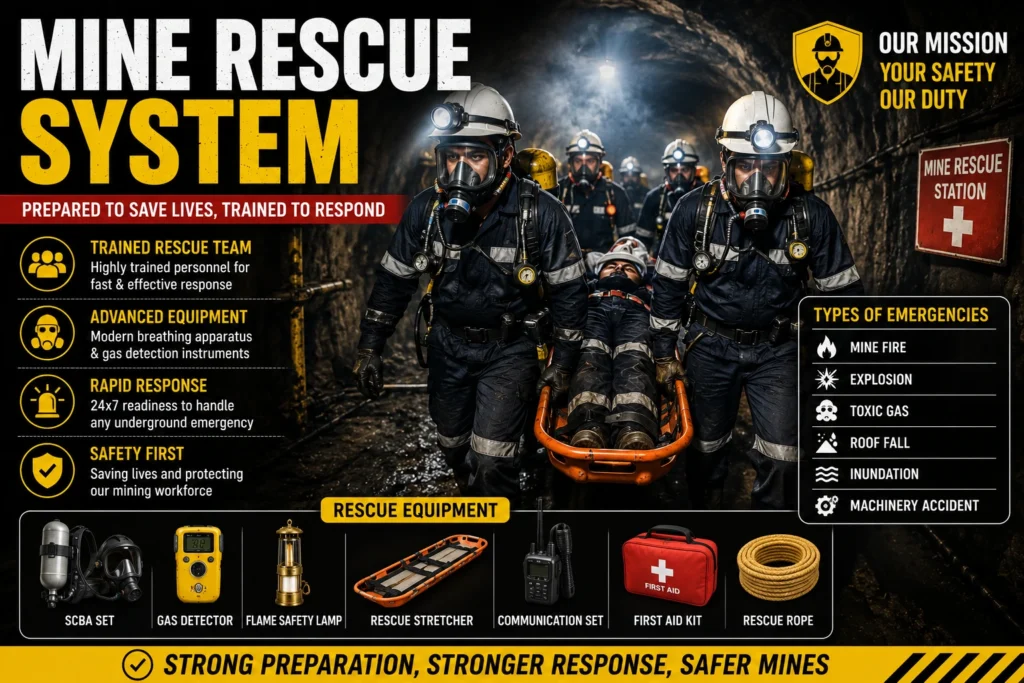
A Mine Rescue System is one of the most critical emergency support systems in the mining industry. Mining operations involve hazards such as explosions, fires, roof falls, inundation, poisonous gases, machinery accidents, and confined spaces. During such emergencies, specially trained rescue teams equipped with advanced rescue equipment save lives, recover trapped miners, and control hazardous situations.
A well-established Mine Rescue System ensures that emergency response begins immediately after an accident, minimizing casualties and protecting valuable mine infrastructure. Every underground coal mine must have access to trained rescue personnel and modern rescue equipment to respond effectively to emergencies.
For GATE Mining, Mining Sirdar, Overman, DGMS, PSU recruitment, and Mining Engineering examinations, the Mine Rescue System is one of the most important safety topics because it combines emergency management, mine ventilation, first aid, fire control, gas monitoring, and statutory requirements.
What Is a Mine Rescue System?
A Mine Rescue System is an organized emergency response arrangement consisting of trained rescue personnel, rescue stations, breathing apparatus, gas detection instruments, communication systems, transport facilities, and medical support. The system is designed to conduct safe rescue operations during mining emergencies.
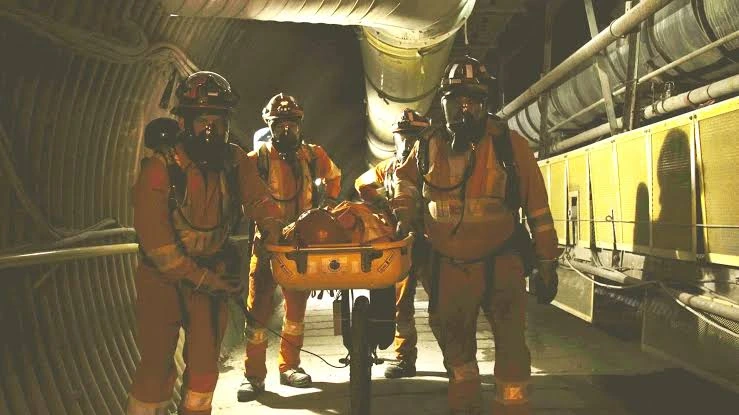
The primary objective of the Mine Rescue System is to rescue trapped miners, control mine disasters, restore safe working conditions, and prevent further loss of life and property.
Its main functions include:
- Rescue trapped miners
- Fight underground mine fires
- Control poisonous gases
- Assist during roof fall accidents
- Support inundation rescue operations
- Conduct recovery work after disasters
Why Is a Mine Rescue System Important?
Mining emergencies often develop rapidly. Delayed rescue operations can significantly increase fatalities. A properly organized Mine Rescue System helps reduce response time and improves the chances of survival.
Major benefits include:
- Faster emergency response
- Improved worker safety
- Better disaster management
- Protection of mine assets
- Reduced accident severity
- Improved statutory compliance
- Greater confidence among workers
- Better coordination with medical teams
An effective rescue system is therefore an essential component of every underground mining operation.
Organization of a Mine Rescue System
The Mine Rescue System operates through specialized rescue stations located strategically to cover mining regions. These stations maintain trained rescue brigades, rescue vehicles, breathing apparatus, testing laboratories, and communication facilities.
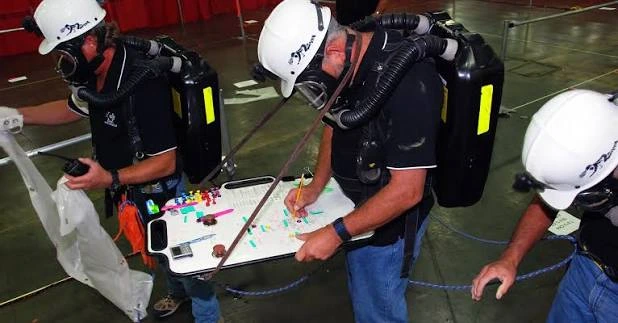
The organization generally includes:
- Central Mine Rescue Station
- Rescue Sub-Station
- Rescue Superintendent
- Rescue Instructors
- Rescue Brigade Members
- Medical Support Team
- Communication Control Room
Each rescue station remains ready throughout the year for emergency deployment.
Equipment Used in a Mine Rescue System
Modern Mine Rescue System operations depend on highly specialized equipment capable of working in smoke-filled, oxygen-deficient, and toxic underground environments.
Major rescue equipment includes:
- Self Contained Breathing Apparatus (SCBA)
- Oxygen Breathing Apparatus
- Gas Detection Instruments
- Multi-Gas Detectors
- Flame Safety Lamps
- Thermal Imaging Camera
- Stretchers
- Rescue Rope
- First Aid Kit
- Communication Devices
- Explosion-Proof Lighting
- Portable Ventilation Equipment
All equipment is regularly inspected and tested to ensure operational reliability.
Mine Rescue Team and Their Responsibilities
The success of a Mine Rescue System depends largely on the efficiency of the rescue team. Rescue personnel undergo intensive physical training, firefighting drills, breathing apparatus practice, first aid, gas testing, navigation, and disaster management exercises.
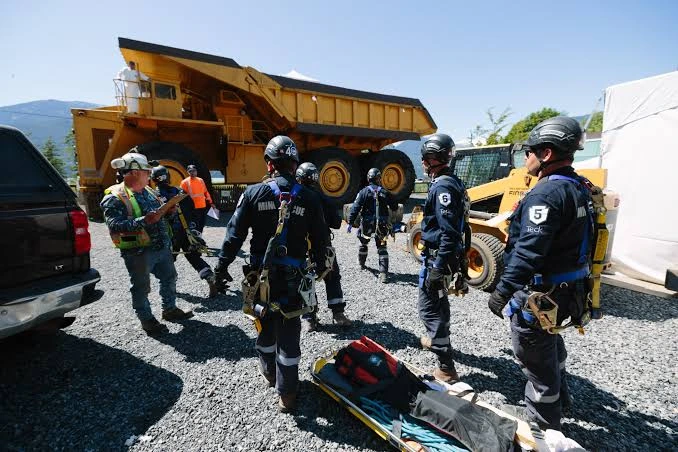
The responsibilities of a rescue team include:
- Entering hazardous mine areas safely
- Searching for trapped miners
- Providing first aid
- Monitoring mine gases
- Fighting underground fires
- Assisting ventilation restoration
- Recovering injured workers
- Reporting ground conditions
Only certified rescue personnel are allowed to perform underground rescue work during emergencies.
Working Procedure of a Mine Rescue System
A Mine Rescue System follows a systematic emergency response procedure to ensure safe and effective rescue operations.
The general sequence includes:
- Accident information received.
- Rescue station alerted.
- Rescue team mobilized.
- Rescue equipment checked.
- Gas conditions assessed.
- Rescue plan prepared.
- Rescue operation started.
- Casualties evacuated.
- Area stabilized.
- Investigation initiated.
Throughout the operation, continuous communication is maintained between underground teams and the surface control room.
Types of Emergencies Managed by a Mine Rescue System
A Mine Rescue System is designed to handle different types of mining emergencies.
These include:
- Underground mine fire
- Methane explosion
- Coal dust explosion
- Roof fall accident
- Mine inundation
- Toxic gas leakage
- Machinery accidents
- Shaft accidents
- Electrical accidents
- Confined space rescue
Each emergency requires specialized rescue procedures and equipment.
Advantages of a Mine Rescue System
An efficient Mine Rescue System provides several operational and safety benefits.
Major advantages include:
- Saves human lives
- Reduces accident fatalities
- Faster disaster response
- Better emergency coordination
- Improves mine safety culture
- Protects expensive equipment
- Supports statutory compliance
- Enhances public confidence
Regular mock drills further improve the efficiency of rescue teams.
Challenges in a Mine Rescue System
Despite modern technology, rescue operations remain extremely difficult due to the hostile underground environment.
Common challenges include:
- High temperature
- Dense smoke
- Oxygen deficiency
- Toxic gases
- Poor visibility
- Roof instability
- Flooded workings
- Communication failure
Continuous training and modern rescue technology help overcome these challenges.
Future of Mine Rescue System
Modern Mine Rescue System technology is rapidly evolving with automation and digital monitoring.
Future developments include:
- AI-based emergency management
- Rescue drones
- Robotic underground inspection
- Smart wearable sensors
- Wireless underground communication
- Real-time gas monitoring
- Digital rescue mapping
- Remote-controlled rescue vehicles
These innovations are expected to improve rescue speed while reducing risks to rescue personnel.
Conclusion
A Mine Rescue System is one of the most important life-saving systems in the mining industry. By combining trained rescue personnel, advanced breathing apparatus, gas monitoring instruments, communication systems, and emergency planning, it protects miners during accidents and disasters.
Mine Illumination System: Complete Guide to Underground Mine Lighting, Standards and Safety
Every underground mining operation must maintain a well-equipped Mine Rescue System to ensure rapid emergency response, minimize casualties, and restore safe working conditions. For Mining Engineering students, GATE aspirants, Mining Sirdar, Overman, DGMS, and PSU examinations, understanding the Mine Rescue System is essential because it directly relates to mine safety, disaster management, and statutory requirements.
Frequently Asked Questions
What is a Mine Rescue System?
A Mine Rescue System is an organized emergency response arrangement used to rescue miners and control underground mining disasters.
Who performs mine rescue operations?
Specially trained and certified mine rescue teams perform rescue operations using breathing apparatus and specialized rescue equipment.
What is the most important equipment in a Mine Rescue System?
The Self Contained Breathing Apparatus (SCBA) is one of the most important rescue devices because it allows rescuers to work safely in oxygen-deficient and toxic environments.
Which emergencies require a Mine Rescue System?
Mine fires, explosions, roof falls, inundation, gas leakage, machinery accidents, and shaft accidents commonly require mine rescue operations.
Why is a Mine Rescue System important?
It saves lives, reduces accident severity, supports emergency response, and ensures safe recovery during mining disasters.



2 Responses