
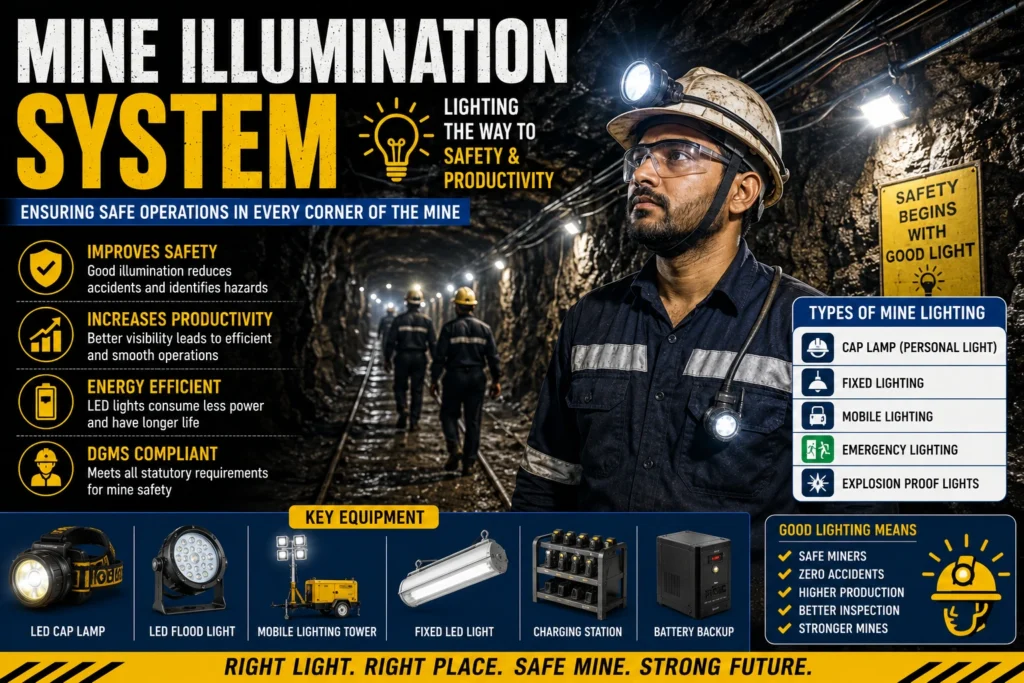
A Mine Illumination System is one of the most important safety systems used in underground and opencast mining. Proper illumination allows miners to identify hazards, inspect machinery, detect roof defects, read warning signs, and perform mining operations safely. Poor lighting can lead to accidents, equipment damage, production delays, and reduced efficiency.
Modern mines use a combination of cap lamps, fixed lighting, mobile lighting towers, LED floodlights, and emergency lighting systems to ensure every workplace receives adequate illumination. The Mine Illumination System plays a critical role in improving productivity while reducing human error.
For GATE Mining students, Mining Sirdar, Overman, DGMS, and PSU examinations, the Mine Illumination System is an important topic because it directly relates to mine safety, statutory compliance, and underground operations.
What Is a Mine Illumination System?
A Mine Illumination System is a planned arrangement of lighting equipment designed to provide sufficient visibility in mines. The system ensures that workers can safely travel, inspect, operate machinery, and perform mining activities in low-light or completely dark environments.
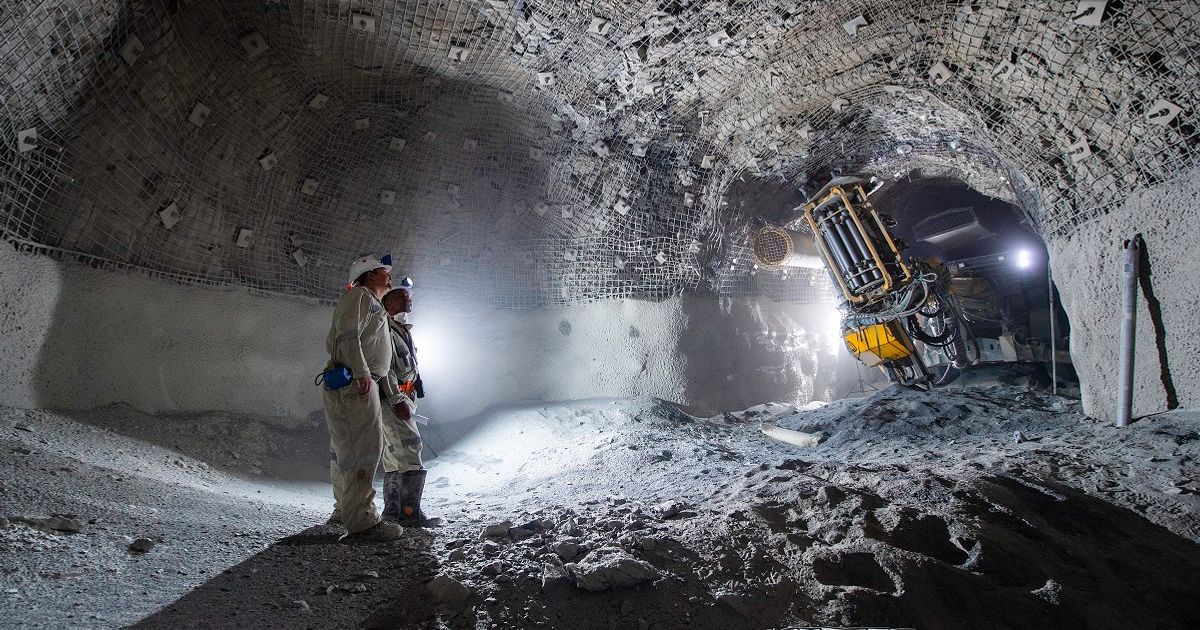
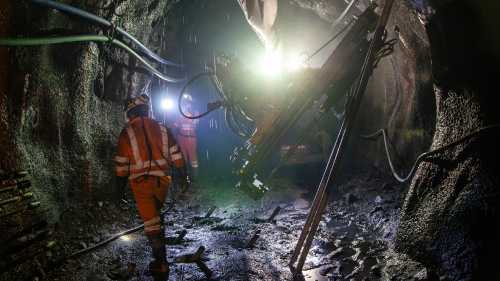
Lighting requirements vary depending on the workplace, such as underground roadways, coal faces, workshops, haul roads, crusher stations, conveyor galleries, and opencast benches.
The main objectives are:
- Improve visibility
- Prevent accidents
- Increase operational efficiency
- Support inspection activities
- Ensure statutory compliance
Why Is a Mine Illumination System Important?
An effective Mine Illumination System improves both safety and productivity. Underground mines have little or no natural light, making artificial illumination essential.
Major benefits include:
- Better visibility for workers
- Early identification of hazards
- Safer machinery operation
- Improved inspection quality
- Reduced accident risk
- Higher production efficiency
- Better maintenance work
- Improved emergency response
Proper lighting also reduces eye strain and worker fatigue during long shifts.
Components of a Mine Illumination System
A modern Mine Illumination System consists of several lighting devices designed for different mining conditions.
Important components include:
- LED Cap Lamps
- Fixed LED Lights
- Flood Lights
- Mobile Lighting Towers
- Portable Inspection Lamps
- Battery Backup Units
- Explosion-Proof Lighting
- Emergency Lighting System
- Charging Stations
- Lighting Distribution Panels
Each component is selected according to the mine environment and safety requirements.
Types of Mine Illumination System
Different mining operations require different lighting arrangements.
Personal Illumination
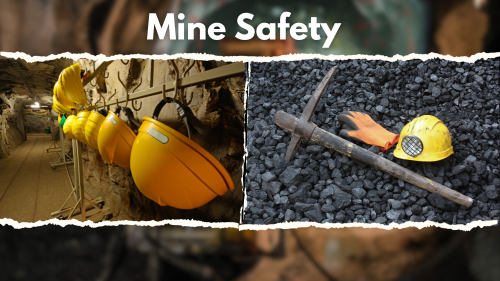
Every underground worker carries a rechargeable LED cap lamp attached to the helmet.
Fixed Lighting
Permanent LED fixtures are installed at workshops, conveyor belts, pumping stations, substations, and junctions.
Mobile Lighting
Portable lighting towers and machine-mounted lights are used in opencast mines and during maintenance work.
Emergency Lighting
Backup battery-operated lights automatically operate during power failure or emergencies.
Equipment Used in a Mine Illumination System
The Mine Illumination System depends on reliable lighting equipment capable of operating in harsh mining conditions.
Common equipment includes:
- LED Cap Lamps
- Rechargeable Batteries
- Flood Lights
- Explosion-Proof LED Fixtures
- Search Lights
- Portable Inspection Lamps
- Lighting Towers
- Battery Chargers
- Control Panels
- Electrical Cables
Modern LED systems consume less power while providing brighter illumination and longer service life.
Advantages of a Mine Illumination System
A properly designed Mine Illumination System offers several operational benefits.
Key advantages include:
- Improves worker safety
- Reduces workplace accidents
- Increases production efficiency
- Enhances equipment inspection
- Lowers maintenance errors
- Saves electrical energy with LEDs
- Improves emergency evacuation
- Supports DGMS safety compliance
Good lighting contributes directly to a safer and more productive mine.
Challenges in a Mine Illumination System
Despite modern technology, maintaining an effective Mine Illumination System can be challenging.
Common issues include:
- Dust reducing light intensity
- Moisture damaging fixtures
- Battery failure
- Electrical faults
- High maintenance in underground areas
- Power interruptions
- Damage from heavy machinery
- Harsh environmental conditions
Regular maintenance and periodic illumination surveys help overcome these challenges.
Future of Mine Illumination System
Mining companies are increasingly adopting smart lighting solutions.
Future developments include:
- Smart LED lighting
- IoT-based monitoring
- Motion-sensor lighting
- Wireless lighting control
- Solar-powered lighting towers
- AI-based energy management
- Longer-life lithium battery cap lamps
These technologies improve energy efficiency while enhancing mine safety.
Conclusion
A Mine Illumination System is an essential part of every mining operation. It provides safe visibility, reduces accidents, improves productivity, and supports statutory compliance. Whether in underground coal mines or opencast projects, proper mine lighting is necessary for protecting workers and ensuring efficient operations.
As mining technology continues to evolve, advanced LED lighting, smart monitoring systems, and energy-efficient solutions will further improve the effectiveness of the Mine Illumination System.
Frequently Asked Questions
What is a Mine Illumination System?
A Mine Illumination System is a lighting arrangement that provides adequate visibility for safe mining operations.
Why is a Mine Illumination System important?
It improves safety, reduces accidents, increases productivity, and supports inspection and maintenance work.
Which light is commonly used in underground mines?
Rechargeable LED cap lamps are the most commonly used personal lighting devices.
Where is a Mine Illumination System used?
It is used in underground mines, opencast mines, workshops, haul roads, conveyor galleries, and mine infrastructure.
What are the advantages of LED lighting in mines?
LED lights consume less power, produce brighter illumination, require less maintenance, and have a longer service life.



One Response
Your posts are so thought-provoking and often leave me pondering long after I have finished reading Keep challenging your readers to think outside the box