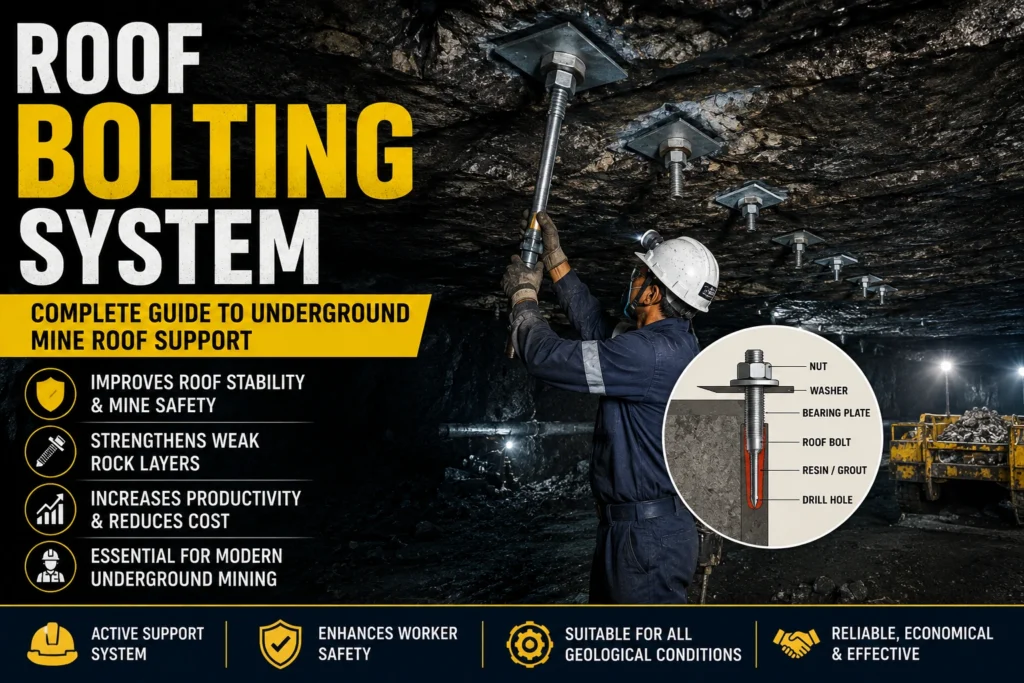
Underground mining presents several geotechnical challenges, and one of the most critical is maintaining roof stability. A Roof Bolting System is one of the most widely used roof support methods in underground coal and metal mines because it reinforces the surrounding rock mass instead of simply supporting loose rock.
Today, almost every modern underground mine relies on a Roof Bolting System to improve safety, reduce roof falls, increase productivity, and extend the life of mine roadways. It has become an essential part of scientific mining and is frequently covered in Mining Engineering, GATE Mining, Mining Sirdar, Overman, and DGMS examinations.
What Is a Roof Bolting System?
A Roof Bolting System is an active support method used to strengthen the roof of underground excavations by installing steel bolts into competent rock layers. Instead of holding fallen rock after failure, the system binds weak rock layers together to form a stronger and more stable rock beam.
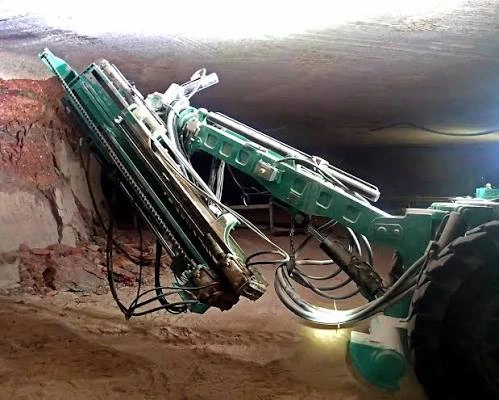
The basic principle is simple. A drilled hole is made in the roof, a bolt is inserted, and the bolt is anchored using mechanical anchors, resin cartridges, or cement grout. Once tightened, the bolt compresses the surrounding rock, significantly improving roof stability.
A typical Roof Bolting System consists of:
- Roof bolts
- Bearing plate
- Nut
- Washer
- Resin or grout (depending on the system)
- Drill hole
This combination creates a reinforced roof capable of supporting mining operations safely.
Why Roof Bolting System Is Important
A properly installed Roof Bolting System plays a major role in underground mine safety. Roof falls remain one of the leading causes of accidents in underground mines, and effective roof support minimizes this risk.
Besides improving safety, roof bolting offers several operational benefits.
Some important advantages include:
- Reduces roof fall accidents.
- Improves roadway stability.
- Supports large underground openings.
- Increases worker safety.
- Reduces maintenance costs.
- Improves mine productivity.
- Extends roadway life.
Because of these benefits, the Roof Bolting System has replaced traditional timber supports in many modern mines.
Types of Roof Bolting System
Different geological conditions require different Roof Bolting System designs. The selection depends on rock quality, mining depth, stress conditions, and expected roof behavior.
The most common types include:
- Mechanical anchor bolts
- Resin-grouted bolts
- Cement-grouted bolts
- Friction bolts
- Cable bolts
Among these, resin-grouted bolts are widely used in underground coal mines because they provide rapid anchorage, excellent load transfer, and long-term stability.
How Roof Bolting System Works
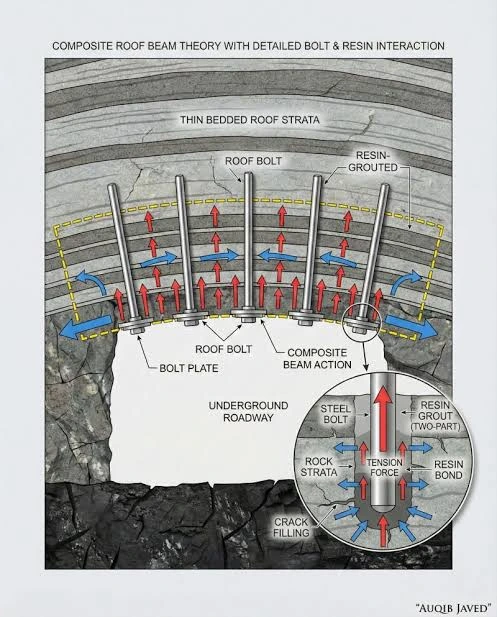
The working principle of a Roof Bolting System is based on reinforcing the rock rather than supporting loose blocks after failure.
First, a hole is drilled into the mine roof. The bolt is then inserted and anchored using resin, grout, or a mechanical device. Tightening the nut compresses weak rock layers together, increasing their strength and preventing separation.
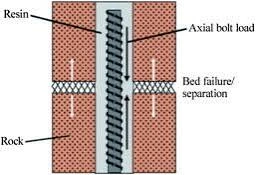
Instead of allowing individual rock layers to move independently, the Roof Bolting System makes them behave like a single strong beam. This significantly reduces the possibility of roof collapse.
Components of Roof Bolting System
Every Roof Bolting System contains several components that work together to provide effective support.
The main components are:
- Roof bolt
- Anchor
- Bearing plate
- Washer
- Nut
- Resin cartridge or grout
- Drill hole
Although each component performs a different function, all are essential for ensuring the bolt transfers load efficiently into competent rock.
Advantages of Roof Bolting System
The popularity of the Roof Bolting System is due to its technical and economic advantages.
Some key benefits are:
- Higher level of mine safety.
- Lower support cost.
- Faster installation.
- Less obstruction in roadways.
- Better ventilation due to open entries.
- Suitable for mechanized mining.
- Long service life.
These advantages make roof bolting the preferred roof support method in most underground coal mines.
Challenges of Roof Bolting System
Although the Roof Bolting System is highly effective, improper installation can reduce its performance.
Common challenges include:
- Poor drilling quality.
- Incorrect bolt length.
- Inadequate resin mixing.
- Corrosion of bolts.
- Improper torque application.
- Weak geological conditions.
Regular inspection, pull testing, and quality control are necessary to ensure the roof support performs as designed.
Future of Roof Bolting System
Modern mining is improving the Roof Bolting System through automation and digital technologies. Smart roof bolters equipped with sensors can monitor drilling parameters, bolt installation quality, and anchorage performance in real time.
Researchers are also developing corrosion-resistant bolts, intelligent monitoring systems, and AI-assisted strata control techniques that can further improve underground mine safety.
These innovations are expected to make roof support more reliable while reducing maintenance costs.
Conclusion: Why Roof Bolting System Is Essential
A Roof Bolting System is one of the most effective roof support techniques used in underground mining. By reinforcing the surrounding rock mass, it improves stability, prevents roof falls, enhances worker safety, and supports efficient mining operations.
Whether you are a Mining Engineering student, GATE aspirant, Mining Sirdar candidate, Overman trainee, or mining professional, understanding the Roof Bolting System is essential because it is both an important examination topic and a practical aspect of modern underground mining.
FAQs About Roof Bolting System
What is a Roof Bolting System?
A Roof Bolting System is an active roof support method that strengthens underground mine roofs using anchored steel bolts.
Why is a Roof Bolting System used?
It prevents roof falls, improves roadway stability, and increases underground mine safety.
Which type of Roof Bolting System is most common?
Resin-grouted roof bolts are the most commonly used system in underground coal mines.
What are the main components of a Roof Bolting System?
The system includes roof bolts, bearing plates, nuts, washers, anchors, and resin or grout.
Image ALT Text
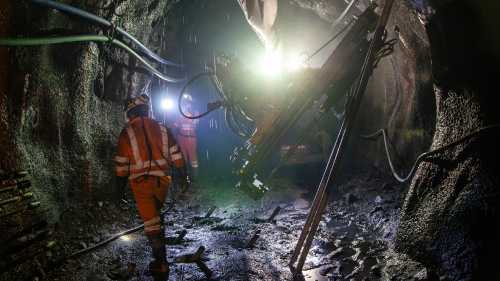
Roof Bolting System installed in an underground coal mine for roof support and strata control.
Suggested Internal Links
- Mine Ventilation System
- Strata Control in Underground Mines
- Coal Mine Methane
- Underground Mine Safety
- Underground Mining Methods