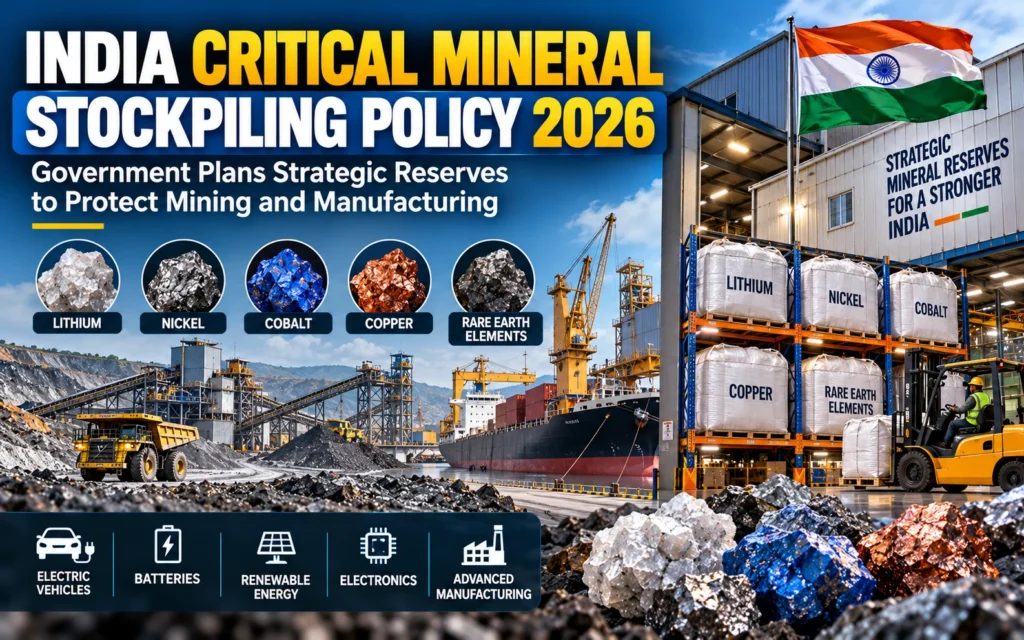
India is preparing a strategic stockpiling policy for critical minerals to protect domestic industries from global supply disruptions, import dependence and price volatility.
On October 9, 2026, Mines Secretary Keshav Chandra said the government expected to finalise the policy within approximately one month. The announcement came during the India Mines and Minerals Conclave 2026 organised by ASSOCHAM.
The proposed policy is intended to help India maintain access to essential minerals used in manufacturing, energy infrastructure, electric vehicles, electronics and other strategic industries.
For India’s mining sector, this development could create new opportunities in mineral exploration, processing, storage infrastructure, supply-chain management and domestic value addition.
It is important to note that the policy is still under preparation. Its final operating rules, stock quantities and release procedures have not yet been fully announced.
What Is Critical Mineral Stockpiling?
Critical mineral stockpiling means maintaining strategic reserves of selected minerals so that industries can continue operating when normal supplies are disrupted.
These reserves can act as a buffer against events such as export restrictions, geopolitical tensions, transport interruptions, shortages and sudden price increases.
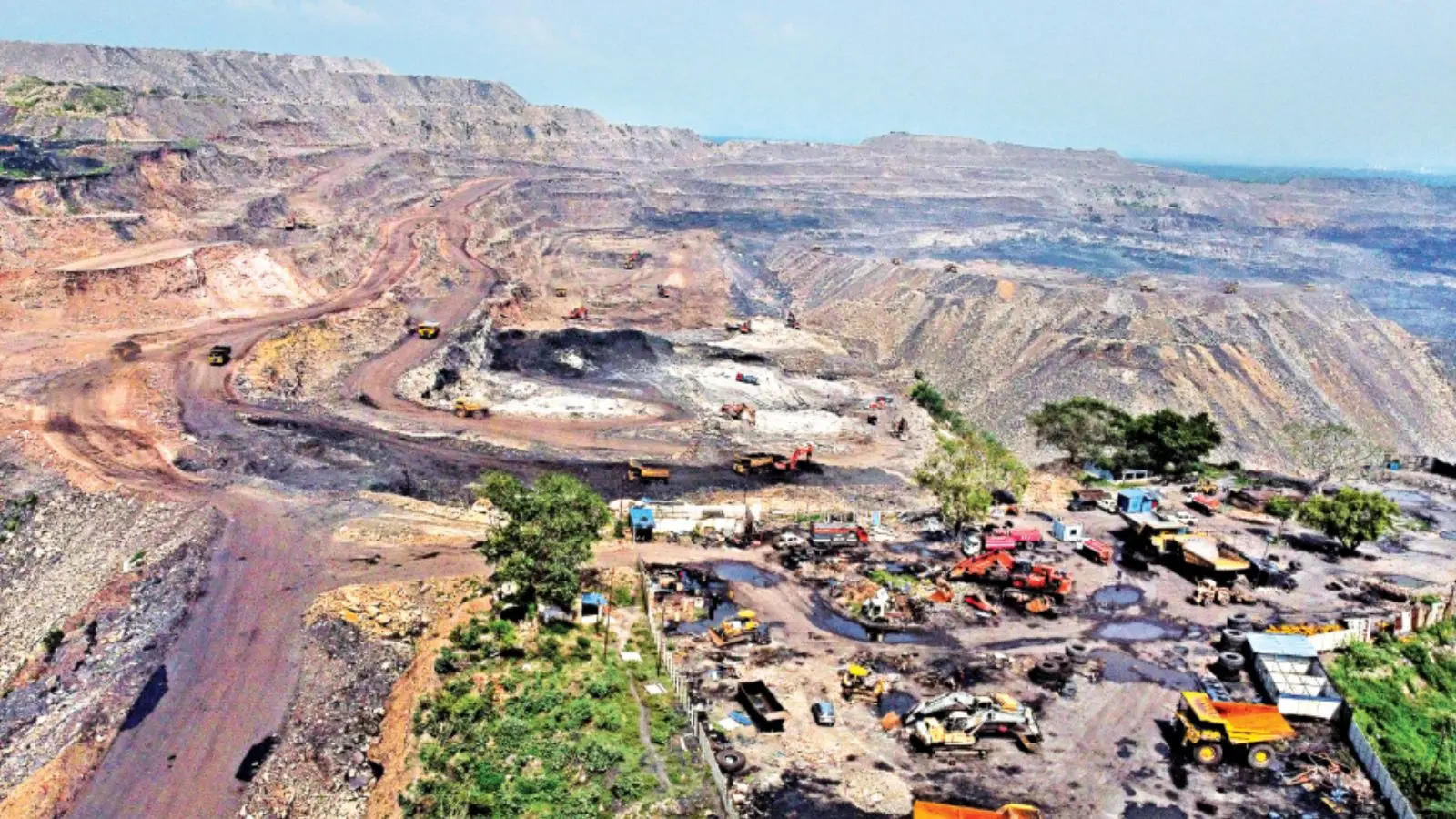
For example, if a major supplier restricts exports of a mineral needed by Indian manufacturers, an available strategic reserve could help eligible industries obtain supplies while alternative sources are arranged.
Unlike ordinary commercial inventories maintained by individual companies, a government-backed strategic stockpile is designed around broader economic and national supply-security objectives.
The exact structure of India’s proposed system will depend on the final policy.
Which Minerals Could Be Included?
The minerals being considered for strategic stockpiling include several materials essential to India’s industrial and energy ambitions.
1. Lithium
Lithium is an important raw material for rechargeable batteries used in electric vehicles, electronics and energy-storage systems.
Reliable lithium supplies can help support battery manufacturing and India’s transition towards electric mobility.
2. Nickel
Nickel is used in stainless steel, specialised alloys and certain lithium-ion battery chemistries.
A strategic reserve could help reduce the impact of supply interruptions on relevant industrial users.
3. Cobalt
Cobalt is used in selected battery chemistries, superalloys and other specialised applications.
Its supply chain is exposed to geographical concentration and international market risks.
4. Copper
Copper is essential for electrical wiring, power transmission, renewable-energy installations, industrial equipment and electric vehicles.
Disruptions in copper supply can affect multiple sectors simultaneously.
5. Rare Earth Elements
Rare earth elements are used in permanent magnets, electronics, wind turbines and various advanced technologies.
Securing these materials is important for India’s efforts to develop domestic manufacturing capabilities.
The final policy will determine which minerals are prioritised, how much is stored and which industries can access the reserves.
Why Does India Need a Critical Mineral Stockpile?
India’s growing industrial requirements make reliable access to critical minerals increasingly important.
However, domestic mineral availability, processing capacity and international supply chains differ considerably from one mineral to another.
Several factors explain the need for a strategic reserve.
Dependence on International Suppliers
India imports many critical minerals and processed materials because domestic production or processing capacity is insufficient to meet demand.
A disruption in a major exporting country can therefore affect Indian manufacturers.
Concentrated Global Processing Capacity
Some critical-mineral processing activities are concentrated in a limited number of countries.
This concentration can create supply-chain risks even when mineral resources are available elsewhere.
Price Volatility
International mineral prices can fluctuate because of changing demand, production constraints, trade restrictions and geopolitical developments.
Strategic reserves could help eligible users manage temporary shortages, although they would not eliminate market-price fluctuations.
Growing Industrial Demand
Electric vehicles, batteries, renewable energy, electronics and advanced manufacturing require dependable supplies of several critical minerals.
A reliable supply system is therefore important for India’s long-term industrial development.
How the Proposed Policy Could Work
The final operating framework has not yet been published. However, a strategic stockpiling system would generally need several important components.
1. Identification of Priority Minerals
The government would need to identify minerals whose supply disruptions could cause serious economic or industrial problems.
Priority could depend on import dependence, supply concentration, strategic importance and the availability of substitutes.
2. Procurement and Sourcing
Minerals could potentially be sourced through international purchases, domestic production, overseas mineral assets or other approved supply arrangements.
The actual sourcing strategy will depend on the final government framework.
3. Storage and Quality Management
Stockpiled materials would require appropriate storage facilities, inventory monitoring and quality-control procedures.
Different minerals and processed products may require different handling arrangements.
4. Release Rules
The government will need to define when reserves can be released, how much material can be supplied and which users qualify.
Clear rules will be essential to prevent uncertainty and ensure that reserves are used for their intended purpose.
5. Replenishment
Once materials are released, the system will need a mechanism to replenish reserves.
This may involve planned purchases, long-term supply agreements or other arrangements established under the final policy.
Proposed Funding Under the National Critical Mineral Mission
The stockpiling initiative is connected to India’s wider efforts to strengthen critical-mineral security through the National Critical Mineral Mission.
Government planning has included a proposed allocation of ₹500 crore over seven years for a National Critical Mineral Stockpile Programme, with reserves intended to cover at least five key minerals.
This funding proposal should not be confused with a fully operational stockpile. The final policy and implementation details will determine how the programme is structured and how funds are used.
The broader mission also focuses on exploration, mineral recovery, processing, overseas resource acquisition and developing domestic capabilities.
Together, these initiatives aim to improve India’s ability to obtain and use strategically important minerals.
What Could This Mean for India’s Mining Industry?
The proposed policy could influence more than mineral trading. It may also affect exploration, processing, infrastructure and industrial planning.
Greater Focus on Critical Mineral Exploration
Reliable domestic resources could help diversify India’s supply options.
Exploration companies may find opportunities in geological surveying, resource evaluation and the identification of economically viable deposits.
Opportunities for Mineral Processing
Stockpiling raw materials alone cannot resolve every supply-chain problem.
India also needs capabilities to process and refine minerals into forms suitable for manufacturing.
Investment in beneficiation, refining and advanced materials could therefore remain an important priority.
New Logistics and Storage Requirements
A strategic reserve requires suitable infrastructure for transport, storage, inventory control and material handling.
Depending on the minerals selected, these requirements could create opportunities for specialised logistics and storage providers.
Stronger Supply-Chain Planning
Manufacturers could benefit from clearer procedures for obtaining materials during a disruption.
However, the effectiveness of this support will depend on how the government defines eligibility and allocates available reserves.
Implications for Battery and Electric Vehicle Manufacturing
Battery manufacturers are among the industries that could benefit from improved critical-mineral security.
Lithium and nickel are important to parts of the battery supply chain, while cobalt is used in selected battery chemistries.
A reserve system could help reduce the risk that a temporary supply interruption forces manufacturers to slow production.
Nevertheless, stockpiling is only one part of the solution. India will also need competitive refining, battery-material production, recycling and reliable long-term procurement arrangements.
A combination of these measures could make the domestic battery supply chain more resilient.
Challenges in Building a Strategic Mineral Reserve
Although stockpiling can improve supply security, it involves important financial and operational challenges.
High Procurement Costs
Critical minerals can be expensive, particularly when global supply is tight. Purchasing and maintaining reserves requires careful budgeting.
Storage and Quality
Minerals differ in physical and chemical properties. The government will need suitable storage arrangements and quality standards for each selected material.
Choosing the Right Quantity
A reserve that is too small may not provide sufficient protection during a prolonged disruption. An unnecessarily large reserve could tie up public funds.
Market Price Risk
Mineral prices can rise or fall after procurement. Stockpile managers must balance supply security against the cost of maintaining inventory.
Transparent Distribution
The policy needs clear criteria for releasing materials so that access is predictable and aligned with national priorities.
Coordination Across Government and Industry
Successful implementation may require cooperation among the Ministries of Mines, Commerce and Industry, relevant public-sector companies, mineral producers and manufacturing businesses.
Critical Mineral Stockpiling vs Mineral Recycling
Stockpiling and recycling address different supply-chain problems.
Stockpiling maintains reserves that can be used when supplies are disrupted.
Recycling recovers useful materials from discarded batteries, electronic waste, industrial scrap and other secondary sources.
Stockpiling can provide a short-term buffer, while recycling can recover materials that might otherwise be lost from the economy.
Domestic exploration, overseas sourcing, processing and recycling can complement one another to create a more diversified mineral supply system.
What Mining Engineers and Professionals Should Know
The proposed policy reinforces the growing importance of critical minerals within the mining industry.
Mining professionals may find increasing relevance in areas such as:
- Critical mineral exploration and resource estimation
- Mineral beneficiation and processing
- Metallurgy and refining
- Supply-chain planning and mineral economics
- Warehouse and inventory management
- Environmental management
- Recycling and mineral recovery
- Project development and quality assurance
The policy is not a guarantee of new jobs or projects. However, expanding critical-mineral infrastructure could increase demand for specialised technical and operational skills over time.
What Happens Next?
The next major milestone will be the formalisation and announcement of the stockpiling policy.
Industry participants will need to watch for details covering:
- The final list of minerals
- The planned scale of strategic reserves
- Funding and procurement arrangements
- Storage and inventory management
- Conditions for releasing materials
- Eligible industries and recipients
- Replenishment and monitoring procedures
These details will determine whether the policy becomes an effective mechanism for managing supply disruptions.
Conclusion
The India Critical Mineral Stockpiling Policy 2026 represents an important proposed step towards strengthening the country’s mineral supply security.
By preparing strategic reserves of minerals such as lithium, nickel, copper, cobalt and rare earth elements, India aims to reduce the risks associated with import dependence and global supply disruptions.
The initiative complements broader efforts in domestic exploration, overseas sourcing, mineral processing and recycling.
However, the final policy is still awaited, and its effectiveness will depend on the minerals selected, the scale of the reserves, transparent release procedures and careful financial management.
For India’s mining and manufacturing sectors, the development highlights a wider strategic shift: securing critical minerals is no longer only about extracting resources, but also about building a dependable supply chain from exploration to industrial use.