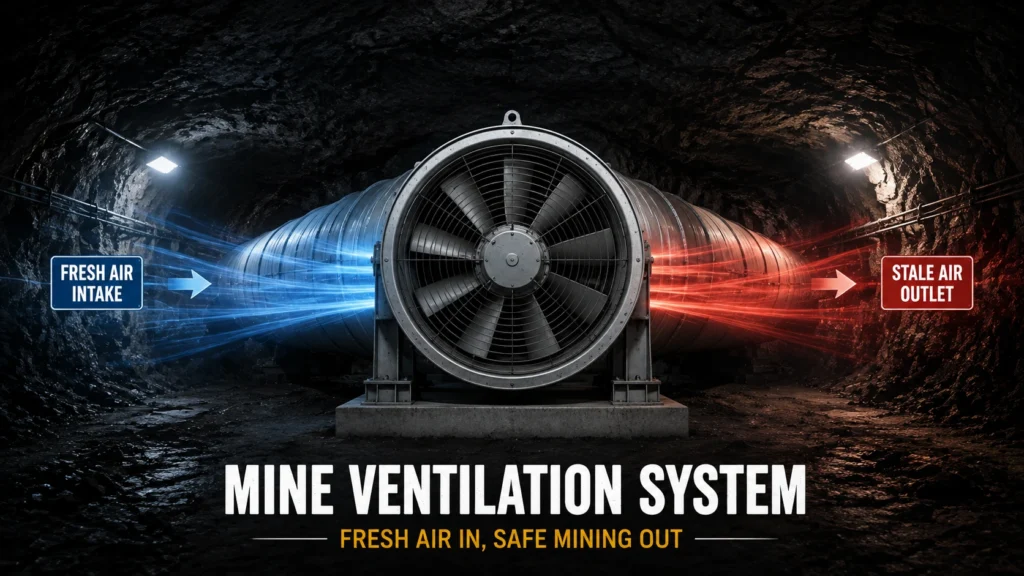
Efficient mine ventilation is one of the most critical aspects of safe and productive mining operations. Every underground and surface mine requires a robust mine ventilation system to ensure worker safety, maintain air quality, control dust and gas emissions, regulate temperature and humidity levels, and meet regulatory compliance standards set by the Directorate General of Mines Safety (DGMS).
Download Mining Gyan App Download Mining Gyan 2.0 AppIn underground mines, proper mine ventilation system design and maintenance is a life-saving necessity. Without adequate ventilation, toxic gases like methane, carbon monoxide, and hydrogen sulfide can accumulate to lethal levels, dust concentration can exceed safe limits, oxygen deficiency can occur, and workers face severe health hazards and safety risks. This comprehensive guide covers everything you need to know about mine ventilation systems, types of ventilation methods, ventilation components, ventilation design principles, and the importance of mine ventilation in mining industry.
What Is Mine Ventilation System and Why Is It Important?
Mine ventilation system refers to the process of supplying fresh air to underground or surface mining areas and removing contaminated, stale, or polluted air to maintain a safe and healthy working environment. A properly designed and maintained mine ventilation system ensures continuous flow of fresh air throughout all working areas of the mine.
The primary purpose of mine ventilation is to:
1. Supply Oxygen, Underground mines lack natural oxygen supply, so mechanical ventilation systems must continuously supply fresh air containing adequate oxygen for miners to breathe safely
2. Remove Toxic Gases, Mine ventilation removes hazardous gases such as methane (CH4), carbon monoxide (CO), nitrogen dioxide (NO2), hydrogen sulfide (H2S), and other toxic substances produced during mining operations, blasting, and underground combustion
3. Control Dust Levels, Fine coal dust, ore dust, and rock dust can cause serious respiratory diseases like silicosis and coal worker’s pneumoconiosis (CWP). Mine ventilation systems remove dust particles from the air to keep dust concentration below maximum exposure limits (MEL) set by DGMS
4. Regulate Temperature and Humidity, Underground mines naturally have high temperature and humidity levels. Proper ventilation helps maintain comfortable and safe working conditions by cooling the environment and reducing moisture levels
5. Dilute Gas Concentrations, Ventilation dilutes the concentration of potentially hazardous gases and vapors released during blasting, welding, diesel equipment operation, and chemical processes
6. Prevent Spontaneous Combustion, Adequate air flow helps prevent spontaneous combustion in coal mines by controlling temperature and oxidation rates
7. Meet Regulatory Standards, The DGMS Regulations and various mining acts require all underground mines to maintain proper ventilation systems that comply with specific air quality, air velocity, and gas concentration standards
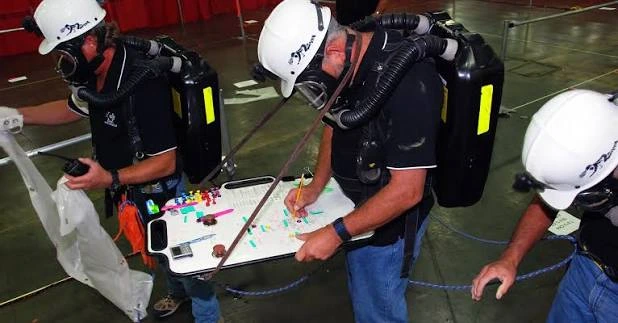
Types of Mine Ventilation Systems
Mine ventilation systems are classified into different types based on the method of air movement and the source of ventilation:
1. Natural Ventilation System
Natural ventilation, also known as gravity ventilation or passive ventilation, relies on natural differences in air density (temperature) and pressure to create air flow through the mine.
How Natural Ventilation Works, When air temperature at the shaft bottom (deeper underground) is higher than at the surface, warm air becomes lighter and tends to rise. This creates a buoyancy effect that pushes warm air up the shaft while cooler, denser air enters from alternative openings. This natural air circulation is called the chimney effect or stack effect.
Advantages of Natural Ventilation, Requires no mechanical equipment or power input, Operating costs are minimal, No maintenance of ventilation machinery required, Works continuously without manual intervention
Limitations of Natural Ventilation, Effectiveness depends on temperature difference between surface and underground, Not reliable in hot climates where surface temperature is high, Insufficient for large or deep mines, Cannot be controlled or directed as needed, Unreliable during summer months when temperature difference decreases
Application, Natural ventilation is used only in shallow, small-scale mining operations. Modern mines rely on mechanical ventilation because natural ventilation cannot provide adequate air volume and control for large underground mines.
2. Mechanical Ventilation System
Mechanical ventilation uses mechanical equipment like fans, compressors, and ductwork to actively force or extract air from the mine. This is the primary ventilation method used in all modern mining operations.
Mechanical ventilation systems are further classified into three categories based on how air is moved:
A. Forcing or Blowing System, Fresh air is forced or blown into the mine using a fan installed at the surface. This creates positive pressure inside the mine, pushing contaminated air out through return airways. The fan is installed at the mine entrance or shaft, and ductwork carries fresh air deep into the working areas.
Advantages, Better control over air flow direction and volume, Fresh air reaches all areas of the mine, Suitable for mines with only one shaft, Better for dust control, Works in any climate condition
Disadvantages, Requires large diameter ductwork in working areas which can obstruct operations, Contaminated air may not be fully evacuated, Long ductwork increases friction and reduces efficiency
B. Exhaust or Suction System, Stale, contaminated air is extracted or sucked out of the mine using a large fan installed at the surface outlet. This creates negative pressure inside the mine, drawing fresh air inward through inlet shafts and return airways.
Advantages, No large ductwork needed in working areas, More space available for mining operations, Contaminated air is actively removed, Better for removing dust and gases, Efficient for large mines
Disadvantages, Requires multiple openings (inlet and outlet shafts), Positive pressure ventilation is better for certain gases, Cannot be used in single-shaft mines, Requires careful monitoring to prevent methane accumulation in dead ends
C. Combined or Balanced System, Both forcing and exhausting systems are used together. Fresh air is forced in while stale air is simultaneously extracted, creating a balanced ventilation system.
Advantages, Best control over mine atmosphere, Efficient air flow through all areas, Flexibility in managing different mining zones, Superior for large and complex mines, Better for safety in hazardous conditions
Disadvantages, More equipment required, Higher capital and operating costs, Complex to design and maintain, Requires skilled personnel for operation and monitoring
Main Fan and Ventilation Equipment in Mine Ventilation System
The main fan is the heart of the mechanical mine ventilation system. It creates the pressure difference necessary to move air through the mine.
Types of Main Fans
Axial Flow Fans, These fans have blades similar to airplane propellers and move air parallel to the fan axis. They are used for high volume, low pressure applications typical of mine ventilation.
Centrifugal Fans, These fans use rotating impellers to push air outward radially. They create higher pressure and are suitable for mines with high resistance to air flow.
Fan Capacity and Performance, The capacity of a mine ventilation fan is measured in cubic meters per minute (m3/min) or cubic feet per minute (CFM). Fan performance is determined by:
Air Volume (CFM), How much air the fan can move per unit time
Fan Pressure (in mm of water column), The pressure difference the fan can create
Fan Efficiency, Ratio of useful work output to mechanical power input
Fan Speed (RPM), Rotational speed affects both volume and pressure
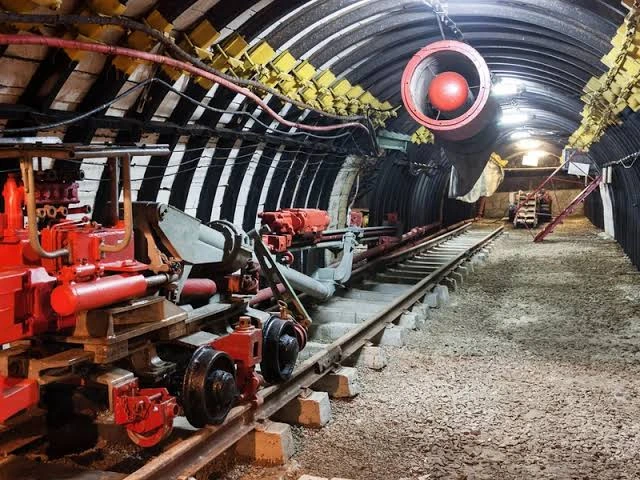
Other Ventilation Components in Mine Ventilation System
Main Shaft, The primary vertical opening through which air enters and exits the mine. Modern mines have both intake and return shafts.
Return Airway, Secondary passages and routes through which contaminated air travels back to the exit. Return airways can be separate shafts, boreholes, or underground passages.
Stoppings, Temporary or permanent seals or barriers that divide the mine into different ventilation zones and direct air flow along desired paths.
Crossings or Junctions, Connections between main ventilation roads (main air roads) where air splits into multiple paths heading to different working sections.
Ventilation Control Devices, Dampers, regulators, and doors that control air flow distribution and volume in different parts of the mine.
Ductwork, Steel or plastic pipes that carry fresh air into deep working areas and reduce air leakage.
Mine Ventilation Design Principles
Proper mine ventilation system design is critical for safety and operational efficiency. Key design principles include:
1. Adequate Air Supply Requirement
The ventilation system must supply enough fresh air to meet the requirements of all workers, equipment, and mining processes. DGMS regulations specify minimum air requirements based on mine type, depth, and number of workers.
For Coal Mines, Minimum 0.5 m3 per minute per worker or 3 m3 per minute per tonne of coal produced per hour, whichever is greater.
For Metalliferous Mines, Minimum 3 m3 per minute per worker for underground operations.
For Surface Mines, Additional ventilation required in enclosed areas like drill cabins and equipment enclosures.
2. Proper Air Velocity
Air must move at sufficient velocity to carry dust and gases toward exhaust points. Recommended air velocity in mining areas is typically 0.5 to 1.5 m/second, depending on mining method and conditions.
3. Minimize Air Leakage
Ventilation ducts, seals, and barriers must be properly maintained to prevent air leakage, which reduces ventilation efficiency.
4. Separate Intake and Return Airways
Fresh air intake shafts and contaminated air return shafts or passages must be kept separate to prevent short-circuiting where returning contaminated air mixes with fresh incoming air.
5. Ventilation for All Areas
Every working area must receive adequate ventilation, including dead-end workings, blind pits, and enclosed areas.
Mine Ventilation Methods and Strategies
Different mine ventilation methods are used based on mine characteristics and operational requirements:
1. Splitting System
Fresh air is split at junctions and distributed through multiple pathways to different working sections. Return air from various sections is combined back into return airways. This method ensures all areas receive some ventilation even if one pathway is blocked.
2. Bleeder System
This method is used in coal mines to manage methane. Fresh air is directed to main working areas, while secondary or less important areas receive minimum ventilation. Contaminated air from all areas is extracted and removed to the outside through bleeders (auxiliary ventilation openings).
3. U-Tube Ventilation
Air enters from one shaft, travels through the mine in one direction, and returns through the same or another shaft. This creates a U-shaped air flow pattern and ensures all areas are ventilated in sequence.
4. Cascade Ventilation
Fresh air flows from higher sections to lower sections, with each section receiving progressively older, more contaminated air. This method is used in deep mines where heat dissipation is important.
5. Auxiliary Ventilation
Temporary ducting is used to supply fresh air directly to specific working areas (like tunneling headings, longwall faces, or drilling areas) where main ventilation alone is insufficient.
Mine Ventilation Monitoring and Control
Proper monitoring and control of mine ventilation is essential for maintaining safe working conditions:
1. Air Quantity Measurement
Anemometers are used to measure air velocity in various sections of the mine. Air quantity (CFM) is calculated by multiplying air velocity by cross-sectional area.
2. Air Quality Testing
Gas detection equipment monitors concentration of methane, carbon monoxide, and other hazardous gases at regular intervals or continuously.
3. Dust Sampling
Personal dust samplers (PDS) and static samplers are used to measure dust concentration in work areas and ensure it remains below DGMS exposure limits.
4. Temperature and Humidity Monitoring
Wet and dry bulb thermometers or digital monitors track temperature and humidity to ensure working conditions remain safe and productive.
5. Ventilation Records
Mine operators must maintain detailed records of fan performance, air quality tests, gas monitoring, dust sampling, and any ventilation system changes for regulatory compliance.
Challenges in Mine Ventilation System
Mine ventilation systems face several challenges in modern mining operations:
1. Depth and Geothermal Heat
Deeper mines generate more geothermal heat, making it difficult to control temperature through ventilation alone. Additional cooling systems may be required.
2. Methane Management in Coal Mines
High-methane coal seams require robust ventilation systems and multiple ventilation methods to keep methane concentration below the explosive limit of 5%.
3. Dust Generation in Modern Mining
Large-scale mining operations generate enormous quantities of dust that must be controlled through ventilation and additional dust suppression systems.
4. Energy Consumption
Operating large mine ventilation fans continuously consumes significant electrical energy and represents a major operational cost.
5. Ventilation System Maintenance
Fans, ductwork, seals, and other components require regular maintenance and occasional replacement, which can be costly and may temporarily disrupt operations.
6. Regulations and Compliance
DGMS regulations on ventilation are strict and frequently updated. Mines must invest in monitoring equipment and training to remain compliant.
Importance of Mine Ventilation System in Mining Industry
Mine ventilation is not just a regulatory requirement, it is a critical component of mining safety and productivity:
1. Worker Safety and Health
Proper ventilation prevents fatal accidents from toxic gas exposure, explosion risks, and long-term respiratory diseases caused by dust inhalation. It protects the health and lives of thousands of miners.
2. Operational Efficiency
Better air quality and controlled temperature create a more comfortable and productive working environment, improving mining productivity and reducing absenteeism due to health issues.
3. Regulatory Compliance
All underground mines must comply with DGMS ventilation standards. Non-compliance can result in mine closure, penalties, and legal action.
4. Explosion Prevention
In coal mines, proper ventilation prevents methane accumulation and reduces explosion risk. Many coal mine disasters have been caused by inadequate ventilation.
5. Equipment Performance
Proper ventilation helps maintain optimal conditions for mining equipment operation and extends equipment lifespan.
6. Environmental Management
Ventilation systems help control and minimize air pollution, dust emissions, and environmental impact from mining operations.
Mine Ventilation and DGMS Regulations
The Directorate General of Mines Safety (DGMS) has established strict regulations and standards for mine ventilation under the Mines Act and DGMS Circulars:
Minimum Air Quantity, DGMS specifies minimum air requirements in cubic meters per minute (m3/min) for different mine types and depths.
Air Quality Standards, Maximum permissible concentrations for methane, carbon monoxide, dust, and other hazardous substances are specified.
Monitoring Requirements, Regular monitoring of air quantity, air velocity, gas concentration, and dust levels is mandatory.
Ventilation Records, Detailed records of ventilation system performance, monitoring results, and maintenance activities must be maintained.
Fan Inspection and Testing, Main fans must be inspected and tested periodically to ensure safe and efficient operation.
Emergency Ventilation, Backup ventilation systems must be available in case main ventilation fails.
Conclusion
Mine ventilation system is a critical infrastructure in modern mining operations that ensures worker safety, maintains air quality, controls hazardous gases and dust, and helps meet regulatory compliance standards set by the DGMS. From natural ventilation in small operations to complex mechanical ventilation systems in large underground mines, proper ventilation design, installation, and maintenance are essential for safe and productive mining.
For mining professionals, mine engineers, mining supervisors, and those preparing for GATE Mining, DGMS certifications, and other mining examinations, understanding mine ventilation systems, ventilation methods, ventilation design principles, and DGMS regulations on ventilation is crucial. As mining operations become deeper, larger, and more mechanized, the importance of efficient and reliable mine ventilation systems continues to grow, creating career opportunities for specialized ventilation engineers and mine safety professionals in India’s evolving mining sector.