Dust is one of the most serious occupational hazards in mining. During drilling, blasting, loading, crushing, transportation, and mineral processing, a large quantity of airborne dust is generated. If not controlled properly, this dust can reduce visibility, damage equipment, increase explosion risks in coal mines, and cause severe respiratory diseases such as pneumoconiosis and silicosis. To overcome these hazards, modern mines use an efficient Mine Dust Suppression System.
A Mine Dust Suppression System is designed to prevent, control, and suppress airborne dust at its source using water spray systems, mist generators, foam technology, chemical suppressants, and ventilation support. It improves workplace visibility, protects workers’ health, and ensures compliance with mine safety regulations.
For GATE Mining, Mining Sirdar, Overman, DGMS, PSU recruitment, and Mining Engineering examinations, the Mine Dust Suppression System is an important technical topic because it combines mine safety, occupational health, ventilation, environmental engineering, and mineral handling.
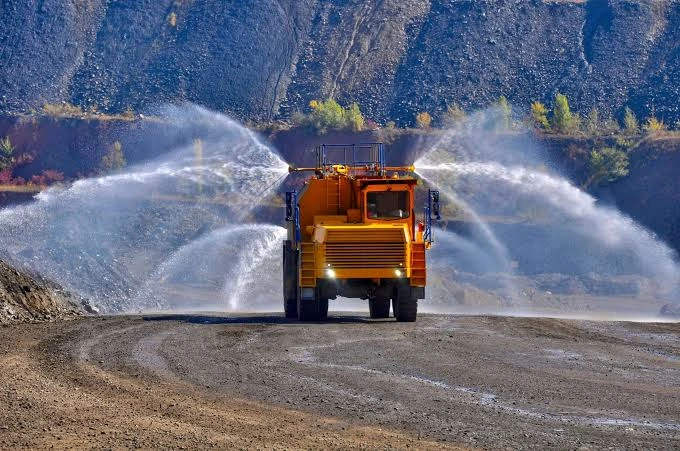
A Mine Dust Suppression System is a collection of equipment and control techniques used to reduce the generation and spread of airborne dust during mining operations.
The system suppresses dust either by preventing it from becoming airborne or by capturing dust particles after they are generated. Water sprays, fogging systems, foam generators, dust collectors, and ventilation systems work together to maintain safe air quality inside mines.
The primary objectives of a Mine Dust Suppression System include:
- Reduce airborne dust
- Improve worker health
- Increase visibility
- Prevent coal dust explosions
- Protect machinery
- Maintain environmental compliance
Effective dust suppression is essential for both underground and opencast mining.
Why Is a Mine Dust Suppression System Important?
Mining dust contains fine particles that can remain suspended in the air for long periods. Continuous exposure may cause chronic lung diseases, eye irritation, skin problems, and reduced work efficiency.
In underground coal mines, suspended coal dust also increases the risk of explosions when mixed with methane gas.
Major benefits include:
- Improved respiratory safety
- Better workplace visibility
- Reduced explosion risk
- Lower equipment wear
- Cleaner working environment
- Improved production efficiency
- Reduced environmental pollution
- Compliance with DGMS standards
Dust control is therefore one of the most important aspects of mine safety management.
Sources of Dust in Mining
Dust is generated during almost every mining activity.
Common dust-generating sources include:
- Drilling operations
- Blasting
- Coal cutting
- Crushing
- Screening
- Loading and unloading
- Conveyor transfer points
- Haul roads
- Stockpiles
- Mineral processing plants
Each source requires a suitable dust suppression technique.
Working Principle of a Mine Dust Suppression System
A Mine Dust Suppression System works by capturing airborne dust particles before they spread into the atmosphere.
Water sprays or mist systems release fine droplets that collide with dust particles. The dust becomes heavier and settles on the ground instead of remaining suspended in the air.
Foam systems trap dust at the source, while dust collectors remove fine particles using filters or cyclones.
The basic operating cycle includes:
- Dust generation
- Water or mist application
- Dust particle capture
- Dust settling
- Air cleaning
- Continuous monitoring
Modern systems automatically activate when dust levels exceed preset limits.
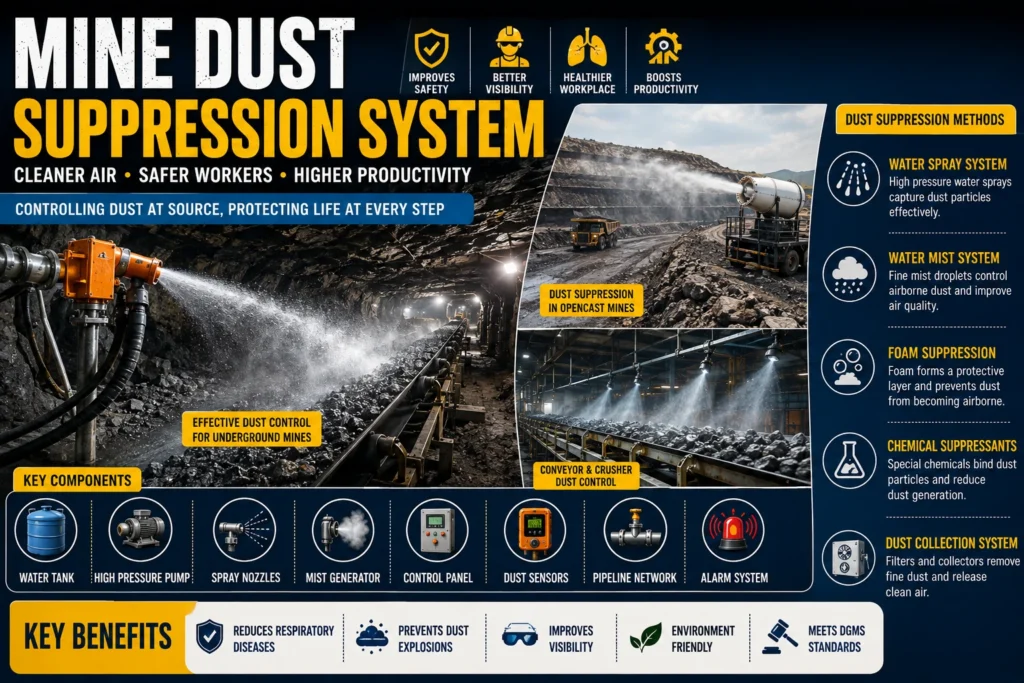
Components of a Mine Dust Suppression System
A Mine Dust Suppression System consists of several integrated components.
Major components include:
- Water Storage Tank
- High-Pressure Pump
- Spray Nozzles
- Mist Generators
- Foam Generator
- Water Pipelines
- Solenoid Valves
- Dust Sensors
- Control Panel
- Filtration Unit
- Pressure Gauges
- Automatic Monitoring System
Each component helps improve dust suppression efficiency.
Types of Dust Suppression Methods
Different mining conditions require different dust control techniques.
Water Spray System
The water spray system is the most widely used dust suppression method. High-pressure nozzles spray water directly at dust-generating locations.
Water Mist System
Water mist systems produce extremely fine droplets that capture airborne dust more efficiently while consuming less water.
Foam Dust Suppression
Foam systems create stable foam that covers coal or mineral surfaces, preventing dust from becoming airborne.
Chemical Dust Suppressants
Special chemicals improve the binding of dust particles and reduce dust generation over long periods.
Dry Dust Collection System
Industrial dust collectors capture fine dust using filters, bag houses, or cyclone separators before clean air is released.
Applications of Mine Dust Suppression System
Mine Dust Suppression Systems are widely used throughout mining operations.
Major applications include:
- Underground coal mines
- Opencast mines
- Drilling operations
- Crusher plants
- Conveyor transfer points
- Coal handling plants
- Stockyards
- Loading stations
- Mineral processing plants
- Haul roads
Proper dust suppression significantly improves overall mine safety.
Advantages of Mine Dust Suppression System
Modern dust suppression systems provide several benefits.
Major advantages include:
- Better air quality
- Improved worker health
- Higher visibility
- Reduced explosion hazards
- Lower equipment maintenance
- Environmental protection
- Increased productivity
- Better regulatory compliance
These advantages make dust suppression a key part of modern mining operations.
Challenges in Mine Dust Suppression
Despite technological improvements, several challenges remain.
Common issues include:
- Water scarcity
- Nozzle blockage
- High maintenance
- Uneven water distribution
- Wind interference
- Corrosion
- Power failures
- Dust sensor calibration
Routine inspection and preventive maintenance help improve system performance.
Future of Mine Dust Suppression Systems
Dust control technology is becoming smarter and more sustainable.
Emerging developments include:
- AI-based dust prediction
- IoT-enabled dust monitoring
- Smart spray control
- Automated mist systems
- Drone-based dust monitoring
- Eco-friendly suppressants
- Real-time dust analytics
- Energy-efficient pumping systems
These innovations improve dust control while reducing water and energy consumption.
Conclusion
A Mine Dust Suppression System is an essential safety and environmental control system used in both underground and opencast mining. It protects workers from harmful dust exposure, improves visibility, reduces explosion risks, and enhances overall operational efficiency.
From conventional water spray systems to AI-powered smart dust monitoring technologies, dust suppression continues to evolve rapidly. Every Mining Engineer, Mining Sirdar, Overman, DGMS candidate, and GATE aspirant should understand the principles and applications of the Mine Dust Suppression System, as it is one of the most important topics in modern mining safety.
Frequently Asked Questions
What is a Mine Dust Suppression System?
A Mine Dust Suppression System is a safety system used to control and reduce airborne dust generated during mining operations.
Why is dust suppression important in mining?
Dust suppression protects workers from respiratory diseases, improves visibility, reduces explosion risk, and protects mining equipment.
Which is the most common dust suppression method?
The water spray system is the most widely used method because it is simple, effective, and economical.
Where are dust suppression systems installed?
They are installed at drilling machines, crushers, conveyor belts, transfer points, haul roads, loading stations, and underground working faces.
What is the future of Mine Dust Suppression Systems?
Future systems include AI-based monitoring, IoT sensors, automated mist systems, drone inspections, and smart water management technologies.