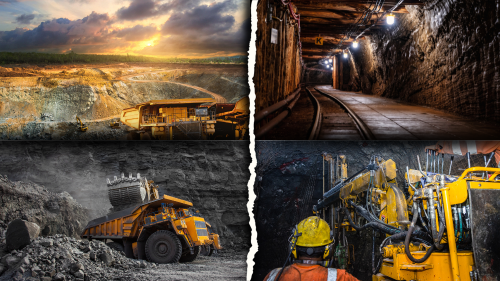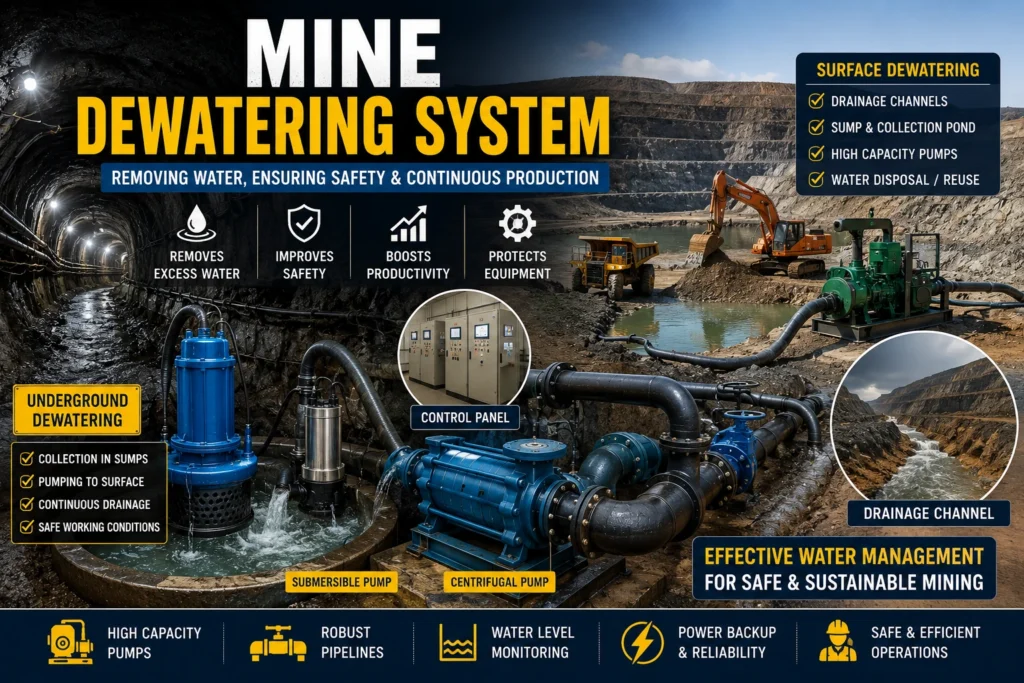
Water is one of the biggest challenges faced during mining operations. Groundwater seepage, rainfall, aquifers, and surface runoff continuously introduce water into underground and opencast mines. If this water is not removed efficiently, it can flood working faces, damage mining equipment, weaken rock formations, delay production, and create serious safety hazards. This is where a Mine Dewatering System becomes essential.
A Mine Dewatering System is designed to collect, control, and remove unwanted water from mining areas, ensuring safe and uninterrupted mining operations. Modern dewatering systems use high-capacity pumps, pipelines, drainage galleries, boreholes, and monitoring systems to maintain dry working conditions. Proper mine dewatering not only improves production but also protects workers, machinery, and mine infrastructure.
For GATE Mining, Mining Sirdar, Overman, DGMS, PSU recruitment, and Mining Engineering examinations, the Mine Dewatering System is one of the most important technical topics because it combines mine drainage, pumping technology, groundwater management, mine planning, and safety engineering.
What Is a Mine Dewatering System?
A Mine Dewatering System is a planned arrangement of pumps, pipelines, sumps, drainage channels, wells, and monitoring equipment used to remove accumulated water from mines. It helps maintain dry working conditions by continuously pumping water away from mining areas.
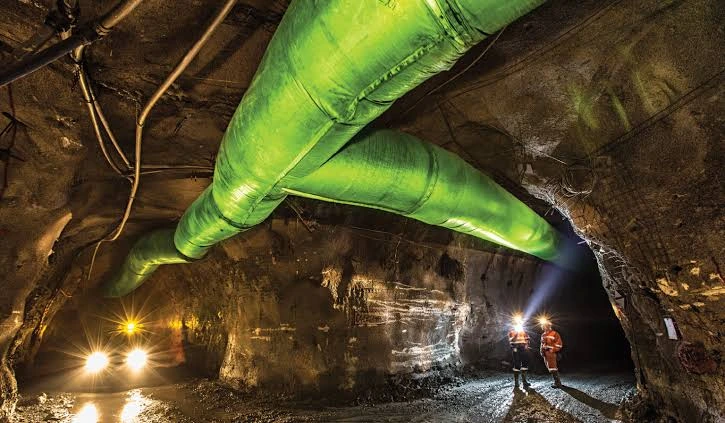
Dewatering is required throughout the life of a mine—from exploration and mine development to production and mine closure. The design of the dewatering system depends on mine depth, geological conditions, groundwater inflow, rainfall, and production capacity.
The primary objectives of a Mine Dewatering System are:
- Remove groundwater and rainwater
- Maintain dry working conditions
- Protect mining equipment
- Improve worker safety
- Prevent slope or roof instability
- Ensure uninterrupted production
Without effective dewatering, mining operations can become unsafe and economically unviable.
Why Is a Mine Dewatering System Important?
Water accumulation can severely affect mining productivity and safety. Excess water may reduce equipment efficiency, cause slope failures in opencast mines, weaken underground roof strata, and increase the risk of electrical accidents.
A properly designed dewatering system allows mining activities to continue safely while minimizing production losses. It also helps maintain haul roads, improves blasting efficiency, and reduces maintenance costs.
Major benefits include:
- Improved mine safety
- Continuous production
- Reduced flooding risk
- Better equipment performance
- Stable mine slopes
- Lower maintenance costs
- Increased operational efficiency
- Enhanced environmental management
Proper mine dewatering is therefore a critical part of modern mine planning.
Sources of Water in Mines
Water enters mines from several natural and operational sources. Understanding these sources is important for designing an effective dewatering system.
Common sources include:
- Groundwater seepage
- Rainfall and stormwater
- Underground aquifers
- Surface water infiltration
- Nearby rivers or lakes
- Old flooded mine workings
- Fractures and faults
The quantity of water entering a mine varies depending on geology, climate, and mining depth.
Working Principle of a Mine Dewatering System
A Mine Dewatering System works by collecting water at designated low points and pumping it safely out of the mine.
In underground mines, water naturally flows into sumps through drainage channels. High-capacity pumps then lift the water to the surface through pipelines.
In opencast mines, drainage channels direct water toward collection ponds or sumps, where pumps discharge it outside the mining area.
The basic dewatering cycle includes:
- Water collection
- Drainage through channels
- Storage in sumps
- Pumping to the surface
- Treatment (if required)
- Safe disposal or reuse
Modern systems also use sensors and automated controls to monitor water levels and pump performance.
Components of a Mine Dewatering System
A Mine Dewatering System consists of several mechanical and hydraulic components working together.
Major components include:
- Mine Sump
- Centrifugal Pumps
- Submersible Pumps
- Rising Main Pipeline
- Drainage Channels
- Valves
- Water Storage Pond
- Monitoring Sensors
- Control Panel
- Backup Power Supply
Each component is selected based on mine conditions, pumping capacity, and water inflow rate.
Types of Mine Dewatering Methods
Different mines require different dewatering techniques depending on geological conditions and water inflow.
Sump Pumping
Sump pumping is the most common dewatering method in underground mines. Water is collected in mine sumps and pumped continuously to the surface using centrifugal or submersible pumps.
Well Point System
The well point system uses a series of shallow wells connected to a vacuum pump. It is commonly used for shallow excavations where groundwater needs to be lowered before mining begins.
Deep Well Dewatering
Deep well systems use boreholes fitted with submersible pumps to lower the groundwater table around deep mining excavations. They are widely used in opencast mines and shaft sinking projects.
Horizontal Drainage
Horizontal drainage boreholes are drilled into water-bearing formations to reduce groundwater pressure and improve slope stability.
Drainage Gallery
Drainage galleries are underground tunnels designed to intercept groundwater and direct it toward pumping stations.
Mine Dewatering Pumps
Pumps are the heart of every Mine Dewatering System. The selection of pumps depends on water quantity, pumping head, and mine conditions.
Common pumps used in mining include:
- Centrifugal Pump
- Submersible Pump
- Multistage Pump
- Slurry Pump
- Positive Displacement Pump
- Vertical Turbine Pump
Modern mines often use automated pumping systems with remote monitoring and standby pumps for reliability.
Applications of a Mine Dewatering System
Mine Dewatering Systems are used in various stages of mining operations.
Major applications include:
- Underground coal mines
- Opencast mines
- Shaft sinking
- Tunnel construction
- Exploration projects
- Mine development
- Flood control
- Mine closure
Proper water management is essential for maintaining safe and productive mining operations.
Advantages of a Mine Dewatering System
An efficient Mine Dewatering System offers several operational benefits.
Major advantages include:
- Safe working environment
- Continuous mining operations
- Reduced equipment damage
- Improved blasting performance
- Better haul road conditions
- Stable underground workings
- Increased production efficiency
- Lower operating costs
These benefits contribute significantly to overall mine productivity.
Challenges in Mine Dewatering
Despite technological advancements, mine dewatering presents several challenges.
Common issues include:
- High groundwater inflow
- Pump failures
- Power interruptions
- Pipeline blockages
- Corrosion
- High energy consumption
- Seasonal rainfall
- Water treatment requirements
Regular inspection and preventive maintenance help minimize these challenges.
Future of Mine Dewatering Systems
Modern Mine Dewatering Systems are becoming more intelligent and energy-efficient.
Emerging technologies include:
- AI-based pump monitoring
- IoT-enabled water level sensors
- Remote pump control
- Smart energy management
- Digital twin technology
- Predictive maintenance
- Solar-powered pumping systems
- Real-time groundwater monitoring
These innovations improve efficiency, reduce operating costs, and enhance mine safety.
Conclusion
A Mine Dewatering System is an essential infrastructure for every underground and opencast mine. It removes unwanted water, maintains safe working conditions, protects mining equipment, and ensures uninterrupted production.
From conventional sump pumping to advanced IoT-enabled smart dewatering systems, modern technology has significantly improved water management in mining. Every Mining Engineer, Surveyor, Mining Sirdar, Overman, DGMS candidate, and GATE aspirant should understand the principles and applications of Mine Dewatering Systems because they are fundamental to safe and efficient mining operations.
Frequently Asked Questions
What is a Mine Dewatering System?
A Mine Dewatering System is a network of pumps, pipelines, drainage channels, and sumps used to remove unwanted water from mining operations.
Why is mine dewatering necessary?
Mine dewatering prevents flooding, improves worker safety, protects equipment, and allows uninterrupted mining operations.
Which pump is most commonly used for mine dewatering?
Centrifugal pumps and submersible pumps are the most commonly used pumps in mining operations.
What are the main sources of water in mines?
Groundwater, rainfall, aquifers, surface runoff, nearby water bodies, and old flooded workings are the major sources of mine water.
What is the future of Mine Dewatering Systems?
Future systems will include AI-based monitoring, IoT sensors, remote operation, digital twins, predictive maintenance, and energy-efficient pumping technologies.