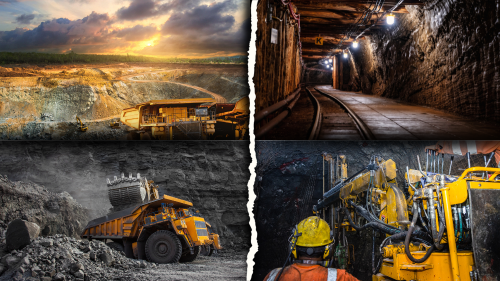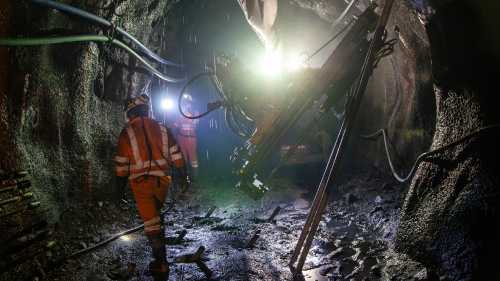
Fresh air is something we take for granted on the surface, but underground, it has to be engineered, moved, and constantly monitored. This is where the mine ventilation system comes in, one of the most critical safety systems in any underground mine.
A mine ventilation system is responsible for supplying breathable air, removing harmful gases, controlling temperature, and preventing the buildup of explosive or toxic conditions deep below the surface. Without proper ventilation, underground mining operations would simply not be possible.
What Is a Mine Ventilation System?
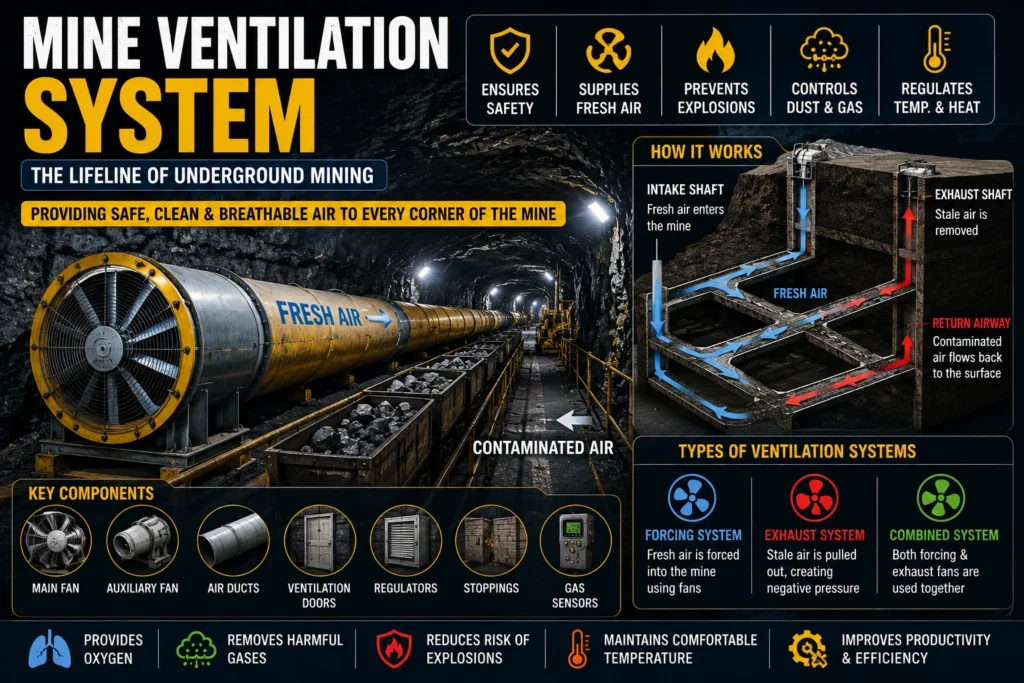
A Mine Ventilation System is a network of fans, ducts, shafts, and control structures designed to circulate fresh air throughout underground workings while removing stale, contaminated, or heated air. It ensures miners working hundreds of meters below the surface have enough oxygen to breathe, and that dangerous gases like methane, carbon monoxide, and dust particles are diluted and carried away safely.
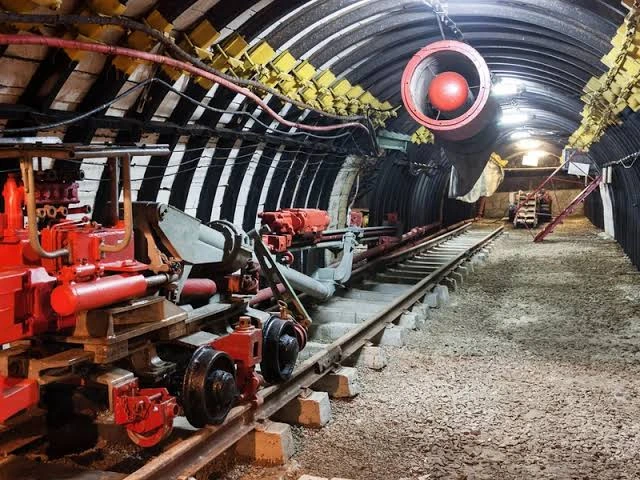
The system works on a simple principle: push fresh air in, pull contaminated air out, and maintain continuous, controlled flow throughout every working section of the mine.
Why Ventilation Is Critical in Mining?
Underground mines, especially coal mines, are prone to several hazards that make ventilation absolutely essential:
1. Oxygen Deficiency – As depth increases, natural air circulation reduces significantly
2. Gas Accumulation – Methane (CH4), carbon monoxide (CO), and other gases can build up to dangerous or explosive levels
3. Dust Control – Ventilation helps disperse and remove coal and rock dust, reducing respiratory hazards and explosion risk
4. Heat and Humidity – Deeper mines get progressively hotter, and ventilation keeps working conditions tolerable
5. Diesel Exhaust – Machinery used underground produces exhaust fumes that must be diluted and removed
Simply put, ventilation is the backbone of underground mine safety. No other system can replace its role in protecting miners’ lives.
Types of Mine Ventilation Systems
1. Natural Ventilation
This relies on the natural pressure and temperature difference between the surface and underground workings to create airflow. It was widely used in older, shallow mines but is unreliable and insufficient for modern, deep operations. Most modern mines have completely moved away from relying solely on natural ventilation.
2. Forced (Mechanical) Ventilation
This uses mechanical fans to actively push or pull air through the mine. It is the standard method in almost all modern mines and is further divided into three categories:
Forcing (Blowing) System – Fresh air is forced into the mine through intake fans, creating positive pressure that pushes stale air out through return airways
Exhaust (Suction) System – Fans are placed at the return airway to pull contaminated air out, creating negative pressure that draws fresh air in naturally
Combined System – Uses both forcing and exhaust fans together for better control, commonly used in large or deep mines
3. Auxiliary Ventilation
Used to supply air to dead-end headings, tunnels, or areas where the main ventilation circuit does not reach directly. Small auxiliary fans and flexible ducting are used to extend airflow to these isolated working faces, ensuring that no area goes without proper ventilation.
Key Components of a Mine Ventilation System
1. Main Fans – Large, high-capacity fans installed at the surface or near shafts that drive the overall air circulation for the entire mine
2. Auxiliary Fans – Smaller fans used to direct air into specific sections, headings, or dead-end areas
3. Air Ducts and Ventilation Tubing – Flexible or rigid ducts that carry air from main airways to remote working faces
4. Ventilation Doors and Air Locks – Structures that control airflow direction and prevent short-circuiting of air between intake and return airways
5. Stoppings and Seals – Permanent or temporary barriers built to block off unused areas and force air to flow only through active working sections
6. Regulators – Adjustable openings in stoppings that allow controlled amounts of air to pass into specific sections, balancing airflow across the mine
7. Overcasts and Undercasts – Structures that allow intake and return air to cross paths without mixing, typically built where two airways intersect
8. Gas Monitoring Sensors – Integrated with the ventilation system to continuously track oxygen levels, methane concentration, and other gas parameters, triggering alerts or automatic fan adjustments when needed
How the Mine Ventilation System Works?
The process begins with fresh air being drawn in from the surface, usually through a designated intake shaft. Main fans, either pushing air in or pulling it out, create the primary pressure differential needed to move air through the entire underground network.
As air travels through the main airways, it is directed toward active working sections using stoppings, regulators, and doors that control its path. Auxiliary fans then extend this airflow into individual headings, tunnels, or faces where miners and machinery are operating.
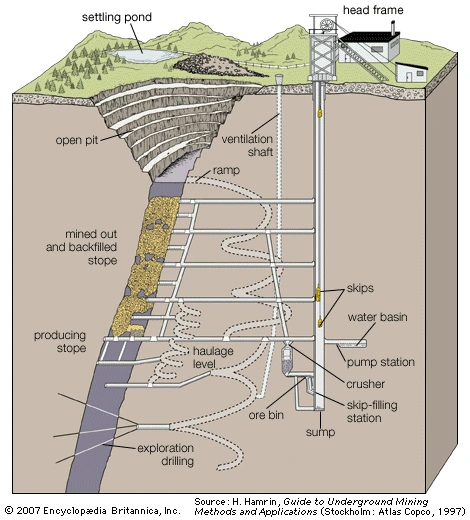
Contaminated air, now carrying dust, gases, heat, and moisture, is channeled into return airways and eventually expelled through an exhaust shaft back to the surface. Throughout this entire cycle, gas sensors and airflow meters continuously monitor conditions, feeding data back to the mine’s control room so adjustments can be made in real time if gas levels rise or airflow drops in any section.
Importance of Mine Ventilation System
1. Ensures Miner Safety – Provides breathable air and removes toxic or explosive gases, directly protecting lives underground
2. Prevents Explosions – By diluting methane and coal dust concentrations below explosive limits, ventilation significantly reduces the risk of underground explosions
3. Improves Working Conditions – Controls temperature and humidity, allowing miners to work efficiently even at great depths
4. Supports Machinery Operation – Removes diesel exhaust and heat generated by heavy underground equipment
5. Regulatory Compliance – Ventilation standards are mandated by mining safety regulations, such as DGMS guidelines in India, and proper systems are essential for legal operation
6. Boosts Productivity – A well-ventilated mine allows for longer, safer working shifts and smoother operations overall
Challenges in Mine Ventilation Systems
Despite their critical importance, ventilation systems face several operational challenges:
1. Air Leakage – Air can escape through cracks and openings, reducing ventilation efficiency
2. Power Interruptions – Fan failures or power outages can completely stop air circulation, creating dangerous conditions
3. Fan Wear and Damage – Fans degrade over time and require regular maintenance
4. Ductwork Degradation – Ducts can tear, collapse, or develop leaks
5. Poor Airway Maintenance – Blocked or poorly maintained airways reduce airflow effectiveness
6. Gas Monitoring Failures – Faulty sensors can miss dangerous gas accumulation
Routine inspection and preventive maintenance improve ventilation reliability and miner safety.
Maintenance of Mine Ventilation System
Regular maintenance ensures efficient ventilation operation and extends system life:
1. Fan Inspection – Check fan bearings, blades, and motor performance regularly
2. Belt and Motor Checks – Inspect drive belts and electric motors for wear and damage
3. Duct Inspection – Check ducts and tubing for tears, leaks, and blockages
4. Airway Cleaning – Remove dust and debris from main airways regularly
5. Sensor Calibration – Calibrate gas sensors monthly to ensure accurate readings
6. Door and Regulator Maintenance – Check ventilation doors and regulators for proper operation
7. Bearing Lubrication – Keep all bearings properly lubricated to prevent overheating
8. Safety Switch Testing – Test all safety switches and interlocks regularly
Preventive maintenance reduces downtime and prevents dangerous situations from developing.
Safety Devices in Mine Ventilation System
Mine Illumination System: Complete Guide to Underground Mine Lighting, Standards and Safety
Several safety devices protect workers and equipment:
1. Pull Cord Switch – Allows miners to stop fans in emergencies
2. Zero Speed Switch – Alerts operators when fan speed drops dangerously low
3. Emergency Stop Button – Stops all ventilation systems immediately in emergencies
4. Overload Protection – Prevents motor damage from excessive load
5. Fire Detection System – Detects fires caused by friction or electrical faults
6. Belt Rip Detector – Alerts operators when ductwork tears or ruptures
7. Interlocking System – Prevents operation of underground machinery if ventilation stops
8. Gas Alarm System – Triggers alerts when dangerous gas levels are detected
These safety systems minimize accidents and equipment damage.
Conclusion
The Mine Ventilation System is not just a support function, it is the lifeline of underground mining. From preventing deadly gas explosions to keeping miners cool and breathing easy hundreds of meters below the surface, this system quietly performs the most important job in the mine.
For any mining engineer or aspirant preparing for GATE, DGMS, or Mining Sirdar examinations, understanding ventilation systems in depth, including gas laws, fan characteristics, and airway resistance calculations, is absolutely essential to success in mining careers.
Modern ventilation technology continues to advance with automated monitoring systems, predictive maintenance, and smart sensors. As mines go deeper and production demands increase, ventilation engineering remains one of the most critical and challenging aspects of mining operations.