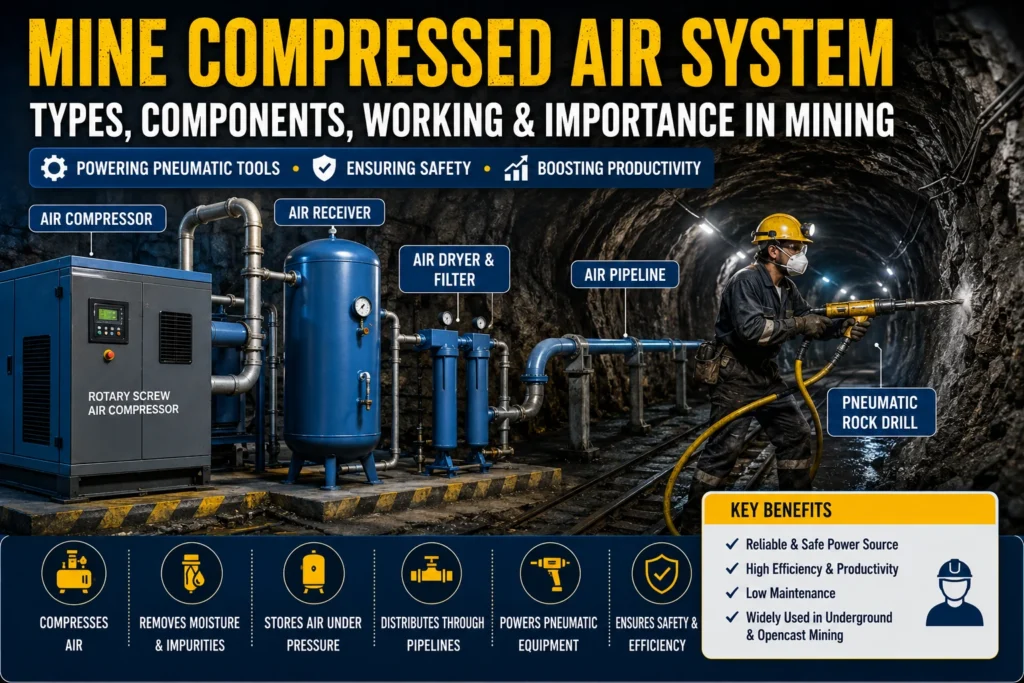
Modern mining operations rely on several utility systems to ensure safe and efficient production. One of the most important utility systems is the Mine Compressed Air System, which supplies high-pressure air to operate pneumatic drills, rock breakers, loaders, pumps, and other mining equipment.
Before electricity became common in underground mines, compressed air was the primary source of power for mining machinery. Even today, compressed air remains an essential utility because pneumatic equipment is reliable, safe in hazardous environments, and capable of operating under harsh underground conditions.
A properly designed Mine Compressed Air System ensures a continuous supply of clean, dry, and adequately pressurized air to different sections of the mine. It improves equipment performance, increases productivity, reduces downtime, and enhances workplace safety.
For GATE Mining, DGMS, Mining Sirdar, Overman, Mine Surveyor, PSU recruitment, and Mining Engineering students, the Mine Compressed Air System is an important examination topic because it combines mining machinery, mine services, and industrial utilities.
What Is a Mine Compressed Air System?
A Mine Compressed Air System is a network of air compressors, receivers, pipelines, valves, filters, dryers, and control equipment that compresses atmospheric air and distributes it under pressure to various mining machines and equipment.
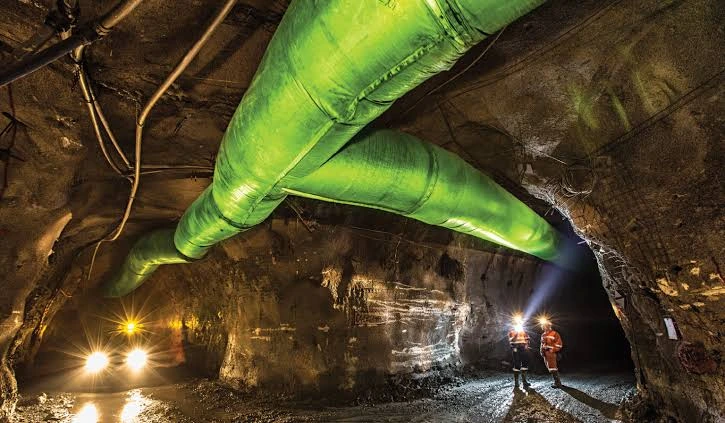
The system converts electrical or mechanical energy into compressed air energy. This stored energy is then transmitted through pipelines and used to power pneumatic machines across the mine.
The primary objectives of the system are:
- Supply compressed air to mining equipment
- Operate pneumatic drilling machines
- Power rock breakers
- Run pneumatic pumps
- Support maintenance work
- Improve underground operational safety
Compressed air is often called the fourth utility after electricity, water, and fuel because of its extensive industrial applications.
Why Is a Mine Compressed Air System Important?
Mining environments are often dusty, wet, and hazardous. Electrical equipment may not always be suitable for every underground application, especially in gassy coal mines.
Compressed air provides a safe and dependable power source for many mining operations. Since pneumatic equipment does not produce electrical sparks at the point of operation, it is widely used in hazardous environments.
Major benefits include:
- Safe operation in underground mines
- Reliable power source
- High equipment durability
- Easy maintenance
- Continuous drilling operations
- Reduced risk of electrical hazards
- Improved productivity
- Efficient power transmission
Working Principle of a Mine Compressed Air System
The Mine Compressed Air System operates on a simple principle.
Atmospheric air is drawn into an air compressor through an intake filter. The compressor increases the pressure of the air by reducing its volume. The compressed air then passes through after-coolers, moisture separators, filters, and dryers before entering the air receiver.
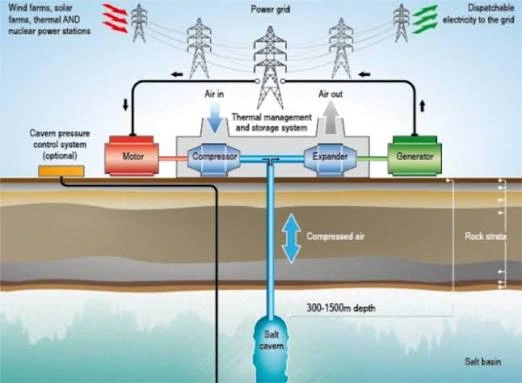
From the air receiver, compressed air flows through a network of pipelines to various underground and surface machines.
The basic operating cycle includes:
- Air intake
- Air compression
- Cooling
- Moisture removal
- Air storage
- Distribution through pipelines
- Equipment operation
Pressure regulators ensure that each machine receives compressed air at the required operating pressure.
Components of a Mine Compressed Air System
A complete Mine Compressed Air System consists of several interconnected components.
Major components include:
- Air Compressor
- Air Intake Filter
- After Cooler
- Moisture Separator
- Air Dryer
- Air Receiver
- Pressure Regulator
- Distribution Pipelines
- Control Valves
- Safety Relief Valve
- Pressure Gauges
- Pneumatic Tools
Each component contributes to maintaining air quality, pressure stability, and reliable equipment performance.
Types of Air Compressors Used in Mining
Different mining applications require different compressor designs.
Reciprocating Compressor
A reciprocating compressor uses a piston-cylinder arrangement to compress air. It delivers high-pressure air and is suitable for low to medium flow applications.
Advantages
- High pressure capability
- Simple construction
- Reliable operation
Rotary Screw Compressor
Rotary screw compressors use two intermeshing rotors to compress air continuously.
These compressors are widely used in modern mines because they provide uninterrupted airflow with low vibration.
Advantages
- Continuous operation
- High efficiency
- Low maintenance
- Compact design
Centrifugal Compressor
Centrifugal compressors compress air using high-speed rotating impellers.
They are generally installed in large mining projects where high airflow is required.
Advantages
- Large air capacity
- Smooth operation
- Suitable for continuous service
Air Distribution System
After compression, air is distributed throughout the mine using steel pipelines or heavy-duty compressed-air hoses.
The distribution system includes:
- Main air pipeline
- Branch pipelines
- Flexible hoses
- Isolation valves
- Pressure regulators
- Drain valves
A well-designed pipeline network minimizes pressure losses and ensures efficient air delivery.
Applications of Mine Compressed Air System
Compressed air is used in almost every mining operation.
Major applications include:
- Jack hammer drilling
- Rock drilling machines
- Pneumatic loaders
- Pneumatic pumps
- Rock breakers
- Air-operated winches
- Pneumatic grinders
- Shotcrete equipment
- Ventilation control devices
- Maintenance workshops
Both underground and opencast mines use compressed air extensively.
Advantages of Mine Compressed Air System
A properly designed Mine Compressed Air System offers numerous benefits.
Major advantages include:
- Safe operation in hazardous areas
- Reliable power transmission
- Easy installation
- Low fire risk
- High equipment life
- Quick maintenance
- Environmentally clean operation
- Continuous production support
These advantages explain why compressed air remains one of the most widely used utility systems in mining.
Limitations of Mine Compressed Air System
Despite its advantages, the system has certain limitations.
Common disadvantages include:
- High energy consumption
- Air leakage losses
- Pressure drop over long distances
- Moisture accumulation
- Noise generation
- Regular maintenance requirements
Proper maintenance and leak management significantly improve system efficiency.
Maintenance of Mine Compressed Air System
Regular maintenance ensures reliable operation and energy efficiency.
Important maintenance practices include:
- Cleaning intake filters
- Checking oil levels
- Removing moisture
- Inspecting pipelines
- Detecting air leakage
- Testing safety valves
- Monitoring pressure
- Servicing compressors periodically
Preventive maintenance reduces breakdowns and operating costs.
Safety Precautions
Safe operation of compressed air systems is essential.
Follow these precautions:
- Never exceed rated pressure.
- Inspect hoses before use.
- Replace damaged pipelines immediately.
- Test safety valves regularly.
- Remove moisture from receivers.
- Wear appropriate PPE while operating pneumatic tools.
- Isolate the system before maintenance.
- Avoid directing compressed air toward people.
These practices help prevent accidents and equipment failure.
Future of Mine Compressed Air Systems
Mining companies are adopting advanced technologies to improve compressed air efficiency.
Emerging developments include:
- Variable Speed Drive (VSD) compressors
- Smart pressure monitoring
- IoT-enabled compressor management
- AI-based predictive maintenance
- Leak detection sensors
- Energy-efficient compressors
- Remote monitoring systems
- Automated pressure control
These technologies reduce energy costs while improving reliability.
Conclusion
The Mine Compressed Air System is one of the most important utility systems in mining. It powers pneumatic equipment, improves operational efficiency, enhances worker safety, and supports continuous production.
With the adoption of energy-efficient compressors, intelligent monitoring, and predictive maintenance technologies, compressed air systems are becoming more reliable and economical than ever before.
Understanding the Mine Compressed Air System is essential for every Mining Engineer, Mining Sirdar, Overman, DGMS candidate, and GATE Mining aspirant because it forms a core part of mining machinery and mine services.
Frequently Asked Questions (FAQs)
What is a Mine Compressed Air System?
A Mine Compressed Air System is a network of compressors, pipelines, air receivers, and control equipment that supplies compressed air to mining machines.
Why is compressed air used in mining?
Compressed air provides a safe, reliable, and efficient source of power for pneumatic equipment used in underground and surface mining.
Which compressor is commonly used in modern mines?
Rotary screw compressors are widely used because of their continuous operation, high efficiency, and low maintenance.
What are pneumatic tools?
Pneumatic tools are machines powered by compressed air, such as jackhammers, rock drills, grinders, and air-operated pumps.
What is the biggest problem in compressed air systems?
Air leakage is one of the biggest issues, as it reduces efficiency and increases energy consumption.