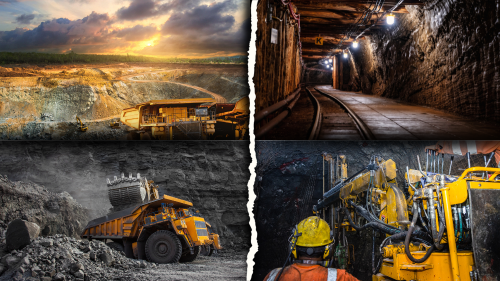
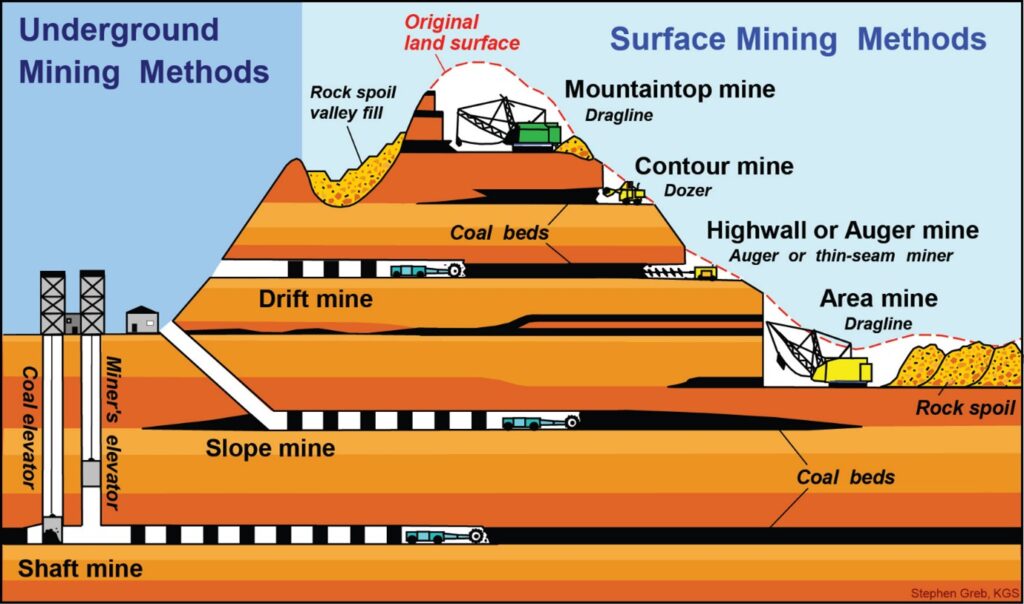
Levels are developed at different depths below the surface and are connected by vertical or inclined openings such as shafts, raises, and winzes. Each level acts as a working horizon from which drifts, crosscuts, and stopes are developed.
Understanding levels in mining is essential for mine layout, ventilation, transportation, safety, and overall operational efficiency.
What is a Level in Mining?
A level in mining is a horizontal underground working or a specific depth at which mining operations are conducted. It represents a floor-like structure within the mine where tunnels and other workings are developed.
Levels are usually named based on their depth, such as 100-meter level, 200-meter level, etc., indicating their vertical distance from the surface.
Purpose of Levels in Mining
Levels are essential for organizing underground mining operations efficiently.
Systematic Mining
Levels divide the mine into structured sections for organized extraction.
Access and Movement
Provide pathways for workers, machinery, and materials.
Ventilation Control
Allow proper airflow distribution across the mine.
Ore Transportation
Facilitate movement of ore through haulage systems.
Safety Management
Help in controlling hazards and improving evacuation routes.
Types of Levels in Mining
Levels can be classified based on their function and location.
Main Level
The primary level used for transportation and main operations.
Sublevel
Intermediate levels between main levels used in specific mining methods.
Haulage Level
Used for transporting ore using rail tracks, conveyors, or trucks.
Production Level
Where actual ore extraction takes place.
Ventilation Level
Designed specifically for airflow management.
| Type of Level | Function |
|---|---|
| Main Level | Primary access and operations |
| Sublevel | Intermediate working level |
| Haulage Level | Transportation of ore |
| Production Level | Ore extraction |
| Ventilation Level | Airflow management |
Spacing Between Levels
The vertical distance between two levels is known as level spacing. It is a critical design factor in underground mining.
Factors Affecting Level Spacing
- Ore body thickness
- Mining method used
- Rock strength
- Economic considerations
- Safety requirements
Development of Levels in Mining
Developing a level involves creating horizontal passages at a specific depth.
Planning and Surveying
Engineers determine the exact depth and alignment.
Shaft Sinking or Access Creation
Access is created using shafts or inclines.
Drift Development
Horizontal tunnels (drifts) are driven along the level.
Crosscut Development
Crosscuts are created to reach the ore body.
Support Installation
Rock bolts, steel supports, and shotcrete are used for stability.
Connection of Levels
Different levels are interconnected using vertical or inclined openings.
Shafts
Provide main vertical access between levels and surface.
Raises
Connect lower levels to upper levels.
Winzes
Connect upper levels to lower levels.
Inclines
Provide sloping access between levels.
Equipment Used at Levels
| Equipment | Function |
|---|---|
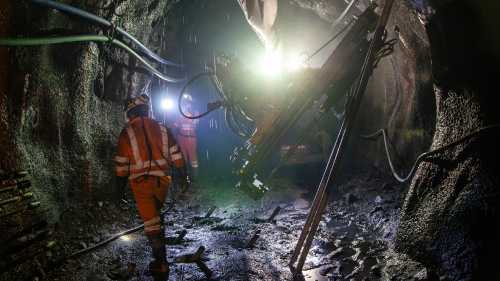
| Drilling Machines | Create blast holes |
| LHD Machines | Load and transport ore |
| Conveyors | Move materials |
| Rail Systems | Transport ore |
| Ventilation Fans | Air circulation |
Importance of Levels in Mining
Levels are essential for efficient underground mining operations.
They provide organized access to different parts of the ore body.
Levels improve ventilation and transportation efficiency.
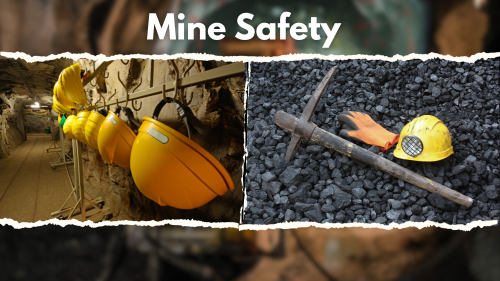
They also help in maintaining safety and controlling mining operations.
Safety Challenges at Mining Levels
| Hazard | Description |
|---|---|
| Roof Collapse | Unstable rock may fall |
| Gas Accumulation | Dangerous gases may build up |
| Dust Exposure | Health risks from dust |
| Water Inflow | Flooding risk |
Proper monitoring, ventilation, and support systems are required to ensure safety.
Modern Technology in Level Mining
Automation
Automated equipment improves efficiency and safety.
Digital Mine Planning
Software helps design optimal level layouts.
Real-Time Monitoring
Sensors monitor gas, temperature, and structural stability.
Electric Equipment
Reduces emissions and improves working conditions.
Frequently Asked Questions
What is a level in mining?
What is level spacing?
Why are levels important?
How are levels connected?
Conclusion
Levels are the backbone of underground mining operations, providing structured access to mineral deposits at different depths. They enable efficient extraction, transportation, ventilation, and safety management.
Proper planning and development of levels are essential for the success of any mining project. With modern technology and advanced equipment, level mining has become more efficient, safe, and productive.