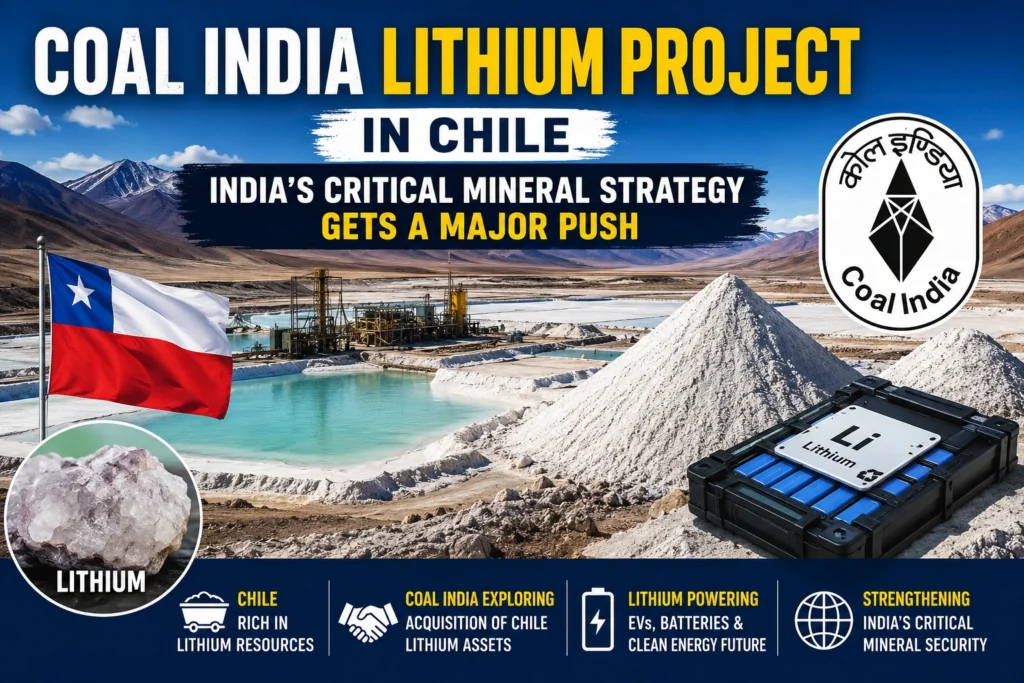
Coal India Lithium Project in Chile: Coal India is exploring a major move beyond its traditional coal business as the company considers acquiring a Chile-focused lithium unit owned by Canada’s Wealth Minerals. The development could mark another important step in India’s strategy to secure overseas supplies of critical minerals required for electric vehicles, batteries and energy storage.
According to a Reuters report published on August 11, 2026, Coal India is in advanced discussions to potentially acquire Wealth Minerals’ Chile-focused lithium unit. The deal, however, depends on regulatory developments in Chile, including approval of a lithium extraction licence already sought by the companies.
The proposed Coal India Lithium Project is particularly significant because Chile has one of the world’s largest lithium resource bases, making the country strategically important for companies looking to secure long-term access to battery minerals.
What Is the Coal India Lithium Project?
The Coal India Lithium Project refers to Coal India’s reported interest in acquiring a Chile-focused lithium business owned by Canada’s Wealth Minerals.
Wealth Minerals operates through its Chilean subsidiary, Kuska Minerals. Coal India and Kuska Minerals have jointly applied for a lithium extraction licence from the Chilean government.
The application was filed in October 2025, but the process has faced delays because of political changes in Chile. According to Reuters, the potential acquisition or joint venture depends heavily on the approval of this licence.
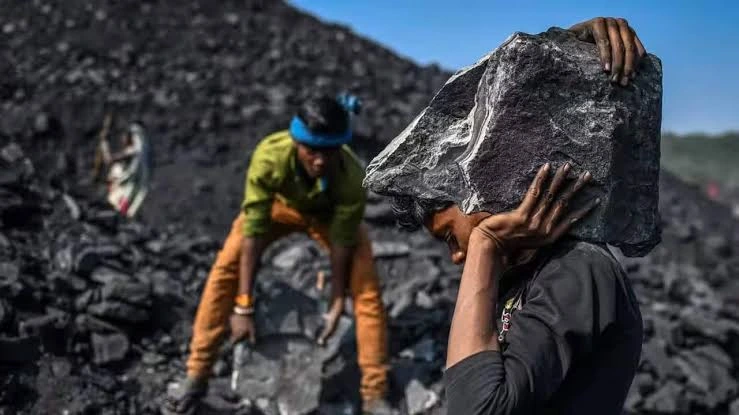
This means the proposed transaction is not yet a completed acquisition. It remains subject to negotiations, regulatory approval and other conditions.
Key points about the proposed project
- Coal India is exploring a Chile-focused lithium acquisition.
- Wealth Minerals owns the Chilean lithium unit involved in the discussions.
- The Chilean subsidiary is called Kuska Minerals.
- Coal India and Kuska Minerals have applied for a lithium extraction licence.
- The licence application was submitted in October 2025.
- Political changes in Chile have delayed the approval process.
- The potential transaction could strengthen India’s access to lithium resources.
Why Is Coal India Moving Into Lithium?
Coal India is traditionally associated with coal mining and India’s energy security. However, the global mining industry is changing rapidly.
The growth of electric vehicles, battery storage, renewable energy and advanced electronics has increased the strategic importance of minerals such as lithium.
For India, securing these minerals has become a national priority because domestic production is currently insufficient to meet the country’s potential future requirements.
Coal India’s interest in lithium therefore represents a broader diversification strategy.
Instead of remaining focused only on coal, Indian mining companies are increasingly examining opportunities in critical minerals and overseas mineral assets.
This could help Indian companies gain experience in new commodities while supporting the country’s long-term mineral security.
Why Is Lithium Important for the Mining Industry?
Lithium is one of the most important minerals used in modern rechargeable battery technology.
It is particularly important for lithium-ion batteries used in:
- Electric vehicles
- Energy storage systems
- Portable electronics
- Grid-scale battery storage
- Industrial energy applications
As electric mobility expands, demand for battery materials is expected to remain strategically important.
This is why governments and mining companies around the world are trying to secure reliable lithium supply chains.
For India, developing overseas lithium resources could reduce exposure to supply disruptions and provide greater access to an important battery mineral.
Why Chile Is Important for Lithium Mining
Chile is one of the world’s major lithium-producing countries and has significant lithium resources.
Its position in the global lithium industry makes it an attractive destination for international mining and resource companies.
For Coal India, a presence in Chile could potentially provide access to a mineral that is very different from its traditional coal portfolio.
The country is already an important part of the global lithium supply chain, making any successful Indian participation potentially significant for India’s critical-mineral strategy. Reuters reported that Chile holds the world’s third-largest lithium reserves.
Coal India and the Shift Toward Critical Minerals
The proposed Coal India Lithium Project is part of a larger transformation taking place within India’s mining sector.
Coal India has historically played a central role in supplying coal for India’s power and industrial sectors. However, India’s mineral requirements are becoming more diversified.
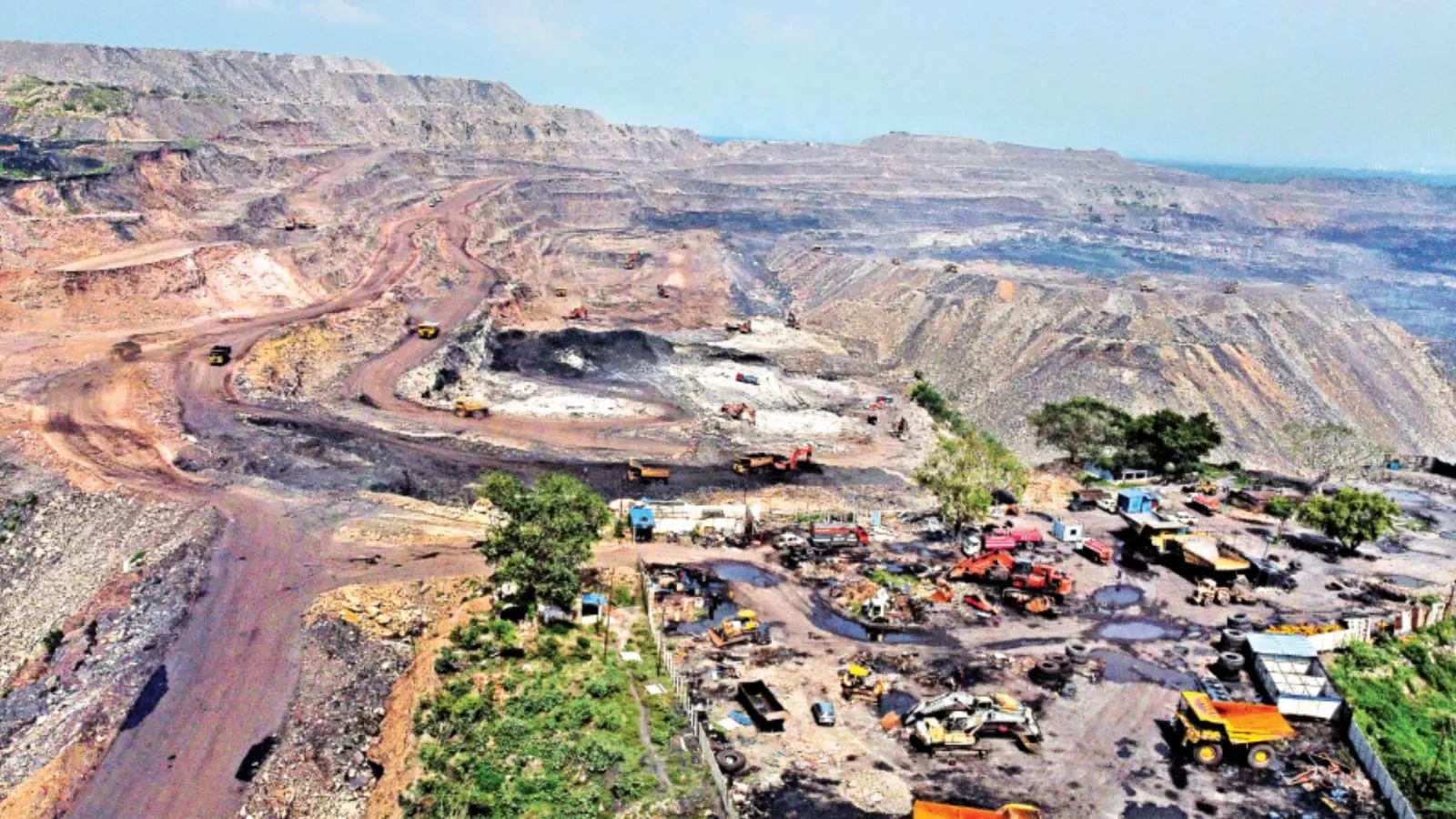
Critical minerals are now important for sectors such as:
- Renewable energy
- Electric mobility
- Battery manufacturing
- Electronics
- Semiconductor-related industries
- Defence and advanced manufacturing
- Energy storage
The Indian government has also been focusing on strengthening critical-mineral supply chains through international partnerships and domestic initiatives.
This creates an opportunity for large Indian mining companies to expand their expertise beyond conventional minerals.
What Could a Chile Lithium Acquisition Mean for Coal India?
If the transaction eventually moves forward, it could represent a major strategic change for Coal India.
1. Commodity Diversification
Coal India would gain exposure to lithium, a mineral associated with the rapidly growing battery and energy-storage industry.
2. Overseas Mining Experience
An international lithium project could give Coal India experience in overseas mineral exploration, project development and resource management.
3. Critical Mineral Security
India could gain another potential source of lithium outside its domestic mineral base.
4. Long-Term Strategic Value
Lithium is expected to remain important as battery-based technologies expand. An overseas asset could therefore have long-term strategic value.
However, these are potential benefits rather than guaranteed outcomes because the proposed transaction has not yet been finalized.
What Is the Status of the Lithium Licence?
The lithium extraction licence is one of the most important factors in the proposed Coal India Lithium Project.
Coal India and Kuska Minerals applied for the licence in October 2025. According to Reuters, the approval process has been delayed amid political changes in Chile.
The licence is particularly important because the potential acquisition is linked to the ability to develop the underlying lithium opportunity.
Until the regulatory process moves forward, it is difficult to determine the final structure, investment requirement or development timeline of the project.
India’s Overseas Mineral Strategy
India has been working to secure mineral resources outside the country as part of its broader critical-mineral strategy.
The objective is not simply to increase imports. Instead, overseas mining partnerships can potentially give Indian companies greater participation across the mineral supply chain.
India has already been pursuing strategic mineral partnerships with countries including Argentina, Australia, Japan, Germany, Brazil and Canada, according to Reuters.
The proposed Chile opportunity could therefore become another part of this international resource strategy.
What Does This Mean for Mining Engineers?
The changing focus of Indian mining companies could also influence the future skill requirements for mining engineers.
Traditional mining knowledge will remain important, but professionals may increasingly need exposure to areas such as:
- Critical mineral exploration
- Lithium mining
- Mineral processing
- Resource estimation
- International mining projects
- Mine economics
- Environmental management
- Sustainable mining
- Digital mine technologies
- Global mineral supply chains
For mining engineering students, this diversification shows that career opportunities in the sector are not limited to coal mining alone.
The emergence of critical minerals could create new technical and professional roles across exploration, mining, processing and project management.
Challenges Ahead for the Coal India Lithium Project
Despite its potential, the proposed project faces several challenges.
Regulatory Approval
The lithium extraction licence needs to progress before the underlying mining opportunity can be properly evaluated.
International Project Risks
Overseas mining projects involve regulatory, political, financial and operational risks that can differ significantly from domestic projects.
Project Development Timeline
Mining projects require extensive exploration, feasibility studies, approvals, infrastructure development and capital investment before production begins.
Lithium Market Conditions
Lithium prices and global battery demand can influence the economics of new mining projects.
Technical Requirements
Lithium extraction requires specialized geological, mining and processing expertise, meaning Coal India may need to build or acquire additional technical capabilities.
Coal India’s Diversification Could Change Its Future Role
The proposed lithium move is important because it demonstrates how the role of large mining companies can evolve.
Coal will continue to remain important for India’s energy system, but the country’s industrial growth is simultaneously creating demand for a much wider range of minerals.
A company with decades of experience in large-scale mining could potentially use that expertise to participate in emerging mineral sectors.
The Coal India Lithium Project therefore represents more than a possible overseas acquisition. It reflects the changing definition of mineral security in India.
Conclusion
The Coal India Lithium Project in Chile is a development worth watching closely as India strengthens its critical-mineral strategy.
Coal India is reportedly exploring the acquisition of a Chile-focused lithium unit owned by Canada’s Wealth Minerals. The companies have also applied for a lithium extraction licence through Wealth Minerals’ Chilean subsidiary, Kuska Minerals.
The proposed move could give Coal India exposure to lithium and potentially strengthen India’s access to an important battery mineral.
However, the project is still at the negotiation and regulatory stage. The licence approval in Chile remains a key factor, and the final structure of any acquisition or joint venture has not been confirmed.
If the project eventually moves forward, it could represent an important milestone in Coal India’s diversification from traditional coal mining toward critical minerals.
For India’s mining industry, the bigger message is clear: the future of mining will not be limited to coal and iron ore. Critical minerals such as lithium are becoming increasingly important to India’s energy, technology and industrial security.