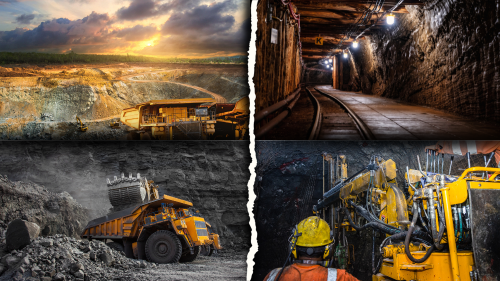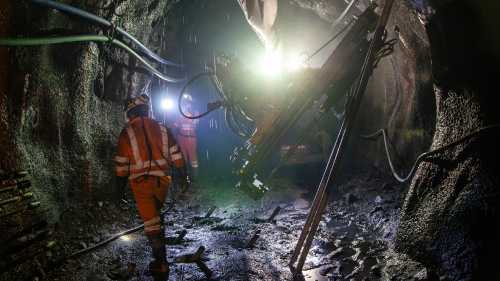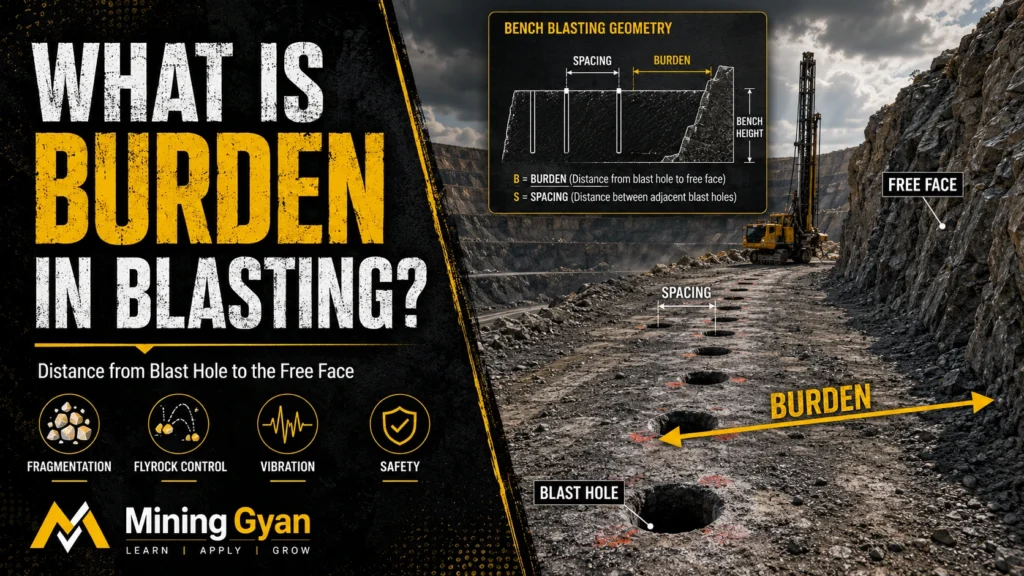
Introduction: In mining and quarrying, blasting is one of the most important operations for breaking rock efficiently. A well-designed blast can improve rock fragmentation, reduce drilling costs, lower fuel consumption during loading and hauling, and improve overall mine productivity. Among all blast design parameters, burden in blasting is one of the most critical.

Many mining learners understand explosives and drill holes but struggle to understand how burden affects blast performance. This guide from Mining gyan explains the concept in simple terms while also covering practical mining engineering considerations used in India and around the world.
Quick Answer
What is burden in blasting?
Burden in blasting is the shortest distance from a blast hole to the nearest free face or rock surface. It controls how explosive energy breaks and displaces the rock. Correct burden produces efficient fragmentation and controlled movement, while incorrect burden can cause flyrock, poor breakage, excessive vibration, or backbreak.
What is Burden in Blasting?

Definition
Definition of burden in blasting
Burden in blasting is the perpendicular distance between a blast hole and the nearest free face. In bench blasting, it is usually the distance from the hole to the bench face. This parameter determines how much rock each hole is expected to break.
In simple terms, burden is the thickness of rock in front of the explosive. When the explosive detonates, energy travels through the rock and pushes the burden toward the free face. If the burden is too large, the rock resists movement and may not fragment properly. If the burden is too small, energy escapes too quickly and can create flyrock and airblast.
Common Mining Terms
Common mining terms related to burden
|
Term |
Meaning |
|
Burden |
Distance from blast hole to free face |
|
Spacing |
Distance between adjacent holes in the same row |
|
Stemming |
Inert material placed at the top of the hole |
|
Bench Height |
Vertical height of the bench |
|
Subdrilling |
Extra drilling below bench floor |
|
Powder Factor |
Explosive quantity per unit rock volume |
These parameters work together in drill and blast operations.
Why Burden Matters in Mining Blasts
Importance
Why burden is important
Burden is important because it controls explosive energy distribution, rock fragmentation, throw, vibration, and overall blasting efficiency. It directly affects drilling cost, crushing cost, equipment productivity, and blast safety.
In practical mining, burden influences:
-
Rock fragmentation
Correct burden produces manageable rock sizes for loaders, crushers, and conveyors.
-
Explosive utilization
Proper burden ensures explosive energy is used for breaking rock rather than escaping into the air.
-
Flyrock control
Excessively small burden increases the risk of dangerous rock ejection.
-
Ground vibration
Poor burden can increase vibration and affect nearby structures.
-
Bench stability
Improper burden may cause toe problems, overbreak, or unstable walls.
For mines near villages, highways, railways, or industrial facilities in India, burden design is also important for regulatory compliance and community safety.
How Burden Works in Drill and Blast Operations
Mechanism
How burden affects a blast
During detonation, explosive energy generates high-pressure gases and shock waves. The rock between the blast hole and the free face (the burden) is pushed outward. The burden acts as the primary rock mass that must move for the blast to succeed.
A simplified sequence is:
-
Explosive detonates inside the blast hole.
-
Shock waves fracture the surrounding rock.
-
Gas pressure expands fractures.
-
The burden moves toward the free face.
-
Rock breaks into fragments.
-
Muck pile is formed for loading.
In surface mining blasting, the free face is usually the bench face. In underground development headings, the free face may be created by a cut pattern.
Burden vs Spacing in Blasting
Comparison
Burden vs spacing
Burden is the distance to the free face, while spacing is the distance between adjacent holes. Burden controls forward rock movement; spacing controls interaction between holes.
|
Parameter |
Measures |
Primary Effect |
|
Burden |
Hole to free face distance |
Forward rock movement and fragmentation |
|
Spacing |
Hole to hole distance |
Interaction between adjacent holes |
A common design relationship in bench blasting is:
Spacing = 1.2 to 1.5 × Burden
However, the actual ratio depends on rock type, explosive, hole diameter, and desired fragmentation.
How to Calculate Burden in Blasting
Calculation
How burden is estimated
There is no single universal burden formula. Engineers estimate burden using hole diameter, rock strength, explosive properties, and bench geometry. Initial values are often refined through field trials and blast monitoring.
Common empirical relationship
For many surface bench blasts:
B \approx k \times D
Where:
-
B = burden
-
D = blast hole diameter
-
k = empirical constant (often 20–40 depending on units, rock, and explosive)
Because different regions use different units (mm, inches, meters), the constant varies. Engineers should always follow site-specific design standards.
Simplified example
Suppose a quarry uses 102 mm diameter blast holes in medium-hard rock.
A preliminary burden might be selected in the range of 2.5–3.5 m based on local blasting experience, explosive type, and bench height.
This value would then be adjusted after evaluating fragmentation, vibration, and muck pile performance.
Important: Real blast design requires engineering judgment, site testing, and compliance with safety regulations. Do not rely solely on simplified formulas.
Factors Affecting Burden in Blasting
Factors
What affects burden distance
Burden distance depends on rock strength, hole diameter, explosive energy, bench height, jointing, water conditions, and desired fragmentation. These factors determine how efficiently explosive energy breaks and moves the rock.
Major factors include:
1. Rock Strength
Hard granite generally requires different burden values than soft limestone or coal measures.
2. Hole Diameter
Larger holes usually allow larger burden and spacing.
3. Explosive Type
High-energy explosives may support larger burden compared with lower-energy products.
4. Bench Height
Taller benches often require adjustments to burden and spacing.
5. Geological Structure
Joints, bedding planes, faults, and fractures can strongly influence blast performance.
6. Water Conditions
Water-filled holes may require different explosives and burden considerations.
7. Desired Fragmentation
Finer fragmentation often requires tighter burden and spacing.
Burden Design for Surface Mining

Surface Mining
Surface mining burden design
In surface mining, burden is designed with bench height, hole diameter, rock conditions, and fragmentation goals in mind. A typical bench blast balances drilling cost, explosive cost, and downstream processing efficiency.
Typical considerations for bench blasting burden include:
-
Bench height
-
Hole diameter
-
Subdrilling
-
Stemming length
-
Powder factor
-
Vibration limits
-
Fragmentation requirements
In Indian limestone, iron ore, and granite quarries, operators often optimize burden based on crusher feed size and loading equipment capacity.
Burden Design for Underground Mining

Underground Mining
Underground blasting burden
Underground blasting uses different burden concepts because free faces are limited. Cut holes create an initial void, and the burden for surrounding holes is designed relative to that void and excavation geometry.
In underground development headings, burden design differs from surface benches because free faces are limited. Engineers create an initial void (cut) and then design the burden for surrounding holes relative to that void.
Common underground considerations include:
-
Heading size
-
Cut design
-
Rock competency
-
Desired advance per round
-
Ground support requirements
Underground blasting parameters must be carefully coordinated with ventilation, support installation, and safety procedures.
Controlled Blasting Burden
Controlled Blasting
Controlled blasting burden
Controlled blasting often uses smaller burden and spacing near final walls to reduce overbreak, vibration, and damage to remaining rock. Techniques include presplitting, cushion blasting, and trim blasting.
When blasting near final pit walls, buildings, roads, or sensitive infrastructure, engineers may use controlled blasting burden techniques such as:
-
Presplitting
-
Cushion blasting
-
Trim blasting
-
Line drilling
These methods typically use smaller burden and spacing to minimize overbreak and vibration.
Common Mistakes in Burden Design
Mistakes
Common burden design mistakes
The most common burden errors are using a value that is too large, too small, or copied from another site without considering local geology. Poor drilling accuracy and ignoring water conditions also lead to poor blast results.
Common mistakes include:
-
Using burden that is too large
Results: poor fragmentation, toe problems, high secondary breaking.
-
Using burden that is too small
Results: flyrock, airblast, excessive fines, safety risks.
-
Ignoring geological structures
Joints and faults can drastically change blast behavior.
-
Poor drilling accuracy
Deviation changes the effective burden.
-
Copying designs from another mine
Each site has unique geology and operating conditions.
-
Ignoring water conditions
Water can affect explosive performance and energy distribution.
Expert Tips for Burden Optimization
Optimization
How to optimize burden
Optimize burden by starting with proven site guidelines, measuring actual fragmentation and vibration, and adjusting burden and spacing gradually. Burden optimization is a continuous process rather than a one-time calculation.
Experienced blasting engineers often follow these practices:
-
Start with proven site-specific guidelines.
-
Measure actual fragmentation after blasting.
-
Monitor vibration and flyrock.
-
Adjust burden and spacing gradually.
-
Use drone surveys or blast monitoring tools when available.
-
Coordinate blasting with crusher performance data.
-
Document every blast for continuous improvement.
Burden optimization is an ongoing process, not a one-time calculation.
Comparison Table: Correct vs Incorrect Burden
|
Condition |
Too Small Burden |
Correct Burden |
Too Large Burden |
|
Fragmentation |
Excess fines |
Target fragmentation |
Oversized boulders |
|
Flyrock |
High risk |
Controlled |
Low |
|
Vibration |
Can increase |
Acceptable |
Can increase |
|
Explosive Efficiency |
Poor energy utilization |
Efficient |
Poor breakage |
|
Loading Productivity |
Mixed results |
Good |
Poor |
|
Secondary Breaking |
Usually low |
Minimal |
High |
Myths vs Facts
|
Myth |
Fact |
|
More burden always reduces blasting cost. |
Excessive burden can create oversized rock and increase downstream costs. |
|
One burden formula works everywhere. |
Burden depends on geology, explosives, hole diameter, and bench geometry. |
|
Flyrock only depends on explosive quantity. |
Insufficient burden is a major cause of flyrock. |
|
Spacing is more important than burden. |
Both are critical and must be designed together. |
|
Experienced miners don’t need measurements. |
Modern blast optimization relies on measurement, monitoring, and data. |
Indian Mining Context
India
Burden design in India
Indian mines face varied geology, monsoon water conditions, and proximity to communities. Burden design must therefore balance productivity, safety, environmental control, and regulatory compliance.
In India, burden design is influenced by:
-
Diverse geology (granite, limestone, coal, iron ore, bauxite, etc.).
-
Monsoon-related water issues in blast holes.
-
Proximity to villages and infrastructure.
-
DGMS safety requirements.
-
Environmental and vibration considerations.
Mines operating near populated areas often use more conservative burden and controlled blasting techniques to reduce vibration and flyrock.
For learners searching online for burden in blasting near me, remember that local geology matters more than location alone. A burden value that works in a limestone quarry in Rajasthan may not work in a granite quarry in Karnataka or an iron ore mine in Odisha.
Frequently Asked Questions
1. What is burden in blasting?
Burden is the shortest distance between a blast hole and the nearest free face. It represents the rock thickness that the explosive must break and move.
2. Why is burden important in blasting?
Burden controls fragmentation, flyrock, vibration, explosive efficiency, and overall blast performance.
3. How do you calculate burden in blasting?
Engineers estimate burden using hole diameter, rock properties, explosive energy, bench geometry, and field experience. Site-specific testing is essential.
4. What happens if burden is too small?
Too small burden can cause flyrock, airblast, excessive fines, and unsafe blasting conditions.
5. What happens if burden is too large?
Too large burden can lead to poor fragmentation, oversized boulders, toe problems, and increased secondary breaking costs.
6. What is the difference between burden and spacing?
Burden is the distance to the free face, while spacing is the distance between adjacent holes. Both must be designed together.