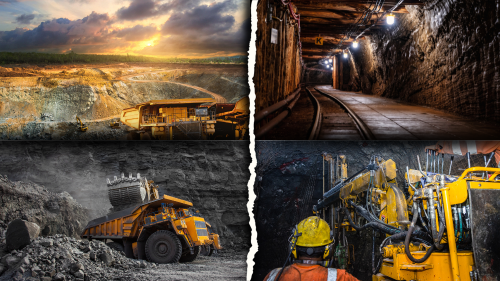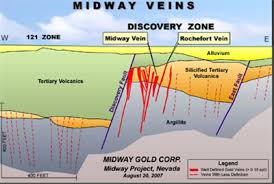
Strike is a fundamental concept in mining geology and structural geology. It refers to the horizontal direction of a rock layer, mineral seam, or geological structure as it intersects with a horizontal plane. In mining engineering, strike helps geologists determine the orientation of rock formations and locate mineral deposits.
Rock layers in the earth’s crust are rarely perfectly horizontal. Due to geological processes such as tectonic forces, folding, and faulting, rock strata may become tilted or deformed. The strike direction helps geologists understand how these rock layers extend across the earth’s surface.
Understanding strike is extremely important in mining operations because it helps engineers plan mine layouts, tunnel directions, exploration drilling, and geological mapping.
What is Strike in Mining?
In mining geology, strike is defined as the compass direction of a horizontal line on the surface of a rock layer or geological plane. This line represents the intersection between a rock layer and an imaginary horizontal plane.
The strike direction indicates the orientation of the rock layer across the earth’s surface. It does not describe the slope of the rock layer but rather its horizontal alignment.
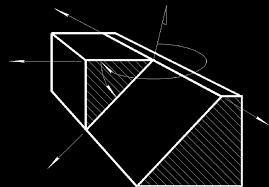
Strike is usually expressed as a compass direction such as north-south, east-west, or as an angle measured in degrees from north.
Strike and Dip Relationship
Strike and dip are two geological measurements used together to describe the orientation of rock layers. While strike represents the horizontal direction of the rock layer, dip describes the angle at which the layer slopes downward.
The dip direction is always perpendicular to the strike direction. Together, strike and dip provide a complete description of the three-dimensional orientation of geological strata.
| Parameter | Strike | Dip |
|---|---|---|
| Definition | Horizontal direction of rock layer | Angle of inclination of rock layer |
| Measurement | Measured using compass direction | Measured in degrees from horizontal |
| Purpose | Shows orientation of strata | Shows slope of strata |
Understanding this relationship helps geologists interpret geological structures and create accurate geological maps.
Measurement of Strike in Mining
Strike is measured in the field using specialized geological instruments. These measurements are important for mapping rock formations and locating mineral deposits.
Instruments Used for Measuring Strike
| Instrument | Purpose |
|---|---|
| Brunton Compass | Measures strike and dip of rock layers |
| Geological Compass | Determines orientation of rock strata |
| GPS Mapping Tools | Records geological survey locations |
| Digital Geological Devices | Provides precise strike measurements |
Steps to Measure Strike
First, the geologist identifies a visible rock bedding plane or geological surface. The compass is then placed flat against the rock surface to determine the horizontal direction.
The compass reading that aligns with the horizontal line on the rock layer represents the strike direction. This value is recorded in degrees or compass directions.
Types of Strike Orientation
Rock layers can extend in different directions depending on geological structures. The orientation of strike may vary significantly across different mining regions.
North-South Strike
In this case, the rock layer extends in a north-south direction across the surface. Geological mapping often identifies this orientation in sedimentary basins.
East-West Strike
An east-west strike indicates that the rock layer runs horizontally across the earth from east to west.
Oblique Strike
Oblique strike occurs when the rock layer extends diagonally across the surface, such as northeast-southwest or northwest-southeast directions.
Importance of Strike in Mining Engineering
The strike direction of rock layers plays a crucial role in many mining engineering decisions.
Geological Mapping
Strike measurements allow geologists to create accurate geological maps that show the orientation of rock formations.
Mine Planning
Mining tunnels and roadways are often developed along the strike direction because this allows engineers to follow the mineral seam more efficiently.
Exploration Drilling
Strike information helps determine the best drilling direction for exploration activities.
Ore Body Prediction
Understanding strike helps geologists predict how far a mineral deposit extends underground.
Strike in Underground Mining
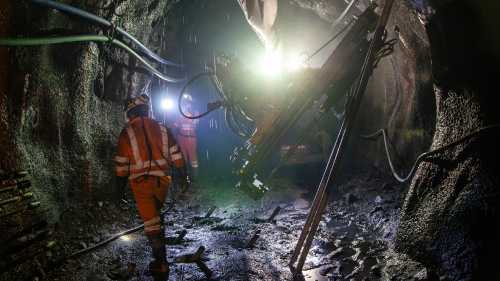
In underground mining operations, strike plays a significant role in the layout of tunnels and galleries.
Mine roadways are often developed parallel to the strike direction so that the mining operation can follow the mineral seam for long distances.
Effect on Tunnel Development
Tunnels developed along strike reduce excavation difficulties and allow efficient mineral extraction.
Effect on Ventilation Systems
The orientation of tunnels relative to strike can influence airflow patterns inside the mine.
Strike in Surface Mining
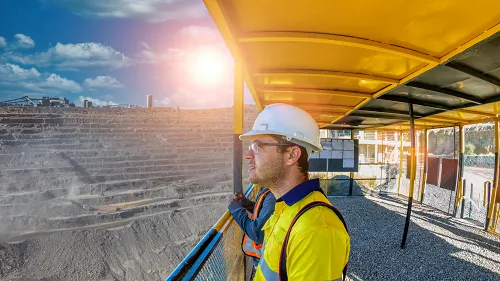
In open pit mining operations, strike direction affects the design of pit walls and bench orientation.
If the strike direction is aligned with the pit wall, engineers must carefully evaluate slope stability to avoid rock failures.
Geologists analyze strike data to determine safe pit slopes and mining sequences.
Challenges Related to Strike in Mining
| Challenge | Description |
|---|---|
| Irregular Geological Structures | Strike direction may change due to folding or faulting |
| Complex Ore Bodies | Mineral deposits may not follow a consistent strike |
| Mapping Errors | Incorrect strike measurements can affect mine planning |
| Structural Instability | Certain strike orientations may influence rock stability |
Frequently Asked Questions
What is strike in mining?
What is the difference between strike and dip?
Which instrument measures strike?
Why is strike important in mining?
Conclusion
Strike is a key geological parameter used to describe the orientation of rock layers in mining geology. It provides valuable information about how geological formations extend across the earth’s surface.
Understanding strike helps mining engineers design efficient mine layouts, plan exploration activities, and improve the accuracy of geological mapping.
When combined with dip measurements, strike provides a complete description of the structure of rock layers, making it an essential concept in both underground and surface mining operations.