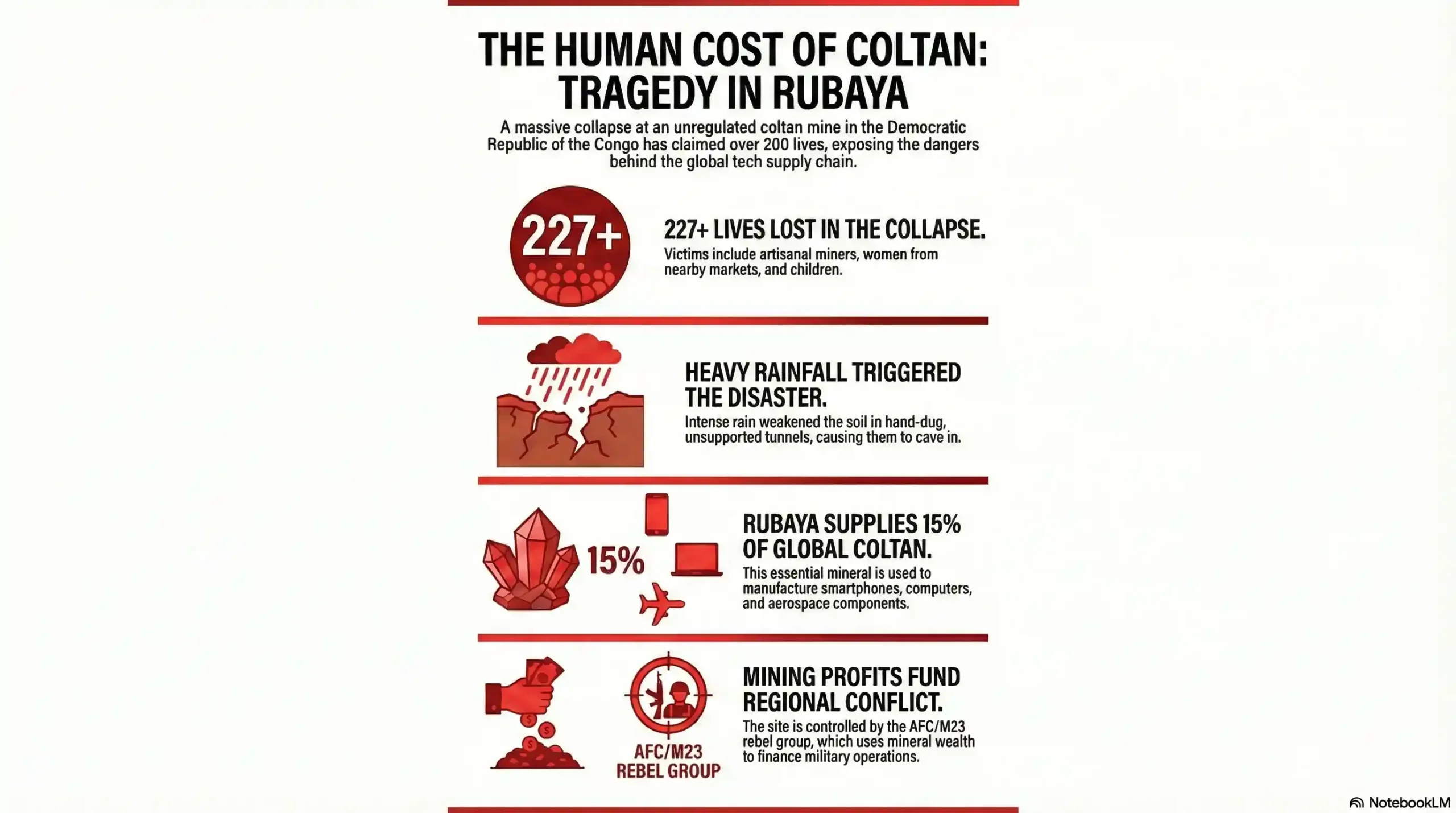
A massive coltan mine collapse in eastern Democratic Republic of the Congo (DRC) has killed more than 200 people, according to local authorities, making it one of the deadliest mining accidents in the country in recent years.
The tragedy occurred on Wednesday in the Rubaya mining area of North Kivu province, a region known for its vast coltan reserves and long-running armed conflict. Officials warned that the death toll could rise further as rescue operations continue.
Heavy Rain Triggered Deadly Mine Collapse
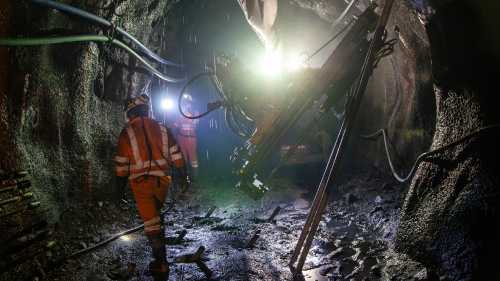
Local authorities said the collapse happened while dozens of people were working inside an artisanal coltan mine. Heavy rainfall weakened the soil, causing the ground to suddenly give way and trap people underground.
Victims included miners, children, and women from nearby markets who were present at the site. Several people were rescued with serious injuries and are currently being treated at local health centres. Around 20 injured survivors have been reported so far.
Rubaya Supplies 15% of the World’s Coltan
Despite its global significance, mining in Rubaya is largely unregulated and informal. Local residents often dig by hand for minimal daily wages, without proper safety equipment or structural support, making such mines highly vulnerable to collapses.
Mine Located in Rebel-Controlled Area
The Rubaya mining zone has been under the control of the AFC/M23 rebel group since 2024. The United Nations has accused the group of exploiting mineral resources in eastern Congo to finance its military operations against the central government.
The UN has also alleged that neighbouring Rwanda has supported the M23 rebels, a claim denied by both Rwanda and the group. Over the past year, rebels have expanded control across several parts of eastern DRC, worsening instability in the region.
Ongoing Safety and Humanitarian Crisis
Eastern Congo has long faced armed conflict, weak governance, and dangerous artisanal mining practices. Mine collapses are common during the rainy season, when loose soil and unsupported tunnels become extremely unstable.