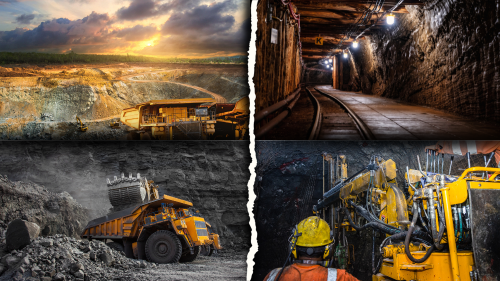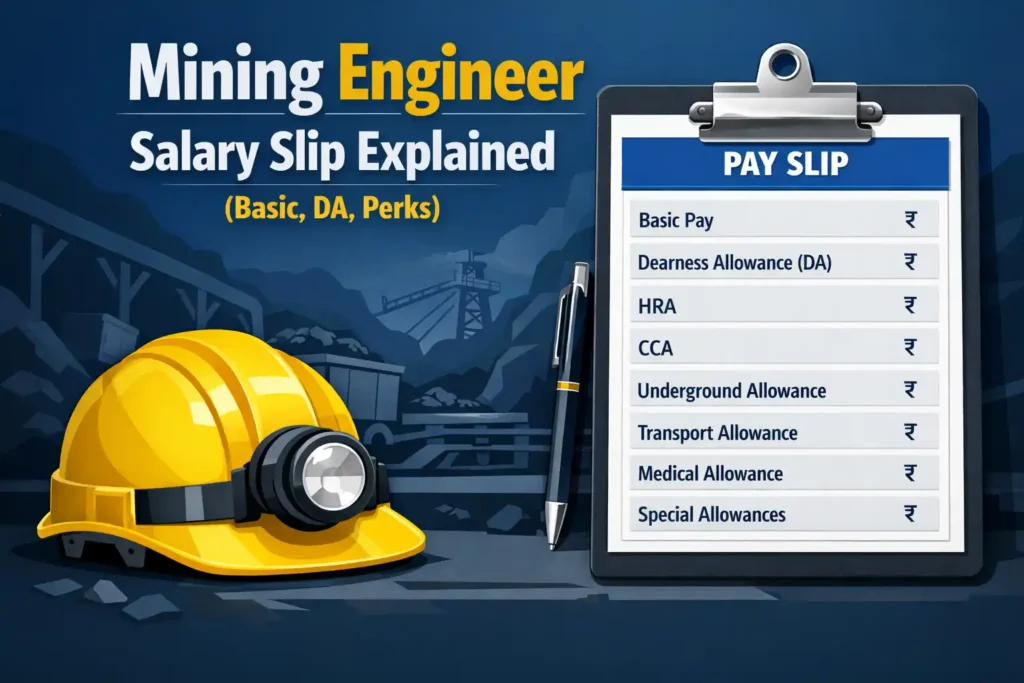
Mining Engineer salary slip explained (basic, DA, perks) is the ultimate guide to understanding how mining engineers in India are compensated. The average basic pay of a fresher mining engineer starts at around ₹40,000 per month at E1 grade, with total in-hand salary reaching ₹50,000–₹60,000 after allowances. Mid-level mining engineers with 5-7 years experience in E2 grade earn basic pay of ₹50,000, with gross salary reaching ₹85,000 and in-hand salary around ₹70,000.
Senior mining engineers at E5+ grade can earn basic pay starting ₹80,000, with gross salary exceeding ₹2,00,000 and in-hand salary reaching ₹1,80,000. Understanding the Mining Engineer salary slip explained (basic, DA, perks) is critical for freshers, mid-level engineers, and experienced professionals to plan careers, promotions, and financial goals.
The Mining Engineer salary slip explained (basic, DA, perks) includes multiple components: basic pay, Dearness Allowance (DA), House Rent Allowance (HRA), City Compensatory Allowance (CCA), risk or underground allowances, transport allowance, medical benefits, and special project-specific allowances.
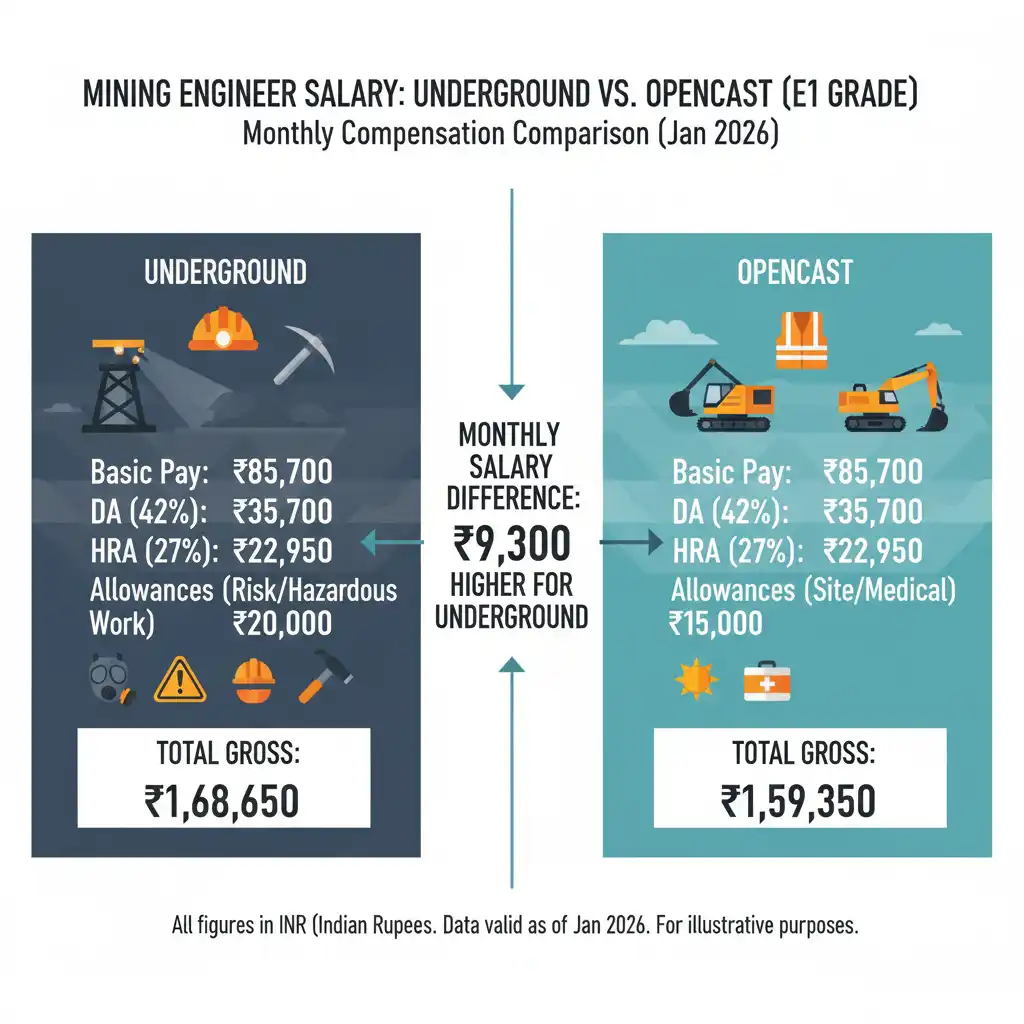
Each component has a significant impact on the gross and in-hand salary. PSUs like Coal India, MOIL, SCCL, and ECL follow structured salary patterns that are transparent and provide stable increments and benefits.
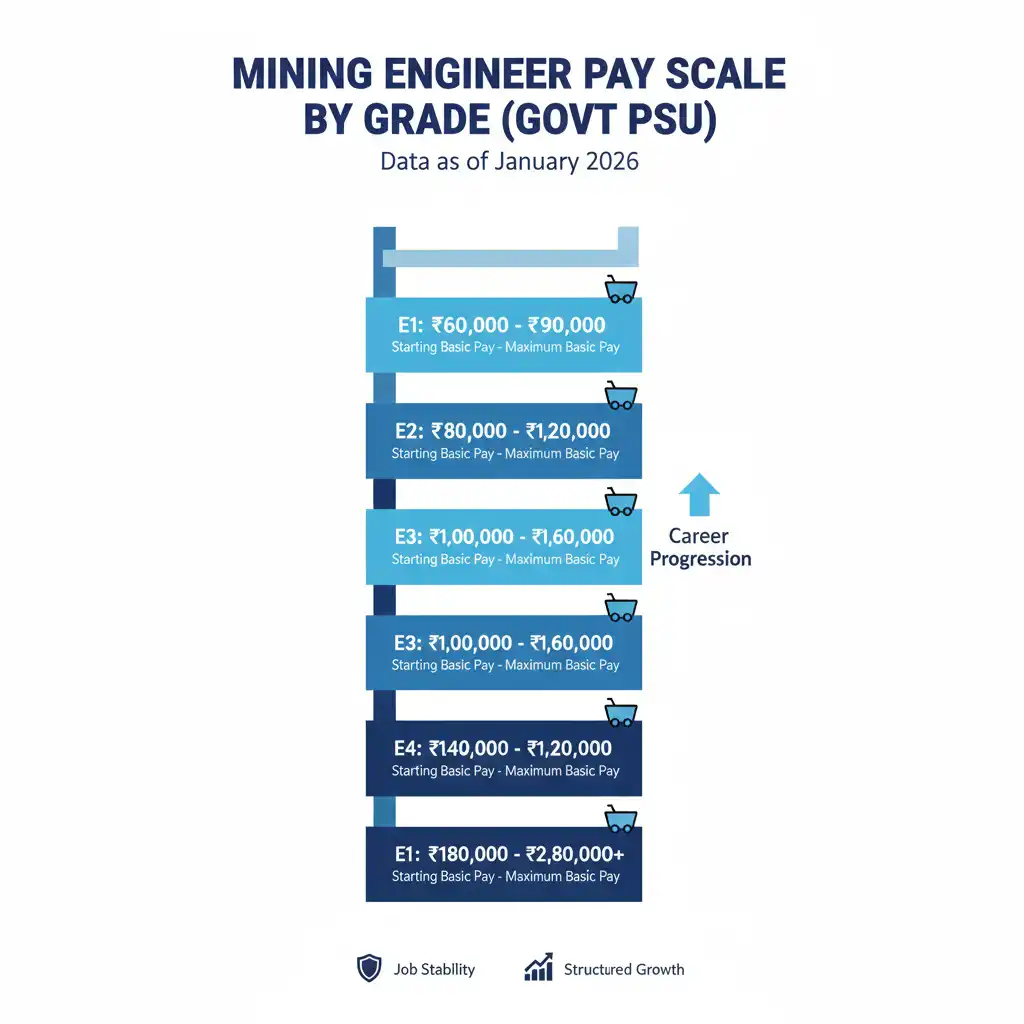
Mining Engineer Pay Scale
| Grade | Pay Scale (₹) | Starting Basic Pay (₹/Month) | Maximum Basic Pay (₹/Month) |
|---|---|---|---|
| E1 | 40,000 – 1,40,000 | 40,000 | 1,40,000 |
| E2 | 50,000 – 1,60,000 | 50,000 | 1,60,000 |
| E3 | 60,000 – 1,80,000 | 60,000 | 1,80,000 |
| E4 | 70,000 – 2,00,000 | 70,000 | 2,00,000 |
| E5+ | 80,000 – 2,20,000 | 80,000+ | 2,20,000+ |
The basic pay is the foundation of the Mining Engineer salary slip explained (basic, DA, perks). Freshers joining at E1 grade start with ₹40,000 basic pay, which grows annually through increments. E2 and E3 grades, usually achieved after 5–10 years of experience, offer starting basic pay of ₹50,000–₹60,000. Senior-level mining engineers at E5 or above grades can draw basic pay of ₹80,000+ per month, with maximums exceeding ₹2,20,000. Understanding the Mining Engineer salary slip explained (basic, DA, perks) begins with knowing this basic pay and its progression with experience and promotions.
Allowances for Mining Engineers
| Allowance Type | Description | Approx. Amount / Percentage |
|---|---|---|
| Dearness Allowance (DA) | Inflation-linked compensation | 30–40% of Basic Pay |
| House Rent Allowance (HRA) | Accommodation support | 15–30% of Basic Pay (varies by city) |
| City Compensatory Allowance (CCA) | Adjustment for metro/high-cost areas | 3–7% of Basic Pay |
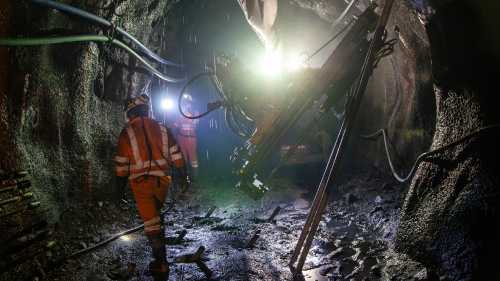
| Mining / Underground Allowance | Risk and skill-based | ₹10,000 – 35,000 per month |
| Transport Allowance | Commuting support | ₹1,600 – 3,200 per month |
| Medical Benefits | Hospitalization, insurance | Full coverage for self & family |
| Special Allowances | Project/site-specific | ₹5,000 – 20,000 per month |
Allowances are crucial for understanding the Mining Engineer salary slip explained (basic, DA, perks). Dearness Allowance (DA) protects engineers’ salaries from inflation and forms 30–40% of basic pay. House Rent Allowance (HRA) ranges from 15% in smaller cities to 30% in metro cities, directly impacting the in-hand salary. City Compensatory Allowance (CCA) adds 3–7% for high-cost locations. Underground mining or risk allowances vary from ₹10,000–35,000 per month, compensating for hazardous conditions.
Transport allowances of ₹1,600–3,200 per month, medical benefits for self and family, and special allowances for projects or site requirements further increase the total salary. Every component is reflected in the Mining Engineer salary slip explained (basic, DA, perks), ensuring transparency and clarity for all professionals.
Gross Salary vs In Hand Salary
| Grade / Posting | Basic Pay (₹) | Allowances (₹) | Gross Salary (₹) | Deductions (₹) | In-Hand Salary (₹) |
|---|---|---|---|---|---|
| E1 (Opencast) | 40,000 | 20,000 | 60,000 | 8,000 | 52,000 |
| E1 (Underground) | 40,000 | 30,000 | 70,000 | 10,000 | 60,000 |
| E2 (Opencast) | 50,000 | 22,000 | 72,000 | 9,000 | 63,000 |
| E2 (Underground) | 50,000 | 35,000 | 85,000 | 11,000 | 74,000 |
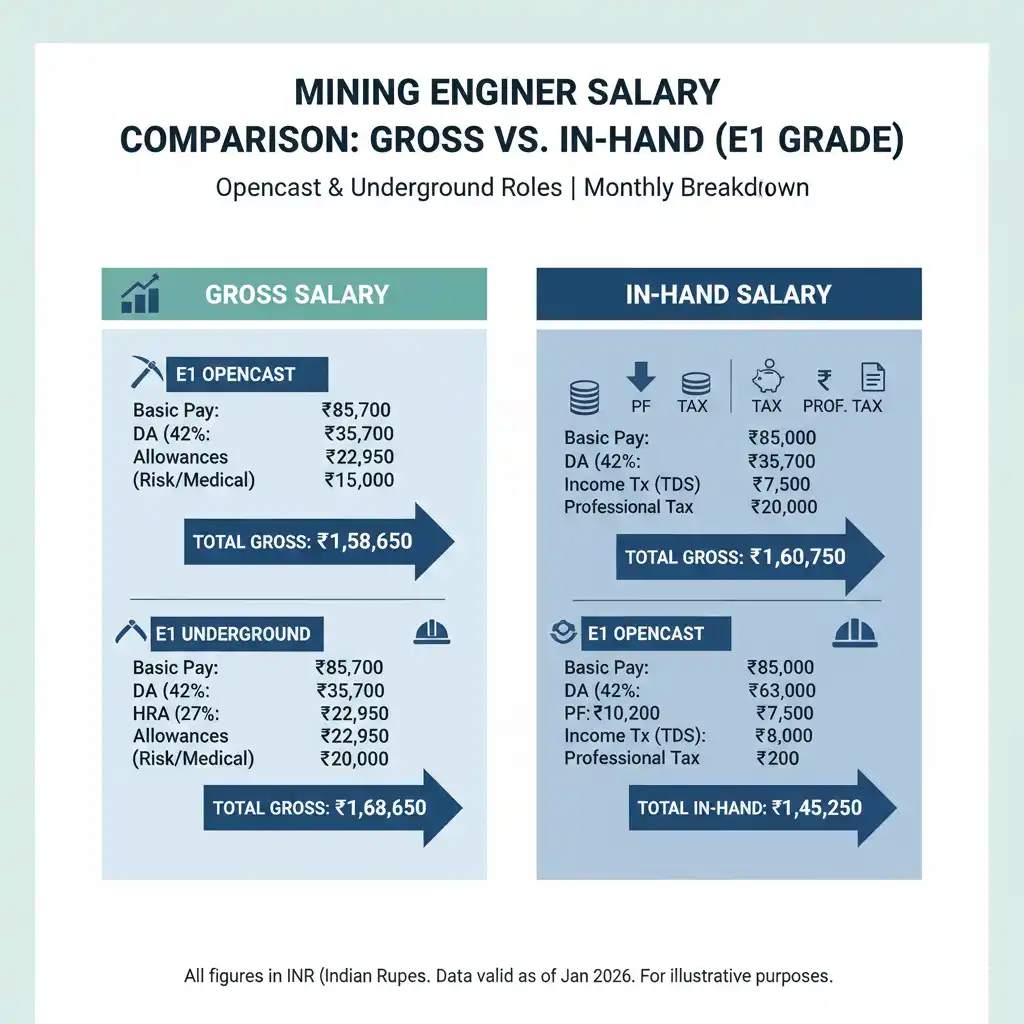
The distinction between gross salary and in-hand salary is a critical part of the Mining Engineer salary slip explained (basic, DA, perks). Gross salary includes the basic pay and all allowances, while in hand salary is the amount the engineer actually receives after statutory deductions like PF, professional tax, and income tax. Underground postings generally offer higher allowances, increasing gross and in-hand salary. For example, an E1 underground engineer receives ₹70,000 gross with ₹60,000 in-hand, whereas an E1 opencast engineer receives ₹60,000 gross and ₹52,000 in-hand. Understanding this is key to interpreting a Mining Engineer salary slip explained (basic, DA, perks).
Mining Engineer Promotion Hierarchy & Salary Increment Chart 2026
Salary Growth with Experience
| Experience | Basic + Allowances (₹/Month) | In-Hand Salary (₹/Month) |
|---|---|---|
| Fresher (E1) | 60,000 – 70,000 | 52,000 – 60,000 |
| 5–7 Years (E2) | 72,000 – 85,000 | 63,000 – 74,000 |
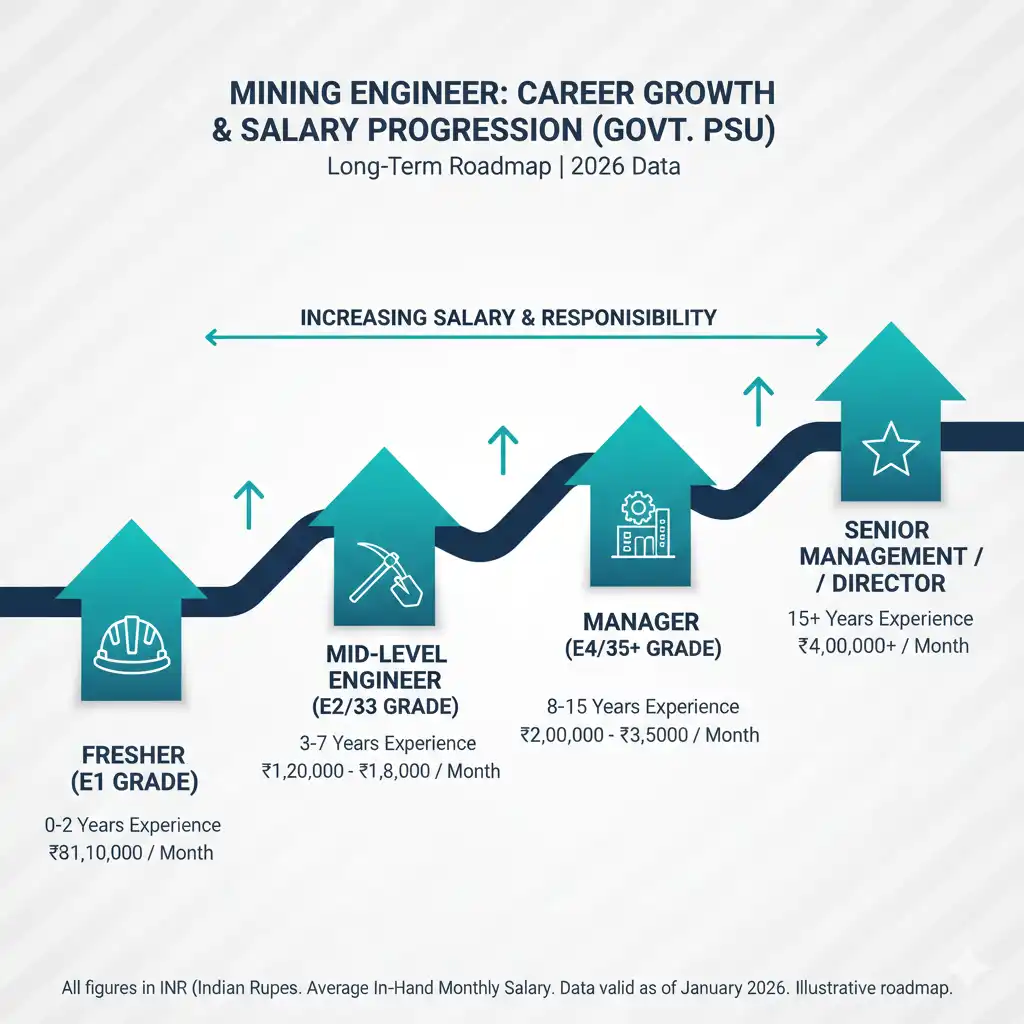
| 10+ Years (E3/E4) | 90,000 – 1,20,000 | 80,000 – 1,00,000 |
| Senior Level (E5+) | 1,40,000 – 2,20,000 | 1,20,000 – 1,80,000 |
The Mining Engineer salary slip explained (basic, DA, perks) shows how experience and promotions directly affect pay. A fresher at E1 grade earns ₹52,000–60,000 in-hand, which grows to ₹63,000–74,000 at E2 grade after 5–7 years. Mid-senior engineers at E3/E4 can earn ₹80,000–1,00,000 in-hand. Senior engineers at E5+ grades can take home ₹1,20,000–1,80,000 per month, with total gross salary exceeding ₹2,00,000. This highlights how promotions, risk allowances, underground postings, and experience impact a Mining Engineer salary slip explained (basic, DA, perks).
Factors Affecting Mining Engineer Salary
Several factors influence the Mining Engineer salary slip explained (basic, DA, perks).
- The type of mine plays a major role: underground mines offer higher allowances than opencast due to the increased risk.
- Location is another factor; metro cities and remote postings influence HRA and CCA, directly affecting in-hand salary.
- PSU mining companies like Coal India, ECL, MOIL, and SCCL follow structured pay scales with fixed allowances, while private mines may vary.
- Experience determines basic pay increments, promotions, and eligibility for special allowances.
- Technical skills, including expertise in automation, mining software, and safety management, can increase the eligibility for special allowances.
All these factors are reflected in the Mining Engineer salary slip explained (basic, DA, perks), helping engineers plan their career and financial growth.
FAQs
What is included in a mining engineer’s salary?
A mining engineer’s salary includes basic pay, Dearness Allowance (DA), House Rent Allowance (HRA), City Compensatory Allowance (CCA), risk/underground or special allowances, transport benefits, and medical coverage. Every component is included in the Mining Engineer salary slip explained (basic, DA, perks).
Does underground work increase salary?
Yes, underground postings attract higher allowances due to increased risk, technical complexity, and skill requirements. This reflects directly on the Mining Engineer salary slip explained (basic, DA, perks).
Are DA and HRA fixed?
Dearness Allowance (DA) is revised periodically based on inflation, while HRA varies according to city and grade. Both are crucial elements of the Mining Engineer salary slip explained (basic, DA, perks).
How does experience affect mining engineer salary?
Experience leads to promotions, higher basic pay, and additional allowances. With time, in-hand salary increases significantly. This is a key aspect of understanding the Mining Engineer salary slip explained (basic, DA, perks).