
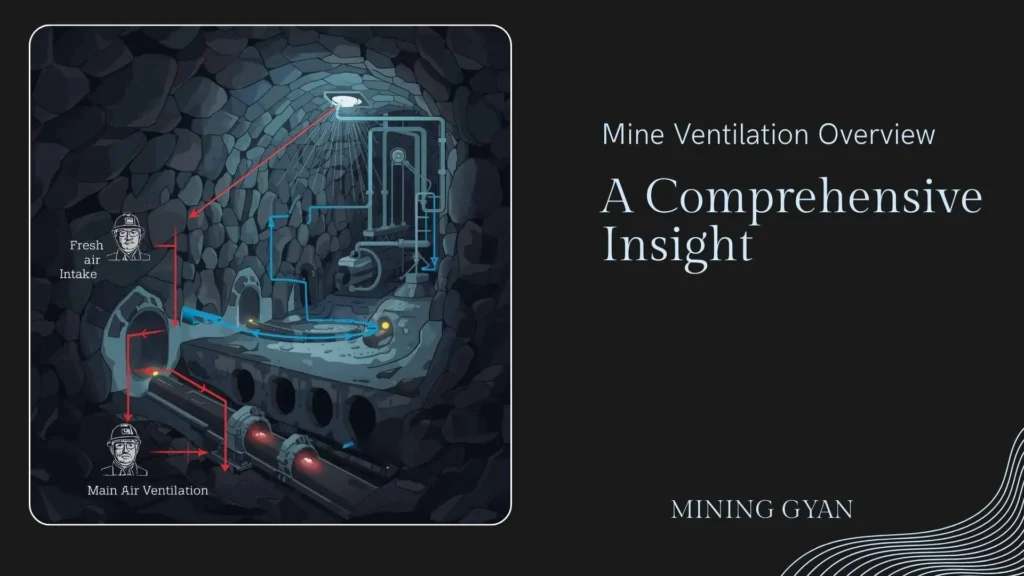
From coal mines to its metal and also non metal mines that the ventilation systems are so carefully designed to ensure its continuous airflow across all active workings as well. And as mining operations go deeper and also become more mechanized the importance of efficient and also reliable mine ventilation has never been greater as well.
Importance of Mine Ventilation in Modern Mining
Mine ventilation is not just about its technical requirement and it is a lifesaving system that supports every aspect of mining operations for sure.
Worker Health and also Safety
- Prevents oxygen deficiency
- Reduces exposure for its harmful dust
- Controls temperature and also its humidity
Poor ventilation can also lead to its serious health risks such as respiratory diseases and heat stress and also long term occupational illnesses as well.

Control of Hazardous Gases
Mining activities release dangerous gases like methane as well as carbon monoxide and nitrogen dioxide and also hydrogen sulfide as well. Mine Ventilation systems dilute these gases to make safe levels and also expel them from mine as well significantly reducing the risk of explosions and fires and also poisoning.
Principles of Mine Ventilation
Understanding its basic principles can also help engineers design efficient ventilation systems.
Airflow Mechanics in Underground Mines
Airflow moves from its areas of high pressure to the low pressure. And also these mechanics are central to the curriculum on platforms like Mining Gyan and where students can learn how systems guide its air through intake and also return airways in a controlled manner for sure.
Pressure and Resistance and also Quantity
Key factors include:
- Pressure: Generated by its fans
- Resistance: Caused by its friction in airways for sure
- Quantity: Volume of air supplied
Balancing all these elements that also ensures adequate airflow that reaches all sections of the mine.
Types of Mine Ventilation Systems
Natural Ventilation
Natural ventilation is used for temperature and also for its pressure differences between mine openings as well. And while cost effective, it is unreliable and as well as unsuitable for large or deep mines.
Mechanical Ventilation
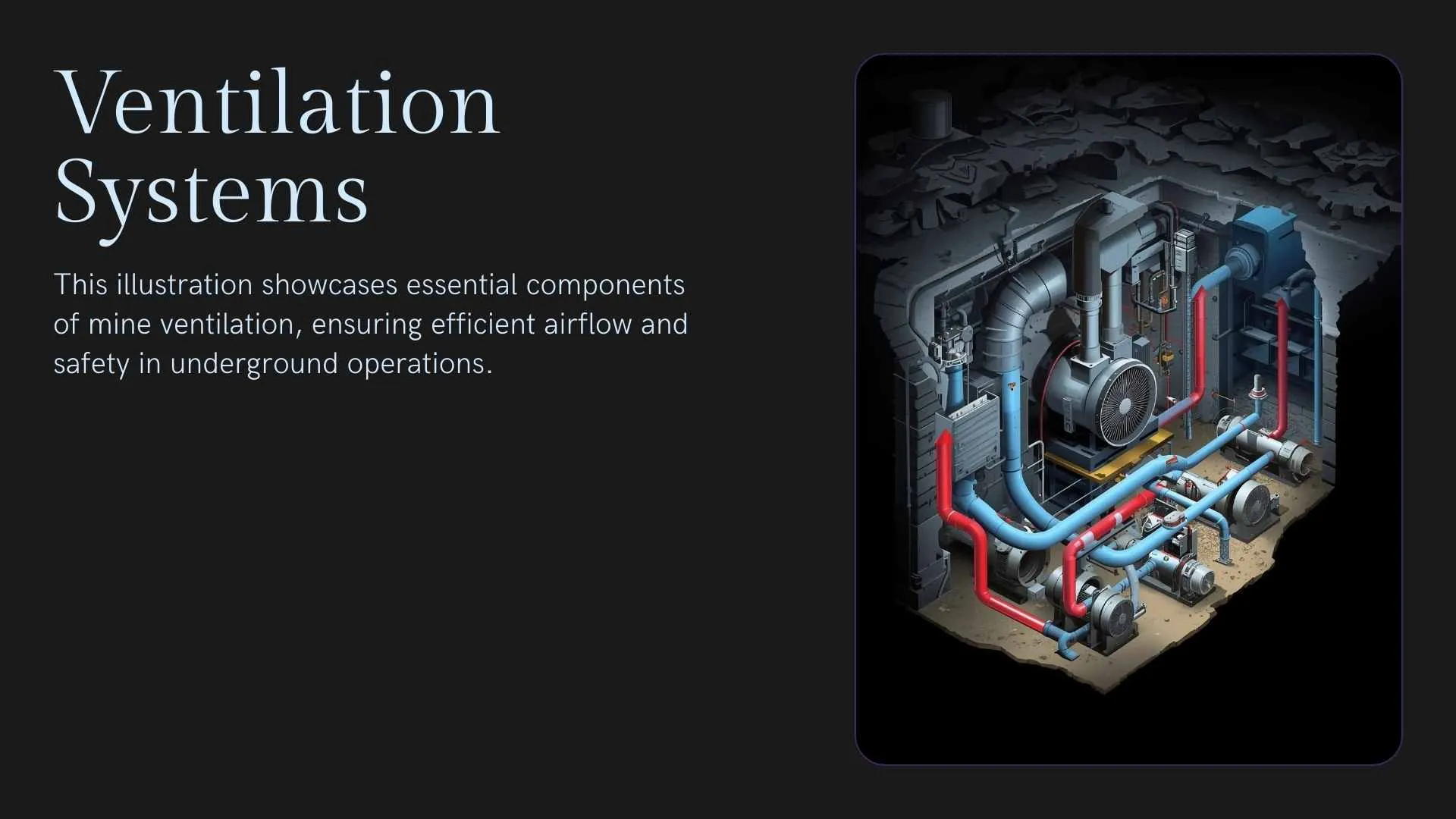
Mechanical systems use fans to control airflow and are widely used in modern mining.
Exhaust Ventilation System
This system pulls air out of the mine, creating negative pressure. It is effective in gas control but may draw contaminants through work areas.
Forcing Ventilation System
Fresh air is pushed into the mine, ensuring clean air reaches working faces first. It is commonly used in development headings.
Also Read: Mineral Exploration Techniques: Unveiling the Secrets of the Earth
Mine Ventilation Equipment
Fans and also Blowers
Main ventilation fans can also provide airflow for its entire mine as well and while auxiliary fans support specific working areas as well. And these fans are designed for durability as well as efficiency and also continuous operation.
Ducts and Regulators and also Stoppings
- Ducts: Direct air to specific locations
- Regulators: Control airflow distribution
- Stoppings: Separate intake and also return airways
Together, they ensure that the air reaches where it is needed most for sure.
Ventilation Planning and also Design
Ventilation Network Modeling
Engineers are also use software to simulate its airflow as well as pressure and gas distribution as well. And also educational resources such as Mining Gyan emphasize these simulations to help students to optimize system performance and also plan for mine emergencies.
Regulatory Standards and Compliance
Mine ventilation also must comply with strict safety regulations and also set by authorities such as MSHA and DGMS and also international mining standards as well. Platforms like Mining Gyan provide detailed study materials on these regulatory frameworks to prepare candidates for the certification as well.

For global best practices and also refer to resources from the International Labour Organization ILO.
Challenges in Mine Ventilation
Deep and also Hot Mines
As mines go deeper and deeper so the temperatures can also rise and airflow resistance increases as well. Cooling systems and also its high capacity fans are required to maintain safe conditions.
Energy Consumption
Ventilation accounts for a large portion of a mine’s energy use. Improving efficiency is a major focus for cost reduction and sustainability.
Smart and Automated Mine Ventilation
Modern Mine Ventilation systems use sensors, real-time monitoring, and automation. Ventilation on demand VOD systems adjust airflow based on worker location and equipment usage, improving safety and reducing energy costs.
Environmental Impact of Mine Ventilation
Ventilation exhaust can also release dust and its greenhouse gases into the atmosphere as well. And new technologies aim to reduce its emissions and also to improve environmental performance through filtration and energy efficient designs as well.
Future Trends in Mine Ventilation
The future of mine ventilation includes:
- AI driven ventilation control
- Energy efficient fan technologies
- Integration with autonomous mining systems
- Improved its air quality monitoring
These innovations will also make mining safer and greener and also more productive.
Faqs
1. What is Mine Ventilation used for?
Mine Ventilation is also used to supply fresh air and remove hazardous gases, control temperature and as well as ensure safe working conditions in mines for sure.
2. Why is ventilation critical in underground mines?
Underground mines lack natural airflow and making ventilation essential for its oxygen supply and for its gas control for sure.
3. What gases are controlled by mine ventilation?
Common gases that include methane as well as carbon monoxide and nitrogen dioxide and also hydrogen sulfide as well.
4. What is the difference between forcing and exhaust ventilation?
Forcing ventilation pushes its fresh air in and also while exhaust ventilation pulls contaminated air out.
5. How often should mine ventilation systems be inspected?
They should be monitored continuously and inspected regularly as per safety regulations.
Investing in effective mine ventilation is also not just about compliance but also it is about saving lives and building a safer mining environment for generations to come as well.


4 Responses