
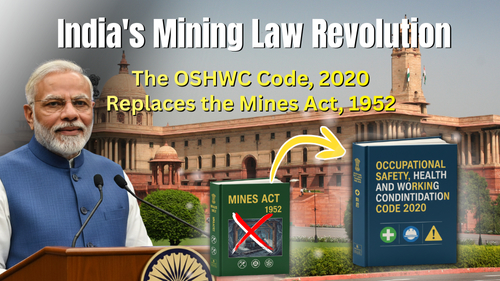
For nearly seven decades, India’s mining sector functioned under the Mines Act, 1952. While it was an important law for its time, the industry has changed dramatically—modern machinery, deeper workings, and increased safety complexities. To address today’s realities, the Government of India introduced a landmark reform: the Occupational Safety, Health and Working Conditions Code, 2020 (OSHWC Code).
This shift marks a major step forward in strengthening worker protection, improving mine management, and bringing India’s labour laws in line with current industrial practices.
Why Was the Mines Act, 1952 Replaced?
The Mines Act was drafted in a very different era. Since then, the mining landscape has evolved in ways that the old legislation could no longer fully support. Some of the major reasons behind the overhaul include:
- Rapid mechanization of mines
- Complex underground workings
- Rising safety concerns
- Need for uniformity across industries
- Multiple outdated and overlapping labour laws
To reduce confusion and ensure consistency, the government merged 13 separate labour laws into one comprehensive legal framework — the OSHWC Code, 2020.
| Aspect | Mines Act, 1952 | OSHWC Code, 2020 |
|---|---|---|
| Coverage | Mines only | Combines mines + 12 other labour laws |
| Safety Training | Limited and basic | Mandatory and continuous training |
| Licensing System | Offline and paperwork-heavy | Fully digital applications and reporting |
| Worker Welfare | Standard welfare provisions | Expanded welfare: sanitation, health checks, rest shelters |
| Penalties | Low and outdated | Higher fines + stricter enforcement |
| Flexibility for Modern Tech | Not suited for mechanized mining | Designed for modern equipment and new risks |
| Compliance | Fragmented regulations | Unified national framework |
Impact on India’s Mining Sector
✓ Improved Safety
The Code introduces structured safety planning and continuous monitoring, reducing the likelihood of accidents.
✓ Better Legal Compliance
With clearer rules and digital processes, mine operators now have defined SOPs that must be followed.
✓ Useful for Mining Students
For those preparing for GATE, DGMS, PSU exams or working in mining operations, understanding the OSHWC Code is now essential.
✓ Supports Ease of Doing Business
Simplified, digitalised processes reduce delays and administrative burden.
Unified Safety Standards Under the OSHWC Code
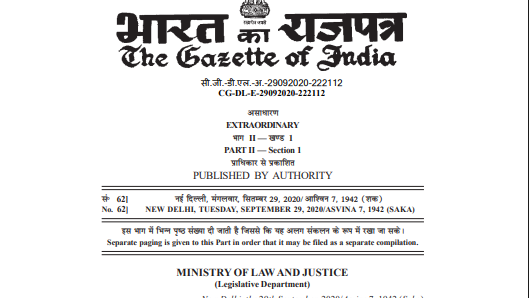
One of the biggest strengths of the OSHWC Code is that it consolidates safety laws from different sectors into a single structure.
This simplifies compliance and creates uniform expectations for industries such as:
- Mines
- Factories
- Plantations
- Construction and dock operations
This approach eliminates loopholes and strengthens worker protections across the board.
Mandatory Safety Training Under the OSHWC Code
Training was one of the weak spots of the old Mines Act. The OSHWC Code makes safety training much more structured and consistent.
Now employers must arrange:
- Compulsory safety training sessions
- Periodic refresher courses
- Emergency response and evacuation drills
It ensures that workers are not only aware of hazards but are also prepared to handle them.
Better Working Conditions
Beyond machinery and operations, the Code stresses everyday working and living conditions—especially for workers stationed in remote mining areas.
Employers must ensure:
- Safe drinking water
- First-aid and medical support
- Sanitation and washing facilities
- Rest shelters and basic necessities
Although simple, these fundamentals significantly improve workforce well-being.
Digitization of Permissions
The industry is gradually moving away from paperwork-heavy systems.
Under the new Code:
- Registrations, licences, and approvals shift online
- Reporting becomes faster and more transparent
- Businesses face fewer administrative delays
This supports India’s broader goal of making industrial operations more efficient.
Clear Responsibility of Mine Owners
The OSHWC Code clearly outlines who is responsible for ensuring safe operations.
Mine owners and managers are accountable for:
- Providing adequate safety gear
- Maintaining equipment
- Preparing emergency plans
- Reporting accidents and unsafe conditions
This clarity reduces confusion during emergencies and improves accountability.
Stronger Penalties
The Mines Act’s penalties had become outdated.
Under the new Code:
- Fines are significantly higher
- Repeat offences attract stricter action
- Negligence is treated seriously
This creates a much stronger deterrent against unsafe practices.
Why This Reform Matters
Mining powers several industries—steel, power, cement, infrastructure.
By replacing a decades-old law with a modern safety code, India is signalling that it values:
- Workers’ dignity
- Safer, healthier workplaces
- Updated regulatory practices
- Sustainable and responsible mining
The OSHWC Code, 2020 is not just legislative housekeeping — it is a fundamental shift in India’s approach to mining safety and worker welfare.



One Response