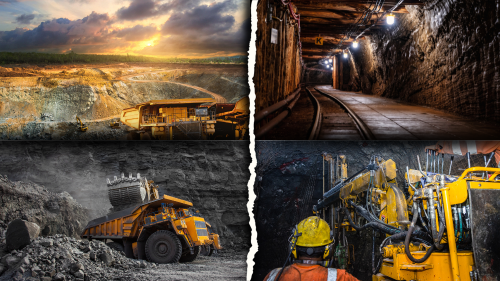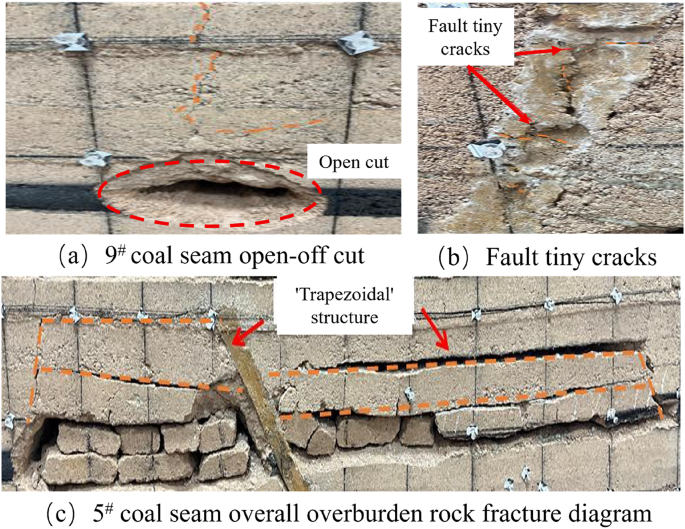
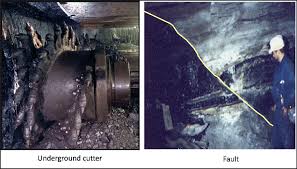
Faults are natural fractures in the earth’s crust where rock layers have moved relative to each other. In mining operations, understanding geological faults is extremely important because they directly influence mine stability, mineral continuity, groundwater movement, and overall safety. Faults can shift ore bodies from their expected positions, making exploration and extraction more complex.
Mining engineers and geologists carefully study fault systems before planning excavation activities. A fault may create weak rock zones, water pathways, or unstable slopes that can threaten workers and equipment. Proper identification and monitoring of faults helps ensure efficient mineral extraction and safe mine development.
What is a Fault in Mining?
A fault is defined as a fracture or break in rock formations along which movement has occurred. In mining geology, faults represent zones where the continuity of rock layers has been disrupted due to tectonic forces acting within the earth’s crust.
The displacement along a fault may be small or extremely large depending on geological conditions. In mining areas, faults often cause offset of coal seams, ore bodies, or rock layers. This displacement complicates drilling, blasting, and excavation operations.
Components of a Geological Fault
| Component | Description |
|---|---|
| Fault Plane | The surface along which rock movement occurs |
| Hanging Wall | The rock block located above the fault plane |
| Footwall | The rock block located below the fault plane |
| Fault Zone | Area of crushed and fractured rock surrounding the fault |
| Fault Scarp | Surface expression of the fault movement |
Understanding these components helps mining engineers evaluate the mechanical behavior and stability of rock masses around mining operations.
How Geological Faults are Formed
Fault formation occurs due to continuous tectonic forces acting inside the earth. These forces create stress within rock formations. When the stress exceeds the strength of the rock, it fractures and moves along a plane of weakness.
The three main types of tectonic stress responsible for fault formation include tension, compression, and shear stress. Each type of stress produces a different kind of fault movement.
| Type of Stress | Effect on Rocks | Resulting Fault |
|---|---|---|
| Tensional Stress | Rocks are pulled apart | Normal Fault |
| Compressional Stress | Rocks are pushed together | Reverse Fault |
| Shear Stress | Rocks slide past each other | Strike-Slip Fault |
Mining areas located in tectonically active regions often contain multiple fault systems that influence rock strength, permeability, and structural stability.
Types of Geological Faults in Mining
Different types of faults exist depending on the direction of rock movement and the type of tectonic stress involved. Identifying the correct fault type is important for mine planning and structural analysis.
Normal Fault
A normal fault forms when tensional forces pull the earth’s crust apart. In this case, the hanging wall moves downward relative to the footwall. Normal faults are common in regions where the crust is being stretched.
In mining operations, normal faults often cause downward displacement of coal seams or ore deposits. This displacement may require additional exploration drilling to locate the continuation of the deposit.
Reverse Fault
Reverse faults occur when compressional forces push rock layers together. The hanging wall moves upward relative to the footwall. These faults are commonly found in mountainous regions formed by tectonic compression.
Reverse faults may create highly fractured rock zones that reduce rock stability. Mining engineers must design strong support systems when operating near such structures.
Strike-Slip Fault
Strike-slip faults involve horizontal movement of rock blocks along the fault plane. The movement occurs due to shear stress acting parallel to the earth’s surface.
In mining areas, strike-slip faults may shift ore bodies sideways, creating challenges in deposit correlation and mine mapping.
Oblique Fault
Oblique faults combine both vertical and horizontal movements. These faults occur when rocks experience both compression and shear stress simultaneously.
The complex movement patterns associated with oblique faults often make geological interpretation and mine design more complicated.
Importance of Faults in Mining Operations
Faults play a major role in determining the success and safety of mining projects. They influence ore distribution, ground stability, and the overall feasibility of extraction activities.
| Mining Aspect | Effect of Faults |
|---|---|
| Ore Distribution | Faults may offset mineral deposits |
| Rock Stability | Fault zones create weak rock conditions |
| Water Flow | Faults may act as groundwater pathways |
| Mine Planning | Fault location influences excavation design |
Mining engineers must carefully map and analyze faults before starting excavation to avoid unexpected hazards during production.
Impact of Faults on Underground Mining
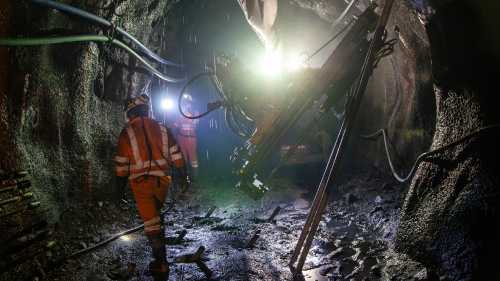
Underground mining operations are particularly sensitive to geological faults. Fault zones contain fractured rocks that are mechanically weaker than surrounding formations.
Ground Instability
The presence of a fault zone may significantly reduce the strength of surrounding rocks. This can lead to deformation of tunnels and galleries, requiring additional ground support systems.
Roof Collapse Risk
Faulted rock layers may detach from the roof of underground openings. This increases the risk of rock falls and roof collapses, especially in coal mines where roof strata are relatively weak.
Water Inrush Through Faults
Faults often act as conduits for groundwater. If a fault connects an aquifer to a mine working, large volumes of water may suddenly enter the mine.
Water inrush incidents can cause severe flooding and may require immediate evacuation of miners. Therefore, hydrogeological studies are essential before mining near major fault zones.
Gas Migration
Fault zones also allow gases such as methane to migrate through rock layers. Accumulation of methane gas increases the risk of underground explosions.
Mining-Induced Fault Activation
Mining activities themselves can trigger movement along existing faults. When large volumes of rock are removed, the stress distribution within the earth’s crust changes.
This stress redistribution may reactivate dormant faults and cause sudden rock movement.
Stress Redistribution
Excavation removes the natural support provided by rock masses. The surrounding rock layers must adjust to the new stress conditions.
If the stress concentration becomes too high along a fault plane, it may trigger fault slip or seismic activity.
Consequences of Fault Reactivation
| Event | Description |
|---|---|
| Rock Burst | Sudden release of stored energy in rocks |
| Seismic Events | Small underground earthquakes |
| Ground Deformation | Movement of tunnels and mine openings |
Continuous monitoring of stress conditions helps prevent dangerous fault movements during mining.
Fault Detection and Mapping Techniques
Accurate detection of faults is essential before mining begins. Geologists use several techniques to identify fault structures both on the surface and underground.
Geological Mapping
Geological mapping involves detailed field observations of rock formations. Surface features such as displaced rock layers and fracture zones provide clues about fault locations.
Geophysical Methods
| Method | Purpose |
|---|---|
| Seismic Survey | Detect underground geological structures |
| Electrical Resistivity | Identify fracture zones and water-bearing faults |
| Ground Penetrating Radar | Map shallow subsurface features |
| Magnetic Survey | Detect structural variations in rock formations |
These techniques provide valuable information about the location, orientation, and size of geological faults.
Modern Technology for Fault Identification
Recent technological advancements have improved the accuracy of fault detection in mining areas.
Subsurface Profiling
Subsurface profiling technologies allow geologists to create detailed images of underground rock structures. These tools help identify hidden faults that may not be visible at the surface.
Drone-Based Geological Surveys
Drones equipped with high-resolution cameras and sensors are now widely used in mining exploration. They provide detailed topographic data that helps identify fault scarps and geological lineaments.
Artificial Intelligence in Fault Detection
Machine learning models such as convolutional neural networks (CNNs) can analyze geological images and automatically identify fault patterns. This technology improves the speed and accuracy of geological interpretation.
Fault Stability Analysis in Mining
Fault stability analysis helps determine whether a fault is likely to move during mining operations. Engineers study the balance between shear stress acting on the fault plane and the frictional resistance of rock surfaces.
If the applied stress exceeds the frictional resistance, the fault may slip.
Geomechanical Analysis
Geomechanical models are used to evaluate rock strength, stress distribution, and fault stability. These models help engineers predict how faults will behave under different mining conditions.
Numerical Simulation
Computer simulations allow researchers to analyze complex fault systems and evaluate the impact of mining activities on rock movement.
Numerical modeling tools such as finite element methods help simulate rock deformation and fault slip behavior.
Water Inrush Hazards Associated with Faults
One of the most serious hazards related to geological faults is water inrush. When a fault connects underground workings with water-bearing strata, large volumes of water may suddenly enter the mine.
This can lead to flooding, equipment damage, and serious safety risks.
| Risk Factor | Effect |
|---|---|
| Fault Permeability | Controls water flow through rock fractures |
| Hydraulic Pressure | Drives water into underground openings |
| Mining Depth | Deeper mines may intersect aquifers |
Preventive measures include drilling exploration holes, installing drainage systems, and constructing water barrier pillars.
Future Trends in Fault Detection and Monitoring
The future of mining geology is increasingly dependent on advanced monitoring systems and digital technologies.
Real-time sensors installed in mines can continuously measure rock movement and stress changes. These systems provide early warning signs of potential fault activation.
Integration of artificial intelligence, remote sensing, and geotechnical monitoring will significantly improve mine safety and operational efficiency in the coming decades.