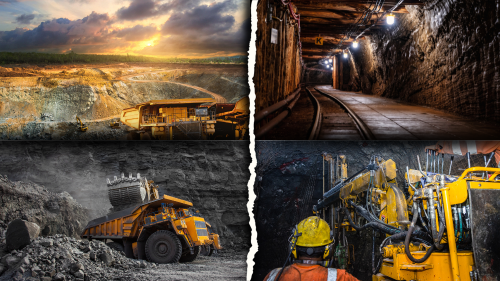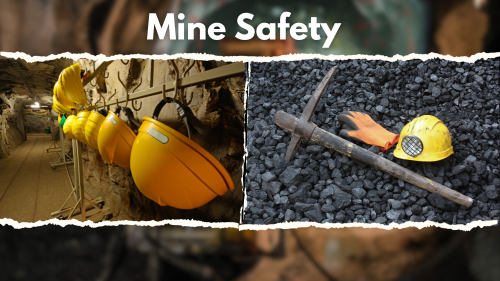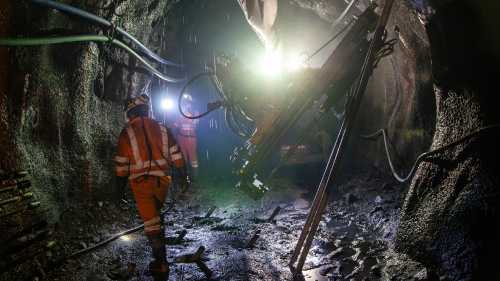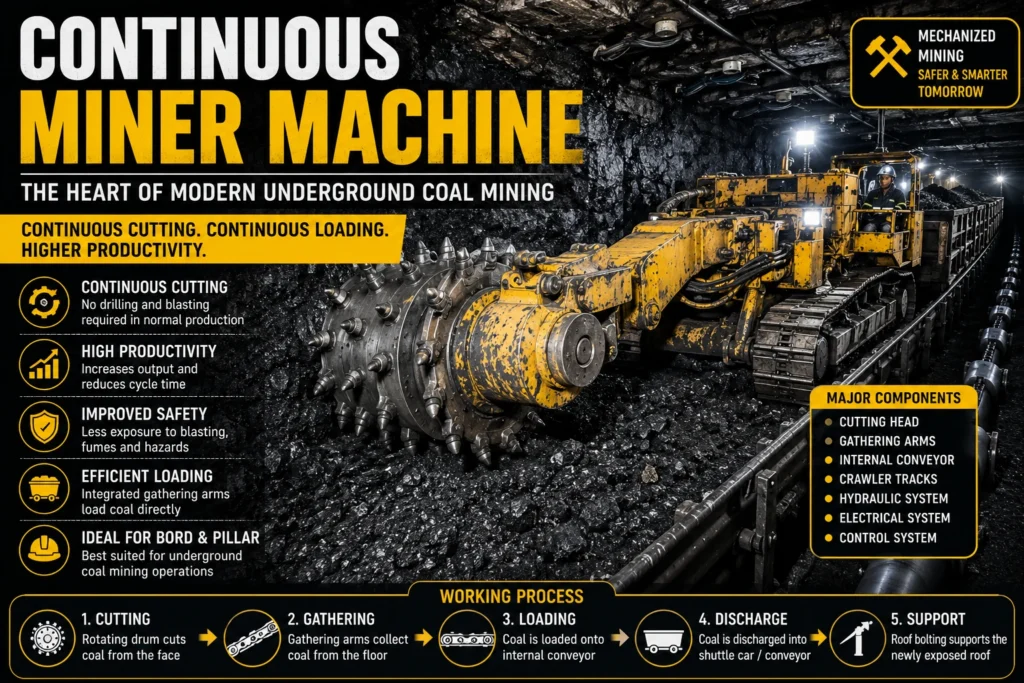
A Continuous Miner Machine is one of the most important pieces of equipment used in modern underground coal mining. It cuts, gathers and loads coal continuously without using the traditional drilling and blasting cycle. This makes the mining process faster, safer and more productive.
The machine is mainly used in bord and pillar or room and pillar workings where coal is extracted from underground roadways and panels. A rotating cutting drum fitted with tungsten carbide picks breaks the coal from the face. Gathering arms then move the broken coal towards the machine’s internal conveyor, which transfers it into a shuttle car or another haulage system.
For Mining Engineering students, Mining Sirdar candidates, Overman aspirants and underground mine professionals, understanding the Continuous Miner Machine is important because it combines coal cutting, loading, transportation and strata-control operations within a highly mechanized mining system.
What Is a Continuous Miner Machine?
A Continuous Miner Machine is a self-propelled underground mining machine designed to cut and load coal continuously. Unlike conventional mining, it does not require separate drilling, charging, blasting and loading operations during every production cycle.
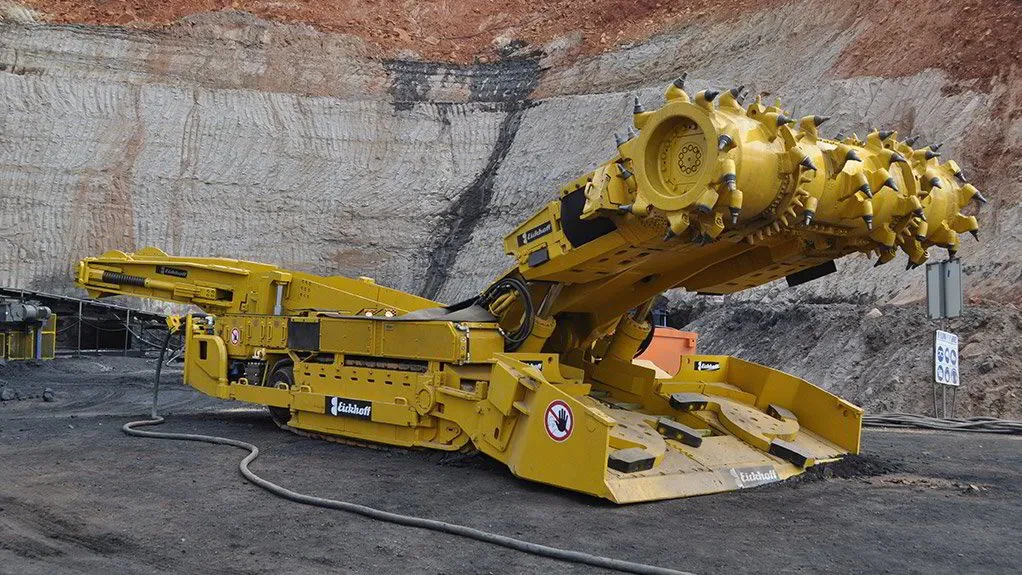
The machine normally moves on crawler tracks and operates directly at the coal face. Its rotating cutting head cuts coal across the roadway section. Broken material falls onto the loading apron, where gathering arms direct it into a chain conveyor.
The main functions of the machine are:
- Cutting coal from the working face
- Gathering the broken coal
- Loading coal onto the internal conveyor
- Transferring coal to a shuttle car
- Forming underground roadways and pillars
Because these activities occur in one continuous sequence, a Continuous Miner Machine can achieve significantly higher production than conventional manual or semi-mechanized systems.
How Does a Continuous Miner Machine Work?
The working cycle of a Continuous Miner Machine begins when the operator positions it in front of the coal face. The cutting drum is raised towards the roof and then moved downward through the coal seam. This action breaks coal across the width and height of the roadway.
As the drum cuts coal, the gathering arms collect the broken material from the floor. The coal is transferred to the central conveyor and discharged from the rear of the machine into a shuttle car, battery hauler or mobile conveyor.
A typical working cycle includes:
- Positioning the machine at the face
- Sumping the cutting head into coal
- Shearing coal from roof to floor
- Gathering and loading broken coal
- Retracting and repositioning the machine
- Supporting the newly exposed roof
The Continuous Miner Machine must work in coordination with roof bolters, shuttle cars, feeder breakers and conveyor systems. Any delay in one unit can interrupt the complete production cycle.
Main Components of a Continuous Miner Machine
A Continuous Miner Machine contains several mechanical, hydraulic, electrical and control systems. Each component has a specific role in coal extraction.
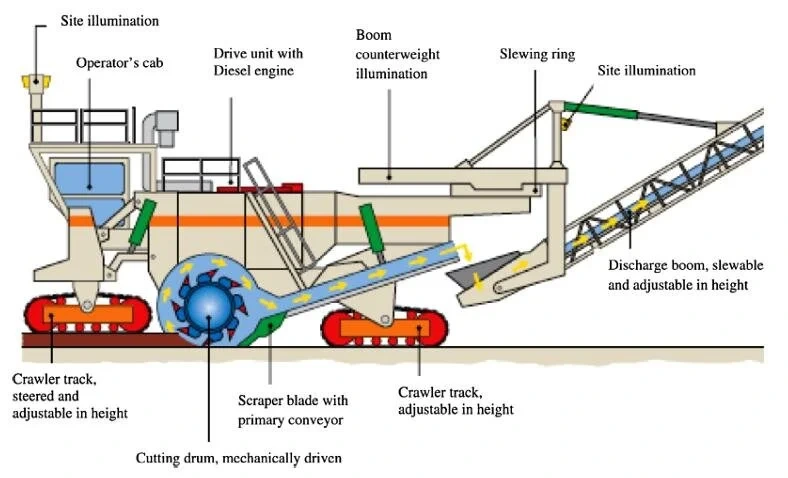
Cutting head
The cutting head is mounted at the front of the machine. It consists of a rotating drum fitted with replaceable cutting picks. These picks penetrate and break the coal during rotation.
Gathering mechanism
Gathering arms or loading discs move the broken coal from the floor towards the central conveyor. Their speed must match the cutting rate to prevent coal accumulation near the face.
Internal conveyor
The conveyor carries coal through the body of the Continuous Miner Machine and discharges it into the haulage unit positioned behind the machine.
Crawler tracks
Crawler tracks provide movement and stability. They allow the machine to advance, reverse and change direction within underground roadways.
Hydraulic and electrical systems
Hydraulic systems operate the cutting head, gathering arms and other moving parts. Electrical systems supply power to the motors, controls, lighting and safety devices.
Modern machines also include remote-control systems, gas monitoring devices, water sprays and automatic shutdown mechanisms.
Continuous Miner Machine and Shuttle Car Operation
The Continuous Miner Machine commonly works with shuttle cars in bord and pillar mining. Once the machine cuts and loads coal, the shuttle car receives it from the rear conveyor and transports it to a feeder breaker.
The feeder breaker reduces oversized coal and transfers it to a belt conveyor for transportation to the surface. Two or more shuttle cars may be used so that one vehicle can receive coal while another travels to the discharge point.
This coordinated arrangement offers several benefits:
- Faster removal of coal from the face
- Reduced idle time for the cutting machine
- Continuous supply to the belt conveyor
- Improved panel productivity
- Better utilization of mining equipment
Efficient traffic management is essential because shuttle cars operate in restricted underground roadways. Poor coordination can increase waiting time and reduce the productivity of the Continuous Miner Machine.
Continuous Miner Machine and Roof Support
Roof support is a critical part of every Continuous Miner Machine operation. As the machine advances, it creates a newly exposed roof that must be supported before workers and equipment can safely enter the area.
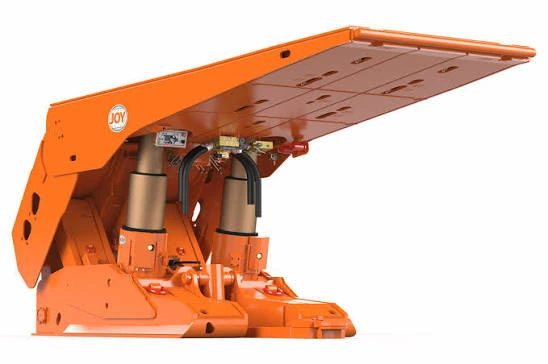
In many mines, a separate roof bolter follows the cutting machine. Some systems use bolter miners that combine coal cutting and roof-bolt installation in one machine.
The main roof-support activities include:
- Examination of the roof and sides
- Scaling loose rock
- Drilling roof-bolt holes
- Installing resin or grouted bolts
- Fixing bearing plates and nuts
- Testing the installed support
The cutting sequence and support sequence must follow the approved support plan. Excessive unsupported exposure can create a roof-fall hazard, even when production equipment is highly mechanized.
Advantages of a Continuous Miner Machine
The Continuous Miner Machine offers major operational and safety advantages compared with conventional drilling and blasting.
Its most important advantages include:
- Continuous cutting and loading of coal
- High production from underground panels
- Elimination of routine production blasting
- Reduced exposure to blasting fumes
- Better roadway profile and size control
- Lower manpower requirement at the face
- Compatibility with mechanized roof support
- Faster development of mine roadways
Since blasting is eliminated from the regular cutting cycle, production becomes more predictable. The machine can also work effectively in multiple headings when a suitable panel layout and equipment fleet are available.
Limitations of a Continuous Miner Machine
Although the Continuous Miner Machine is highly productive, it is not suitable for every coal seam or geological condition.
Its major limitations include:
- High initial investment
- Dependence on continuous electrical power
- Requirement for skilled operators and maintenance teams
- Difficulty in very hard or abrasive coal
- Reduced performance in highly disturbed geology
- Frequent replacement of cutting picks
- Need for effective ventilation and dust suppression
- Downtime when haulage equipment is unavailable
The machine also produces large quantities of respirable dust during cutting. Therefore, water sprays, ventilation, scrubbers and dust-monitoring systems must be maintained properly.
Safety in Continuous Miner Machine Operation
Safe operation of a Continuous Miner Machine requires strict control of machine movement, roof conditions, methane concentration and worker position.
Workers must remain outside the danger zone created by the cutting head, crawler tracks and rear conveyor. Remote-controlled machines reduce operator exposure, but they also require clear visibility and disciplined positioning.
Important safety practices include:
- Checking methane before and during cutting
- Using effective water sprays
- Maintaining adequate face ventilation
- Inspecting roof and sides regularly
- Keeping workers away from the machine’s turning radius
- Testing emergency stop controls
- Maintaining communication with shuttle-car operators
The machine should stop automatically when methane exceeds the prescribed limit or when a major safety device fails.
Applications of a Continuous Miner Machine
A Continuous Miner Machine is mainly used in underground coal mines employing bord and pillar or room and pillar methods. It can be used for development as well as for pillar extraction under suitable layouts.
The machine is also useful for:
- Driving gate roadways
- Developing longwall panels
- Forming main and district roadways
- Extracting coal from panels
- Creating underground entries
- Cutting soft sedimentary minerals
Its suitability depends on seam thickness, gradient, roof condition, floor strength, coal hardness, methane emission and panel dimensions.
Future of the Continuous Miner Machine
The future of the Continuous Miner Machine is closely linked with automation, remote operation and digital mine management. Modern machines can record cutting pressure, motor load, machine position, methane levels and equipment condition in real time.
Advanced systems may include:
- Remote operation from a safer location
- Automated cutting profiles
- Collision-avoidance technology
- Real-time production monitoring
- Predictive maintenance
- Integrated dust and gas control
- Digital mapping of underground workings
These technologies can reduce worker exposure to hazardous areas while improving machine utilization. As underground mining becomes more mechanized, the Continuous Miner Machine will continue to play a major role in high-production coal mines.
Conclusion: Why the Continuous Miner Machine Is Important
A Continuous Miner Machine is a highly productive underground mining machine that combines coal cutting, gathering and loading in one operation. It eliminates routine production blasting and supports faster development and extraction in bord and pillar workings.
Its performance depends on efficient coordination with shuttle cars, roof bolters, ventilation systems and conveyor networks. Although the machine requires high investment and skilled maintenance, its productivity and operational benefits make it an important part of modern underground coal mining.
For students and mining professionals, knowledge of the Continuous Miner Machine is essential because the topic connects mining methods, machinery, ventilation, roof support, transportation and mine safety.
FAQs About Continuous Miner Machine
What is a Continuous Miner Machine?
A Continuous Miner Machine is a self-propelled underground machine that continuously cuts, gathers and loads coal without routine drilling and blasting.
Where is a Continuous Miner Machine used?
It is mainly used in bord and pillar or room and pillar underground coal mines.
Which equipment works with a Continuous Miner Machine?
Shuttle cars, roof bolters, feeder breakers, belt conveyors and ventilation equipment commonly work with the machine.
Does a Continuous Miner Machine require blasting?
No. It mechanically cuts coal from the face, eliminating the need for routine production blasting.
What is the main advantage of a Continuous Miner Machine?
Its main advantage is high and continuous coal production through combined cutting and loading operations.
What are the major hazards of a Continuous Miner Machine?
Major hazards include roof falls, methane, coal dust, moving machinery, electrical risks and interaction with shuttle cars.