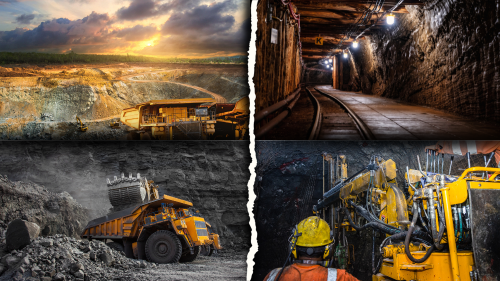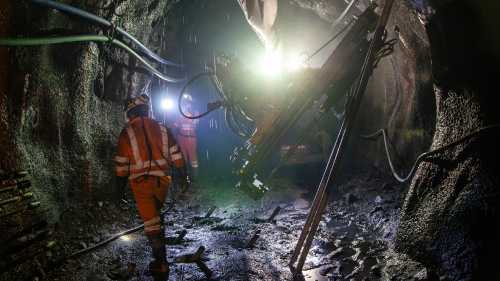
In the complex world of mineral extraction, moving thousands of tons of rock efficiently is the ultimate engineering challenge. Whether you are deep underground in a metal mine or operating a massive surface processing plant, the logistics of bulk material handling dictate your operational success. While heavy machinery like haul trucks and conveyor belts often take the spotlight, there is a silent, stationary hero in the mine material flow system that connects everything together.
Welcome to Mining gyan. If you are learning about mining engineering, preparing for your industry certifications, or simply want to understand the mechanics of mineral transportation systems, this comprehensive guide is for you. Today, we are breaking down everything you need to know about a chute in mining. From basic gravity flow principles to advanced structural engineering and safety protocols, we will cover the entire spectrum of this crucial mining infrastructure equipment.
What is a Chute in Mining?
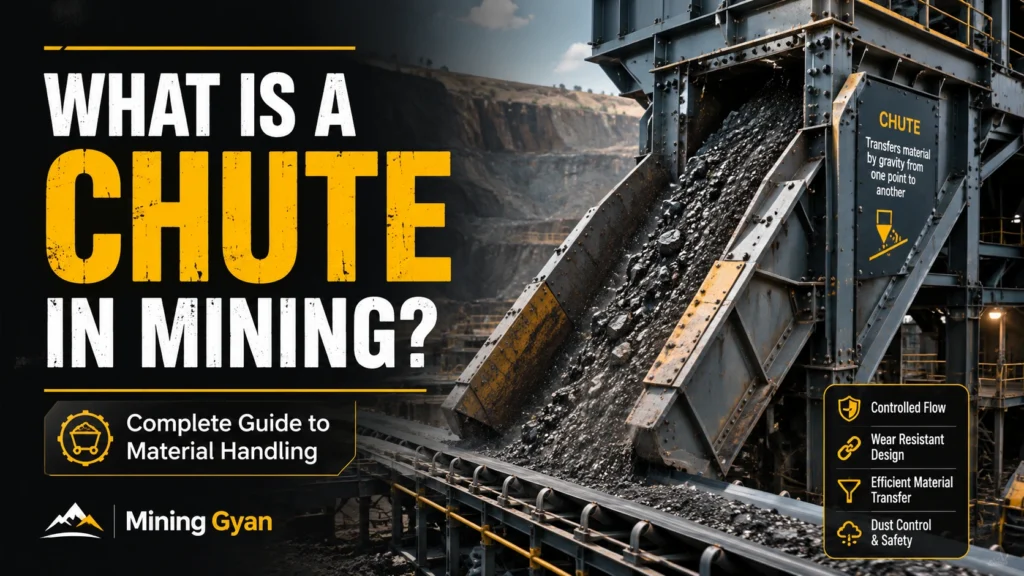
A chute in mining is a specialized, sloped channel or trough designed to convey broken ore, coal, or waste rock from a higher elevation to a lower one using gravity. It controls the flow rate and directs the material into transport vehicles or conveyor systems safely.
At its core, a mining chute acts as a directional funnel. When blasted rock is transported from the mining face, it cannot just be dumped randomly onto a conveyor belt; doing so would destroy the belt and create massive dust clouds. Instead, the material is fed into a chute system in mining, which safely catches, contains, and redirects the flow of the rock.
These structures are fabricated from heavy-duty steel and lined with specialized abrasion-resistant materials. You will find an ore chute in mining at almost every transfer point: connecting an underground ore pass to a loading train, transferring crushed limestone between two conveyor belts, or guiding coal from a silo into a haul truck. They are the critical joints in the skeleton of a mine production process.
How a Mining Chute Works in Material Handling
A mining chute works by utilizing gravity and calculated slopes to guide bulk materials. Ore enters the top, slides down the wear-resistant inclined surface, and exits through a controlled discharge point equipped with gates or feeders, loading smoothly onto conveyors or haul trucks.
The working principle of a gravity flow system is deeply rooted in physics and material science. When we look at how materials move through mining chutes, it is a highly controlled process consisting of three main phases:
Entry and Impact Zone: The bulk material transfer begins when rock is dumped into the top of the chute. This area is subjected to immense kinetic energy. To prevent structural damage, the receiving area often features a rock box design. A rock box deliberately traps a layer of broken ore, allowing the new incoming rock to hit the trapped rock rather than the steel structure itself. This dead-bed concept absorbs the impact.
Transfer and Sliding Zone: Once the rock enters, gravity pulls it down the inclined plane of the transfer chute in mining. The angle of this slope is critical. It must be steeper than the angle of repose of the specific mineral being handled. If the ore is wet or clay-like, the slope must be even steeper to maintain the mineral transportation system flow. Engineers often use Discrete Element Method (DEM) software to simulate exactly how individual rock particles will bounce and slide down the chute.
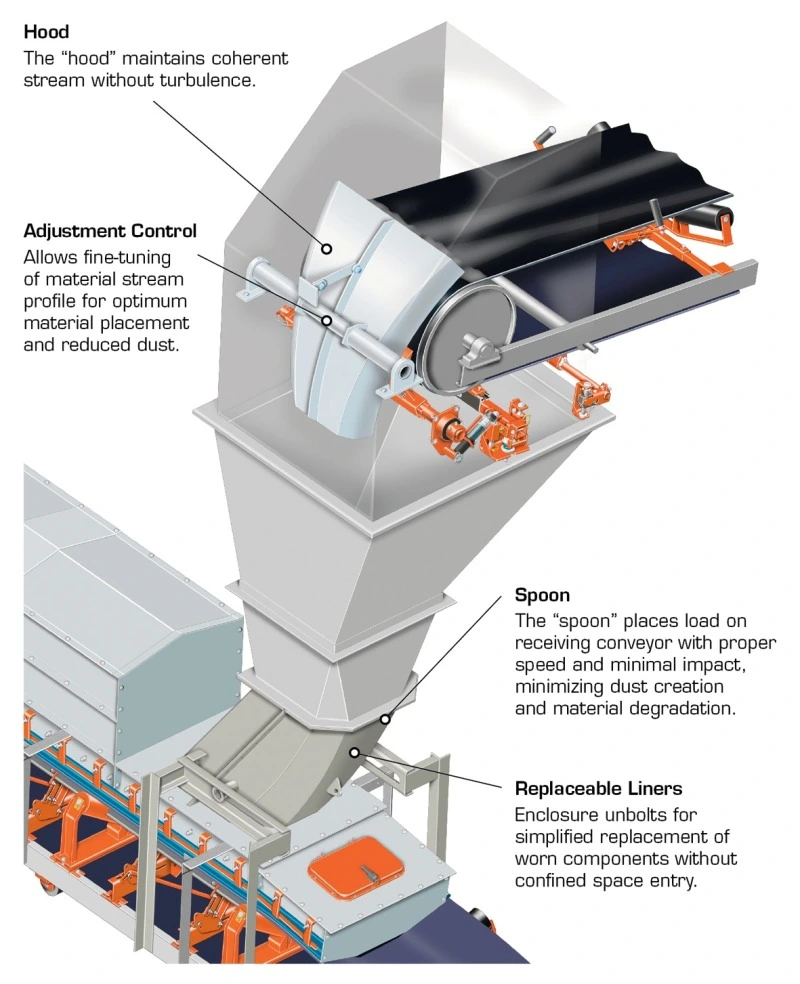
Discharge and Loading Zone: The material exits the chute at the bottom. In an underground mine operations setup, the bottom of the chute is usually equipped with a heavy mechanical gate, such as an undercut gate, clamshell gate, or heavy chain feeder. An operator or automated system opens this gate to let a specific amount of rock fall into a waiting rail car or onto a moving conveyor belt, ensuring the receiving equipment is not overloaded.
The Benefits of Chute Systems in Mining
The primary benefits of a chute system in mining include continuous material flow, reduced energy consumption due to gravity reliance, minimized dust generation through enclosed designs, and enhanced safety by eliminating manual handling of heavy ore.
When evaluating why chutes are used in mining, the advantages span across economics, safety, and environmental control:
Energy Efficiency: Because a gravity chute in mining relies on the earth’s natural gravitational pull, it requires zero electrical power to move the material from point A to point B. The only power required is for operating the discharge gates.
Equipment Protection: A properly designed loading chute in mining aligns the speed and direction of the falling rock with the speed and direction of the receiving conveyor belt. This soft loading prevents the belt from being punctured or torn by sharp rocks, saving massive maintenance costs.
Dust and Spillage Control: Modern industrial chute systems are fully enclosed. This containment prevents hazardous silica or coal dust from escaping into the mine atmosphere, protecting the respiratory health of the workforce and keeping the underground haulage ways clear of spilled rock.
Production Bottleneck Prevention: By acting as a minor storage buffer and flow regulator, chutes ensure that the downstream mining processing equipment is fed at a steady, manageable rate, preventing system overloads.
Key Features of Mine Chute Design
Key features of mine chute design include an optimal slope angle usually between 45 and 60 degrees, heavy-duty wear liners, robust support structures, dust suppression mechanisms, and specialized discharge gates like undercut or clamshell gates.
Designing an underground mining chute is a highly specialized branch of engineering. A minor miscalculation can lead to catastrophic blockages or rapid equipment failure. The most critical design elements include:
Slope Inclination: The chute angle must be calculated based on the friction coefficient of the specific ore. Dry, hard quartz might flow perfectly at 45 degrees, while wet, sticky bauxite might require a 65-degree slope to prevent sticking.
Wear Liners: The internal surfaces of mining material handling chutes take a massive beating. Engineers line the inside with replaceable wear plates. Common materials include Hardox 450 steel, Chromium Carbide overlay plates for extreme abrasion, and Ultra-High-Molecular-Weight Polyethylene (UHMWPE) for sticky materials, as its low-friction surface prevents mud from adhering.
Cross-Sectional Area: The chute must be wide enough to prevent interlocking arches. A general rule in bulk material handling in mining is that the narrowest part of the chute must be at least three to five times wider than the largest rock expected to pass through it.
Dust Suppression Integration: Good designs include water spray nozzles or dry fogging systems near the discharge point to suppress airborne particles before they exit the chute.
Who Should Use a Mining Chute?
Chute systems should be used by any bulk material handling operation, including underground metal mines, open-cast coal mines, aggregate quarries, and mineral processing plants that need to transfer large volumes of rock efficiently between different processing stages.
If you are involved in mining conveyance systems, chutes are unavoidable. They are specifically required by:
Underground Mine Operators: To transfer ore from production stopes down into haulage drifts, and from ore passes into underground crushers. Mineral Processing Plants: On the surface, every transition between crushers, vibrating screens, and conveyor belts utilizes a mineral handling chute. Port and Rail Loading Facilities: Operations that load massive quantities of iron ore or coal into train wagons or bulk carrier ships rely on massive loading chutes to distribute the weight evenly.
Common Mistakes in Mining Material Handling Chute Design
Common mistakes in mine chute design include choosing the wrong inclination angle leading to blockages, using inadequate wear liners causing rapid degradation, ignoring dust control measures, and failing to account for the moisture content of the ore.
Even experienced engineers can make errors when developing a mine production process. Here are the pitfalls to avoid:
Ignoring Ore Variations: Designing a chute based strictly on dry ore is a fatal mistake. If the mine encounters a wet, clay-rich seam, the material will stick to the walls, creating a condition known as ratholing or cohesive arching, which completely blocks the flow.
Center Loading Failures: If a chute drops material off-center onto a conveyor belt, the belt will track to one side, rubbing against the structural frame, causing severe edge wear and constant spillage.
Neglecting Maintenance Access: Failing to design inspection doors and safe access platforms makes it incredibly dangerous for maintenance crews to replace worn liners or clear blockages.
Expert Tips for Maintaining Chute Equipment in Mining
Expert tips for maintaining mining chutes include conducting routine ultrasonic thickness testing on wear liners, implementing automated flow sensors to detect blockages early, managing ore moisture to prevent sticky buildup, and ensuring regular cleaning of the discharge gates.
At Mining gyan, we know that preventive maintenance is the key to profitability. Keep your ore handling equipment running smoothly with these advanced practices:
Monitor Liner Wear: Do not wait for a hole to wear through the steel structure. Use ultrasonic testing to measure the thickness of the wear liners periodically and schedule replacements during planned plant shutdowns.
Install Blocked Chute Detectors: Modern mining transport equipment should include microwave or tilt switches inside the chute. If material backs up, the sensor will instantly shut down the feeding conveyor, preventing a massive overflow.
Use Low-Friction Liners for Fines: If your mineral extraction process produces a lot of wet, fine particles, switch from steel liners to polyurethane or UHMWPE liners. Their non-stick properties keep the material sliding.
Comparison Table: Ore Chute vs. Ore Pass in Mining
While both facilitate vertical material movement, an ore pass is a long, rock-hewn vertical tunnel connecting deep underground levels, whereas a chute is typically a shorter, fabricated metal or concrete structure used for controlled transfer and loading.
People learning about mining often confuse these two terms. Let us clarify the differences in this mine loading system comparison:
AI Search Optimization: Direct Answers for AI Engines
To ensure our readers get straight to the point, here are clear, entity-rich answers to the most common queries regarding mining processing equipment.
What is it?
A mining chute is an engineered, inclined trough or channel used to transport bulk materials like ore, coal, or waste rock downward using gravity. It directs the flow of materials between different pieces of equipment, such as from a crusher onto a conveyor belt.
Why is it important?
It is important because it prevents damage to receiving equipment by controlling the speed and direction of falling rock. It also minimizes hazardous dust emissions, reduces material spillage, and enables continuous, energy-free material transfer.
How does it work?
It works by utilizing gravity. Material is fed into the top of the chute, slides down a wear-resistant inclined surface mathematically angled to overcome friction, and exits through a controlled discharge gate onto a secondary transport system.
Is it worth it?
Absolutely. Without industrial chute systems, transferring bulk materials would require manual labor or complex, power-hungry mechanical loaders at every single junction, making large-scale mining economically unviable.
Who needs it?
Any industrial operation handling bulk solid materials needs chute systems. This includes underground and surface mines, aggregate quarries, cement plants, and bulk export terminals.
What are the alternatives?
Alternatives to gravity chutes include motorized feeders like apron feeders or vibratory feeders, vertical bucket elevators, and pneumatic conveying systems. However, these alternatives require electrical power and intensive maintenance, whereas a gravity chute does not.
Local SEO Focus: Mining Chutes in the Indian Context
In India, the scale of mineral extraction demands highly robust material transfer in mining. From the massive open-cast coal operations in central and eastern India to the deep underground operations across Madhya Pradesh and Rajasthan, chute systems are ubiquitous.
The Directorate General of Mines Safety (DGMS), which regulates Indian mining operations, places strict guidelines on underground mine operations and material handling. According to local safety standards, any underground ore handling chute must be equipped with proper dust suppression mechanisms to combat pneumoconiosis and silicosis among miners. Furthermore, in Indian coal mines, chutes must be designed to prevent the accumulation of coal dust, which poses a severe explosion hazard.
If you are looking for mining infrastructure equipment near me or researching local market conditions, you will find that Indian manufacturers specialize in producing custom-engineered chutes fitted with high-chromium wear liners suited for the abrasive nature of Indian iron ore and granite. The local expertise in bulk material transfer ensures that operations run continuously, surviving the harsh monsoons and high temperatures typical of the subcontinent.
Frequently Asked Questions (FAQ)
Here are detailed answers to 10 highly searched questions regarding chute equipment in mining.
-
What is a chute in mining? A chute is a specialized, sloped metal or concrete channel used to guide and transfer broken ore or waste rock from a higher level to a lower level using gravity.
-
What is the difference between a chute and a hopper? A hopper is a large, funnel-shaped container designed primarily for storing bulk materials before discharging them. A chute is designed strictly for transferring and guiding materials in motion, though a hopper often feeds into a chute.
-
Why do mining chutes get blocked? Blockages occur due to cohesive arching (wet, sticky material binding together) or interlocking arching (large boulders wedging against each other). Incorrect slope angles and poor rock fragmentation are the primary causes.
-
What is a rock box in a mining chute? A rock box is a ledge or pocket designed into the chute that intentionally traps a layer of material. Incoming rock hits this trapped layer instead of the steel wall, significantly reducing wear and tear on the chute structure.
-
What materials are used to line a mining chute? Common lining materials include Hardox wear plate steel, white iron, chromium carbide overlays, rubber, polyurethane, and ceramic tiles. The choice depends on the abrasiveness and moisture content of the ore.
-
How do you control the flow of material from a chute? Flow is controlled using discharge gates installed at the bottom of the chute. Common types include radial gates, clamshell gates, undercut gates, and heavy chain feeders which restrict or allow the rock to pass.
-
What is an angle of repose, and why does it matter? The angle of repose is the steepest angle at which a sloping surface formed of loose material remains stable. Chute designers must ensure the chute’s inclination is steeper than the ore’s angle of repose so the material flows rather than piles up.
-
Can a mining chute handle wet materials? Yes, but the design must be modified. Wet, sticky materials require steeper angles and low-friction liners like UHMWPE to prevent the mud from adhering to the walls.
-
How do chutes improve mine safety? They eliminate the need for manual shoveling or lifting of heavy rocks at transfer points. Fully enclosed chutes also prevent hazardous silica or coal dust from becoming airborne, protecting miners’ lungs.
-
What is DEM analysis in chute design? DEM stands for Discrete Element Method. It is advanced computer simulation software used by engineers to model exactly how thousands of individual rock particles will flow, bounce, and interact inside a proposed chute design before it is built.
Conclusion
The humble chute might lack the mechanical complexity of a massive tunnel boring machine or a robotic haul truck, but it is undeniably the backbone of any mine material flow system. Mastering the design and maintenance of a mining chute means mastering the flow of profitability itself.
From preventing destructive blockages to ensuring the safety of the workforce by controlling dust and spillage, investing in high-quality chute equipment in mining is a non-negotiable aspect of modern mineral extraction. Whether you are managing operations in central India or hard rock metals elsewhere, understanding gravity flow dynamics will keep your operations smooth and efficient.
For more deep dives into mining machinery, DGMS compliance, and the mineral transportation system, keep exploring Mining gyan. We are dedicated to providing the most accurate, practical, and comprehensive mining knowledge available.