Safety and efficiency are the lifelines of the underground extraction world. When operations go hundreds of meters below the earth’s surface, navigating these depths safely becomes the most critical engineering challenge. This is where the manway comes into play. For anyone studying or entering the sector, understanding the infrastructure that keeps personnel safe is just as important as knowing the minerals being extracted.
Welcome to Mining gyan. In this comprehensive guide, we will break down everything you need to know about a manway in mining. Whether you are curious about underground mining in Manway development, researching natural resources in Manway engineering, or looking for mining jobs in Manway construction projects, this article will serve as your ultimate resource. We will explore the technical specifications, DGMS safety regulations in India, and the operational impact of these essential structures.
What is a Manway in Mining?
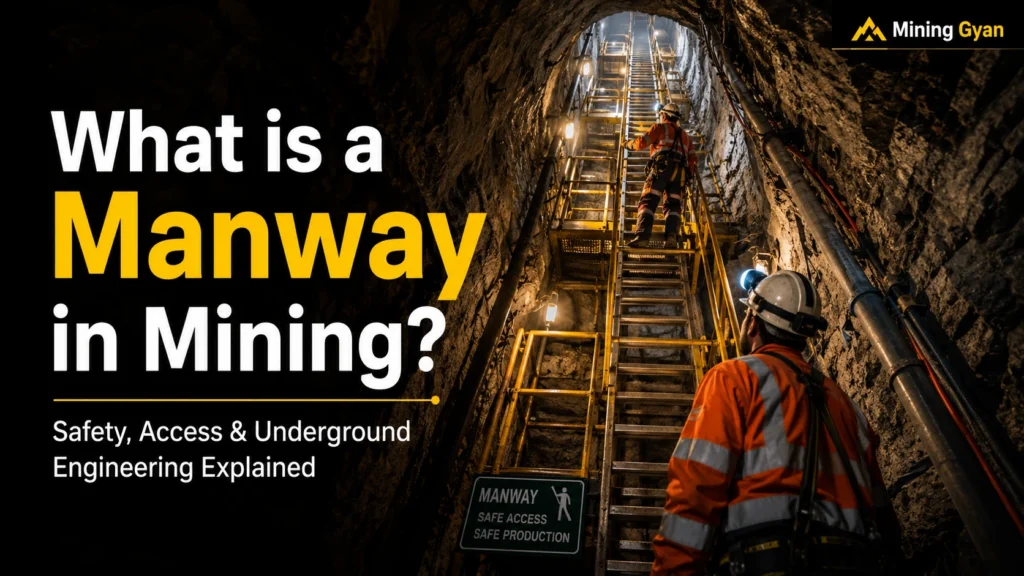
A manway in mining is a dedicated, secure underground passageway, raise, or shaft designed exclusively for miners to travel safely between different levels of a mine. It typically features ladders, platforms, or stairs, keeping human personnel completely separated from heavy machinery, automated vehicles, and ore transportation routes.
When we talk about the mining sector in Manway construction, we are referring to the specialized engineering required to build these vertical or inclined tunnels. A manway acts as the primary pedestrian highway within a mine. Without it, miners would be forced to share travel routes with multi-ton haul trucks or conveyor belts, which is a massive safety hazard.
In many cases, a manway also serves dual purposes. It frequently houses critical utility lines, such as water pipes, compressed air hoses, and electrical cables. Furthermore, it acts as an essential secondary escape route during emergencies. Understanding what minerals are mined in Manway-equipped operations—such as coal, limestone, or manganese—often dictates the specific design and safety requirements of that passageway.
How a Manway Works in Underground Mining
A manway works by providing a structurally reinforced, compartmentalized vertical or inclined route that connects horizontal mine workings (levels or drifts). Miners use standardized ladder systems with staggered resting platforms to climb up or down the raise safely, while fresh air is often routed through the passage to maintain ventilation.
The operational mechanics of a manway are rooted in strict engineering principles. When mining projects in Manway development are initiated, the engineering team excavates a raise—a vertical or steeply inclined opening. Timber or steel dividers are then installed to separate the manway from an adjacent ore pass (a chute used to drop broken rock).
The travelway is equipped with ladders placed at specific angles (usually no more than 80 degrees from the horizontal) to prevent fatigue. Resting platforms, known as landings, are constructed at regular intervals—typically every 6 to 9 meters, depending on local regulations like those from the Directorate General of Mines Safety (DGMS) in India.
Ventilation is another crucial aspect of how it works. Because manways connect different levels, they naturally act as airways. Mining contractors in Manway design must ensure that these passages allow clean air to flow down to the working faces while pushing hazardous gases out through exhaust shafts.
The Crucial Benefits of Dedicated Manways
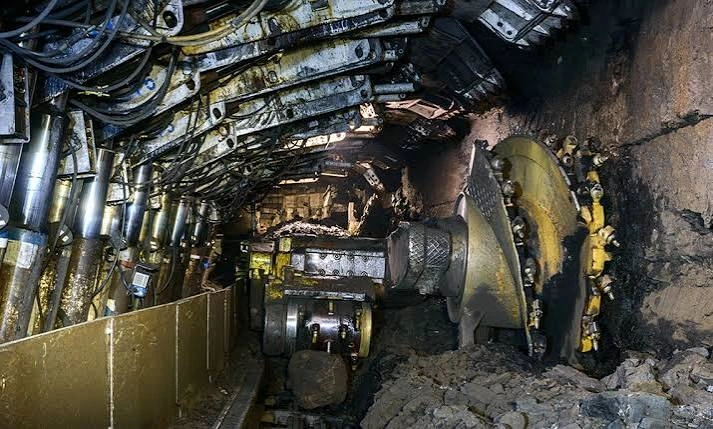
The primary benefit of a manway is absolute personnel safety through the segregation of foot traffic from vehicular traffic and ore handling. Additionally, manways provide immediate emergency egress, facilitate rapid movement between active stopes, and serve as secure conduits for vital mine utilities and ventilation.
Why is Manway important for mining? The benefits extend across safety, productivity, and compliance:
-
Zero Vehicle Conflict: By keeping miners out of the main haulage ramps, the risk of vehicle-pedestrian accidents is eliminated.
-
Emergency Evacuation: In the event of a cave-in, fire, or toxic gas leak, manways serve as the primary secondary escapeways required by law.
-
Efficient Stope Access: Miners can quickly access their working areas (stopes) without walking long distances up spiraling vehicle ramps.
-
Utility Protection: Water pipes, communication lines, and power cables routed through a manway are protected from being crushed by heavy machinery.
-
Improved Airflow: They serve as vital arteries for mine ventilation, ensuring the economic impact of mining in Manway design translates to lower energy costs for air circulation.
Key Features of an Industry-Standard Manway
An industry-standard manway features heavy-duty ladders, slip-resistant rungs, staggered resting landings with trapdoors, robust ground support like rock bolts or timbering, and adequate lighting. It must also be free of obstructions and constructed from materials suitable for the specific mine environment.
To build authority on the subject, we must look at the specific anatomy of a compliant manway. Mining business in Manway infrastructure focuses heavily on these non-negotiable features:
-
Staggered Landings: Ladders must not be continuous. If a miner slips, a staggered landing prevents a fall down the entire shaft.
-
Trapdoors: Openings at each landing are covered by hinged trapdoors to prevent objects from falling onto climbers below.
-
Non-Sparking Materials: For coal mining in Manway applications, materials must be non-sparking to prevent methane explosions. Wood or specialized alloys are often used instead of standard steel.
-
Ground Support: The walls of the manway must be secured with wire mesh, shotcrete, or timber cribbing to prevent rockfalls.
-
Clearances: There must be adequate toe clearance behind the ladder rungs and enough shoulder room for a miner wearing a bulky self-rescuer and hard hat.
Who Should Use It? (And Who Needs It)
Manways are used by all underground mine personnel, including drillers, blasters, surveyors, geologists, and maintenance crews who need to move between levels. Any underground operation utilizing stoping methods, deep shaft access, or vertical vein extraction absolutely needs manway infrastructure.
If you are exploring mining employment opportunities in Manway maintenance, you will quickly learn that these passages are for everyone working below ground.
-
Underground Miners: Use them daily to reach extraction zones.
-
Mine Rescuers: Rely on them heavily during emergency extraction protocols.
-
Geologists and Engineers: Use them to inspect rock formations, take samples, and survey the mine structure.
-
Maintenance Technicians: Need them to repair the water and air pipes housed within the passage.
On a macro level, the mining development in Manway infrastructure is required for operations extracting steep, narrow veins, such as certain gold, silver, and manganese deposits.
What Are the Alternatives to a Manway?
Alternatives to traditional ladder-equipped manways include mechanized Alimak climbers, personnel elevators (cages) in main shafts, and trackless decline ramps where personnel travel via transport vehicles (mantrips).
While a traditional ladder manway is cost-effective and essential, technological advancements and the push for industrial mining in Manway efficiency have introduced alternatives:
-
Decline Ramps: Instead of climbing, miners are driven down spiraling ramps in specialized vehicles. This is common in modern, highly mechanized mines.
-
Cages and Skips: Elevators operated by hoists drop miners directly to their levels.
-
Alimak Raise Climbers: A mechanized platform that climbs a guide rail pinned to the rock wall, often used during the initial development of a raise before a permanent ladderway is installed.
However, even when these mechanized alternatives are present, mining regulations universally require a traditional ladder manway as a secondary escape route in case of a complete power failure.
Common Mistakes in Manway Design and Maintenance
Common mistakes include failing to clear accumulated debris on landings, allowing continuous ladder runs without staggered resting platforms, neglecting wood rot or steel corrosion, and poor ventilation integration resulting in stagnant, hazardous air pockets.
In the fast-paced world of mineral mining in Manway execution, corners are sometimes cut, leading to fatal consequences.
-
Overcrowding Utilities: Stuffing too many pipes and cables into a narrow manway restricts climbing space, causing miners to snag their equipment.
-
Ignoring Water Ingress: Allowing groundwater to flow freely down a manway makes ladders dangerously slippery and accelerates the corrosion of steel components.
-
Poor Trapdoor Maintenance: Leaving trapdoors propped open negates their safety purpose. If a tool is dropped, it will fall straight through to the bottom level.
-
Outdated Timber: In traditional setups, failing to replace rotting timber can lead to a sudden collapse of the platforms.
Expert Tips for Manway Safety and Compliance
Expert tips for manway safety include conducting daily pre-shift visual inspections, implementing a three-point contact rule for climbing, using fall arrest systems in vertical shafts, and utilizing corrosion-resistant FRP (Fiberglass Reinforced Plastic) ladders in highly acidic mine environments.
As a platform dedicated to mining knowledge, Mining gyan recommends the following best practices for anyone involved in mining operations in Manway maintenance:
-
Implement Fall Protection: While enclosed manways are safer than open shafts, workers performing maintenance on the manway itself should wear full-body harnesses tied off to an independent lifeline.
-
Upgrade Materials: Consider transitioning from traditional timber to Fiberglass Reinforced Plastic (FRP). FRP is highly durable, immune to rot, and resistant to the acidic water often found in underground environments.
-
Strict Housekeeping: Enforce a zero-tolerance policy for leaving tools, trash, or rock debris on manway landings.
-
Regular Air Quality Checks: Because manways can trap gases, shift bosses should always test the atmosphere with a multi-gas detector before allowing crews to ascend or descend.
Comparison Table: Manway vs. Shaft vs. Ramp
To understand how mining infrastructure in Manway systems fits into the broader picture, we must compare it with other access methods.
Local SEO Focus: Manways in the Indian Mining Sector
In India, the construction and maintenance of underground travelways are strictly governed by the Directorate General of Mines Safety (DGMS). From coalfields in Jharkhand to metal mines in central India, manway infrastructure is critical to the nation’s resource extraction.
The Mining Industry in Manway Madhya Pradesh and Beyond
Madhya Pradesh is a powerhouse of natural resources, boasting significant deposits of coal, limestone, copper, and manganese. When discussing the mining industry in Manway Madhya Pradesh applications, we are looking at how advanced underground safety infrastructure is implemented in some of India’s most critical operations.
For example, MOIL (Manganese Ore India Limited) operates the Balaghat mine in Madhya Pradesh, the deepest underground manganese mine in Asia. In such deep-level operations, the top mining locations near Manway access points require meticulously maintained ladderways to ensure the hundreds of miners can navigate the varying levels safely.
Furthermore, limestone mining in Manway engineering (referring to the construction of travelways in underground limestone operations) presents unique challenges, as the rock can be prone to karstic voids. Finding the best mining companies in Manway construction within India means looking for contractors who deeply understand DGMS regulations regarding timbering, ventilation, and emergency egress protocols.
The mining sector contribution to Manway development in regions like Madhya Pradesh also drives local employment. Mining opportunities in Manway construction, inspection, and maintenance provide skilled jobs for local engineers and safety officers. Understanding how mining contributes to Manway economy locally shows that safety infrastructure investment directly parallels community upliftment.
As we look toward the future mining prospects in Manway design, we see a shift toward automated sensor monitoring. Future manways in Indian mines will likely feature smart sensors that monitor air quality, temperature, and structural integrity in real-time, sending data back to surface control rooms.
Frequently Asked Questions (FAQ)
Here are 10 highly searched FAQs regarding manways, complete with detailed answers.
-
What is a manway in a mine? A manway is a dedicated vertical or inclined tunnel in an underground mine equipped with ladders and platforms. It is used exclusively for the safe travel of personnel between different underground levels, away from heavy machinery.
-
Why are manways separate from ore passes? Manways are kept separate from ore passes to protect miners from falling rocks, massive dust clouds, and structural damage caused by tons of broken ore tumbling down the chutes. They are often built side-by-side but separated by a heavy timber or steel pillar.
-
Are manways required by law? Yes. In India, the DGMS strictly mandates the provision of safe travelways and secondary emergency escape routes in all underground mines. Similar regulations exist globally under MSHA (USA) and other regional bodies.
-
What is the maximum angle for a manway ladder? Safety regulations generally dictate that ladders should not be installed at an angle greater than 80 degrees from the horizontal. If a ladder must be completely vertical, it requires specialized back guards or fall arrest systems.
-
How far apart should landings be in a manway? To prevent fatal falls and reduce fatigue, resting platforms (landings) are typically required every 6 to 9 meters. A miner climbing a ladder will step off onto a landing, close the trapdoor, and then begin climbing the next staggered ladder.
-
What materials are used to build manways? Historically, treated timber was the standard. Today, modern mines use galvanized steel, aluminum, and Fiberglass Reinforced Plastic (FRP) due to their resistance to corrosion, moisture, and rot.
-
How does a manway help with mine ventilation? Manways act as natural or forced conduits for airflow. Fresh air pumped from the surface often travels down the main shaft, moves through the drifts, and can be directed up or down manways to reach active mining faces.
-
What is the difference between a manway and a shaft? A shaft is a primary vertical opening that connects the surface to the underground, usually equipped with large mechanical hoists for moving tons of ore. A manway is an internal passage between levels, navigated manually by climbing ladders.
-
Do open cast mines use manways? Generally, no. Open cast mining in Manway contexts is rare, as surface mines use massive ramps for haul trucks. However, if a surface mine connects to an older underground working, or has deep drainage sumps, a manway-like ladder system might be utilized.
-
What are the biggest hazards inside a manway? The primary hazards include slips and falls due to wet or muddy ladders, falling objects dropped from higher levels, and the accumulation of toxic or explosive gases due to poor ventilation.
Conclusion
Understanding the engineering, safety protocols, and operational necessity of a manway is fundamental to grasping how underground mining works. From providing a secure path away from roaring machinery to acting as a vital lifeline during emergencies, the manway is a testament to the industry’s commitment to worker safety.
For operations across India—whether dealing with mineral resources in Manway configurations in Jharkhand or managing the complex mining industry in Manway Madhya Pradesh—investing in high-quality, DGMS-compliant travelways is non-negotiable. It protects human capital, ensures regulatory compliance, and maintains operational fluidity.
As technology advances, we will continue to see innovations in mining investment in Manway materials, such as the use of FRP and smart sensors, making the journey into the deep earth safer than ever before.
For more expert insights, beginner guides, and industry news on mining infrastructure, keep exploring Mining gyan. Safety is our foundation, and knowledge is our greatest resource.