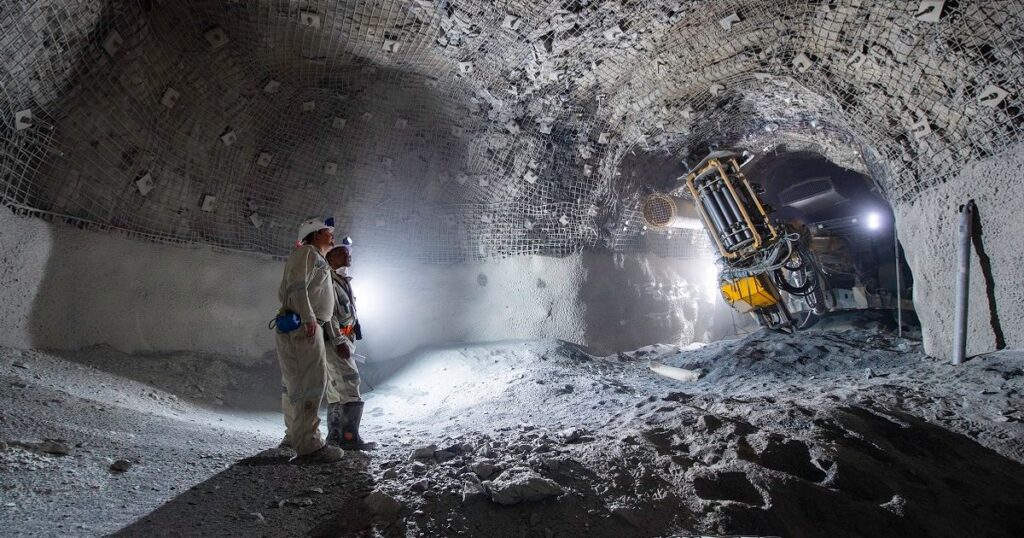
Hanging Wall in Mining is one of the most fundamental concepts in mining geology that every mining student and professional must clearly understand.
Whether you are studying underground mining methods or preparing for a competitive exam like GATE Mining or DGMS, the concept of Hanging Wall in Mining is always relevant.
What is Hanging Wall in Mining?
Hanging Wall in Mining is defined as the rock mass that lies above an inclined fault plane or ore vein – in simple terms, it is the rock that forms the ceiling when a miner works inside an inclined excavation.
Whenever a fault or ore vein is tilted at an angle, the upper side of that plane is always referred to as the Hanging Wall.
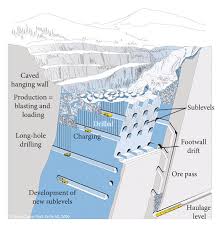
The term Hanging Wall applies equally in mining engineering and structural geology – it is used in fault analysis, stope design, ore body interpretation, and mine safety planning.
Understanding what Hanging Wall in Mining means is the first step toward understanding fault mechanics and underground excavation stability.
History of Hanging Wall in Mining – Origin of the Term
The term Hanging Wall in Mining has a very old origin that dates back to early European miners who worked manually inside inclined ore veins.
These miners used to hang their lamps on the upper wall of the inclined vein while working – and over time, that upper wall came to be called the “Hanging Wall.”
| Term | Origin Language | Original Word | Meaning |
|---|---|---|---|
| Hanging Wall | Old German | Hangendus | Upper side of fault or vein |
| Foot Wall | Old German | Liegendus | Lower side of fault or vein |
| Fault Plane | Latin | Fallo | Surface along which movement occurs |
Hanging Wall and Foot Wall in Mining – Key Terms Explained
To fully understand Hanging Wall in Mining, it is important to first get clear on the three most related terms that are always used together in mining geology.
These three terms form the basic vocabulary of fault and vein analysis in underground mining.
What is Hanging Wall in Mining
The Hanging Wall in Mining is the block of rock that lies on the upper side of an inclined fault plane or ore vein, and it acts as the natural ceiling for miners working below it.
Because gravity pulls it downward, the Hanging Wall is naturally less stable and requires proper support systems in underground workings.
What is Foot Wall in Mining
The Foot Wall is the rock mass that lies on the lower side of a fault plane or ore vein – it is the rock on which a miner’s feet rest when working inside an inclined excavation.
The Foot Wall is comparatively more stable because gravity acts in its favor and keeps it in place.
What is a Fault Plane
The Fault Plane is the inclined surface that separates the Hanging Wall and Foot Wall, and it is the surface along which the two rock masses have moved relative to each other.
The angle of the fault plane, known as the dip, directly determines how much pressure the Hanging Wall in Mining will exert on the underground workings.
Hanging Wall and Foot Wall in Mining – Main Difference
Understanding the difference between Hanging Wall and Foot Wall in Mining is critical for both exam preparation and practical mine design.
The table below provides a clear and detailed comparison between the two terms.
| Parameter | Hanging Wall in Mining | Foot Wall in Mining |
|---|---|---|
| Position | Above the fault plane or vein | Below the fault plane or vein |
| Relative to Miner | Above the miner’s head | Below the miner’s feet |
| Stability | Comparatively unstable | Comparatively stable |
| Effect of Gravity | Gravity pulls it downward | Gravity supports it in place |
| Support Requirement | Requires more support | Requires less support |
| Risk of Rock Fall | Higher risk | Lower risk |
| Role in Stope | Acts as the ceiling of the stope | Acts as the floor of the stope |
| Movement in Normal Fault | Moves downward | Remains relatively fixed |
Hanging Wall in Different Types of Faults in Mining
The behavior of the Hanging Wall in Mining changes depending on the type of fault – and this is one of the most important concepts tested in mining and geology exams.
The three main fault types where Hanging Wall movement is studied are Normal Fault, Reverse Fault, and Thrust Fault.
Hanging Wall in Normal Fault
In a Normal Fault, the Hanging Wall moves downward relative to the Foot Wall, which means tensional forces are acting on the rock mass.
Normal faults are the most common type found in coal mines and rift valley regions across the world.
Hanging Wall in Reverse Fault
In a Reverse Fault, the Hanging Wall moves upward relative to the Foot Wall, which indicates that compressional forces are dominant in that region.
Reverse faults create very high pressure on the Hanging Wall, making it essential to install strong support systems in underground mines.
Hanging Wall in Thrust Fault
A Thrust Fault is a low-angle reverse fault where the Hanging Wall travels a very large horizontal distance over the Foot Wall due to extreme compression.
Thrust faults are common in the Himalayan region, and Hanging Wall in Mining in such zones carries a very high instability risk.
| Fault Type | Hanging Wall Movement | Dominant Force | Common Location |
|---|---|---|---|
| Normal Fault | Moves downward | Tensional | Rift valleys, coal fields |
| Reverse Fault | Moves upward | Compressional | Mountain belts |
| Thrust Fault | Moves horizontally + upward | High Compression | Himalayan region |
| Strike-Slip Fault | Horizontal movement only | Shear Force | Transform boundaries |
Hanging Wall in Stope Mining
In stope mining, the Hanging Wall in Mining plays the most critical role because miners work directly beneath it during the entire extraction process.
A stope is the underground excavation from which ore is extracted, and the Hanging Wall forms its natural ceiling – making its stability a top priority.
| Stope Type | Hanging Wall Role | Stability Level |
|---|---|---|
| Open Stope | Acts as unsupported natural ceiling | Medium to High Risk |
| Cut and Fill Stope | Supported by fill material from below | Better Stability |
| Shrinkage Stope | Broken ore provides temporary support | Moderate |
| Sub-level Stope | Supported by cable bolts and shotcrete | Controlled and Safe |
Hanging Wall Pressure in Underground Mining
Hanging Wall pressure in underground mining increases significantly as the depth of the mine increases – this is one of the key challenges in deep underground mining operations.
The pressure is directly related to the depth, density of the overlying rock, and the size of the excavation opening.
| Mine Depth | Approximate Pressure | Risk Level | Recommended Support |
|---|---|---|---|
| 0 – 100 m | Low (2–3 MPa) | Low | Basic roof bolting |
| 100 – 300 m | Medium (5–8 MPa) | Medium | Rock bolts + wire mesh |
| 300 – 600 m | High (10–15 MPa) | High | Cable bolts + shotcrete |
| 600 m+ | Very High (20+ MPa) | Very High | Full engineered support system |
Hanging Wall Support Methods in Underground Mining
Providing adequate support to the Hanging Wall in underground mining is essential to ensure the safety of miners and the long-term stability of the excavation.
The selection of the support method depends on the rock quality, mine depth, span of the excavation, and the expected pressure conditions.
| Support Method | How It Works | Best Used For |
|---|---|---|
| Roof Bolting | Steel bolts are drilled and tensioned into the Hanging Wall rock | Shallow to medium depth mines |
| Cable Bolting | Long steel cables are grouted deep into the rock mass | Deep stopes and large spans |
| Shotcrete | Concrete is sprayed onto the Hanging Wall surface to seal and strengthen it | Weak or heavily fractured rock |
| Timber Sets | Wooden frames installed to provide temporary support | Shallow workings and old mines |
| Steel Sets | Steel arch frames placed along the tunnel profile | High pressure zones and squeezing ground |
| Hydraulic Backfill | Mined-out areas are filled to provide passive support to the Hanging Wall | Cut and fill stoping operations |
Hanging Wall Stability in Underground Mining
Hanging Wall stability in underground mining depends on several interconnected factors – and all of them together determine whether a Hanging Wall is safe to work under or not.
The table below compares the conditions that lead to a stable versus an unstable Hanging Wall in a typical underground mine.
| Factor | Stable Hanging Wall | Unstable Hanging Wall |
|---|---|---|
| Rock Strength (UCS) | High – above 60 MPa | Low – below 30 MPa |
| Joint Spacing | Wide joint spacing (1 m+) | Closely spaced joints |
| Water Presence | Dry rock conditions | Active water seepage present |
| Dip of Fault or Vein | Low dip angle (below 45°) | High dip angle (above 60°) |
| Excavation Span | Narrow excavation span | Wide and unsupported span |
| Support System | Adequate support installed | No support or poor quality support |
Hanging Wall Collapse in Mining – Causes and Prevention
Hanging Wall collapse in mining is one of the most dangerous events in underground operations – it occurs when the Hanging Wall rock mass suddenly falls into the working area.
Understanding the causes and prevention methods of Hanging Wall collapse is critical for mine safety planning and DGMS compliance in India.
| Cause of Collapse | Prevention Method |
|---|---|
| Inadequate or absent support system | Install proper roof bolting and cable bolting as per design |
| Water seepage weakening rock joints | Install effective drainage systems and use cement grouting |
| Excessive blasting vibrations | Use controlled blasting techniques and limit charge per delay |
| Over-excavation creating large unsupported spans | Leave rib pillars and follow designed excavation limits |
| Highly jointed or fractured rock mass | Apply shotcrete lining and wire mesh reinforcement |
| Lack of regular inspection | Conduct systematic inspections as per DGMS guidelines |
Hanging Wall in Mining – Diagram Explanation
Understanding the Hanging Wall in Mining becomes much easier when the concept is explained through a labeled diagram of a typical inclined fault or ore vein.
The table below describes each part of the standard Hanging Wall and Foot Wall diagram as it appears in geology and mining textbooks.
| Diagram Label | Position | Description |
|---|---|---|
| Hanging Wall | Above the fault plane | Upper rock mass acting as the ceiling of the excavation |
| Foot Wall | Below the fault plane | Lower rock mass acting as the floor of the excavation |
| Fault Plane | Between Hanging Wall and Foot Wall | Inclined surface along which movement occurs |
| Dip Angle | Angle of the fault plane | Measured from horizontal; higher angle = higher Hanging Wall pressure |
| Ore Vein | Along the fault plane | The zone where valuable mineral deposits are found |
| Stope Excavation | Within the ore body | The area where ore has been removed, leaving Hanging Wall exposed |
Hanging Wall in Mining – Important for Competitive Exams
The topic of Hanging Wall in Mining is frequently asked in GATE Mining, DGMS, Mining Foreman, Overman, and Mine Surveyor competitive examinations held in India.
The table below contains the most important MCQ-oriented facts that will directly help in your exam preparation.
| Exam Question Pattern | Correct Answer |
|---|---|
| What is the position of Hanging Wall in Mining? | Above the fault plane or ore vein |
| In which fault does the Hanging Wall move downward? | Normal Fault |
| In which fault does the Hanging Wall move upward? | Reverse Fault |
| Which is more stable – Hanging Wall or Foot Wall? | Foot Wall is more stable |
| What support is most commonly used for Hanging Wall? | Roof bolts and cable bolts |
| What role does Hanging Wall play in a stope? | It acts as the natural ceiling of the stope |
| What increases Hanging Wall pressure in mines? | Increase in mine depth |
| What is the Hanging Wall called in Hindi? | Lalat Bhitt |
MiningGyan – Your Trusted Mining Education Platform
MiningGyan is a dedicated mining education platform built specifically for mining engineering students, working professionals, and competitive exam aspirants across India.
At MiningGyan, complex topics like Hanging Wall in Mining are explained in a simple, structured, and easy-to-understand manner so that every reader can grasp the concept clearly in one reading.
MiningGyan does not just provide definitions – every article includes working processes, labeled diagram descriptions, real-world examples, comparison tables, and exam-ready notes.
Each topic is written in a way that connects theoretical knowledge with practical mining applications, making it useful for both classroom study and on-site understanding.
| What MiningGyan Covers | Who It Helps |
|---|---|
| Underground Mining Methods – Complete Guides | Mining Engineering Students (B.Tech / Diploma) |
| Mining Geology Concepts – Simple Explanation | GATE Mining and DGMS Exam Aspirants |
| Equipment Working Principles and Types | Junior Mining Engineers and Trainees |
| Mine Safety and Ventilation Topics | Mine Supervisors, Overmen, and Safety Officers |
| Competitive Exam Notes and MCQ Practice | Foreman, Overman, and Mine Surveyor Candidates |
| Clear English Content with Labeled Diagrams | All Mining Students and Professionals |
MiningGyan’s mission is simple – “To deliver accurate, complete, and accessible mining knowledge to every mining student and professional in India.”
If you are serious about building a career in mining, MiningGyan is the most reliable and student-friendly platform available to you.
Conclusion – Hanging Wall in Mining
Hanging Wall in Mining is a foundational concept that appears across geology, fault analysis, stope design, support engineering, and mine safety – making it one of the most important topics in mining education.
Whether you are a student trying to clear an exam or a professional designing a safe underground excavation, a solid understanding of the Hanging Wall is absolutely essential.
This article covered the complete concept of Hanging Wall in Mining – from its definition and origin to its behavior in different fault types, pressure analysis, support methods, and exam-ready facts.
Explore more such detailed and free mining guides on MiningGyan and build a strong foundation in mining engineering and geology.