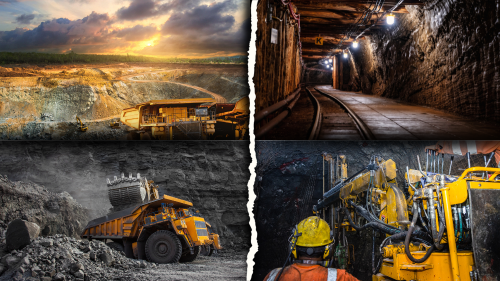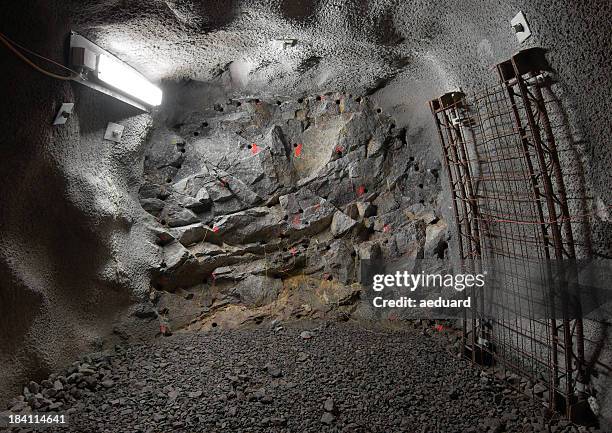
In underground mining, a gallery refers to a horizontal or nearly horizontal passage developed within a mine to provide access to mineral deposits, transportation routes, ventilation pathways, and working areas for miners. Galleries are essential components of underground mine infrastructure and play a vital role in the efficient extraction of minerals.
Mining operations require a complex network of tunnels and passages to connect shafts, stopes, and working faces. Among these passages, galleries serve as the main routes through which workers, equipment, and extracted materials move within the mine.
In coal mines and many other underground mining operations, galleries are often developed along the direction of the mineral seam. These passages allow miners to reach different sections of the deposit while maintaining proper ventilation and safety conditions.
Understanding the concept of galleries is extremely important for mining engineers, geologists, and mine planners because proper gallery design directly influences mine productivity, ventilation efficiency, and worker safety.
What is Gallery in Mining?
In mining terminology, a gallery is defined as a horizontal underground passage or tunnel developed to access mineral deposits and facilitate mining operations. Galleries are commonly created within the ore body or along the mineral seam.
These passages allow miners to reach the working face where extraction takes place. Galleries also serve as transportation routes for moving ore, coal, equipment, and workers throughout the mine.
Galleries may vary in size depending on the type of mining method used, the equipment operating in the mine, and the geological conditions of the rock formations.
In many underground coal mines, galleries form a grid-like pattern that allows efficient extraction of coal while maintaining proper support for the surrounding rock layers.
Purpose of Galleries in Mining
Galleries are designed to perform several critical functions within underground mining operations. These passages ensure smooth operation and safe working conditions for miners.
Transportation of Minerals
One of the primary purposes of galleries is to provide a route for transporting extracted minerals such as coal or ore from the working face to the main haulage system. Conveyor belts, shuttle cars, and other transportation systems are often installed inside galleries.
Worker Access
Galleries provide safe access for miners to reach various working areas within the mine. Without properly designed galleries, it would be impossible for workers to move efficiently between different mining sections.
Ventilation System
Proper ventilation is essential in underground mines to remove harmful gases and supply fresh air. Galleries act as channels through which air circulates inside the mine.
Drainage and Water Control
Water accumulation can create serious hazards in underground mines. Galleries help direct water toward drainage systems where it can be pumped out safely.
Emergency Escape Routes
Galleries also serve as emergency escape pathways that allow miners to evacuate quickly during accidents or hazardous situations.
Types of Galleries in Mining
Depending on their location and function within the mine, galleries can be classified into several types.
Main Gallery
The main gallery is the principal horizontal passage that connects the shaft or main entry of the mine to different mining sections. It usually carries the primary transportation system for ore and materials.
Level Gallery
A level gallery is developed at a specific depth or level in the mine. These galleries provide access to different working areas at that level.
Crosscut Gallery
A crosscut gallery is driven perpendicular to the direction of the ore body or mineral seam. These passages help connect different galleries and improve ventilation.
Strike Gallery
A strike gallery is developed along the strike direction of the mineral deposit. It follows the natural orientation of the ore body or coal seam.
| Type of Gallery | Description |
|---|---|
| Main Gallery | Primary passage for transportation and access |
| Level Gallery | Horizontal passage at a specific depth |
| Crosscut Gallery | Passage intersecting the ore body |
| Strike Gallery | Gallery developed along strike direction |
Development of Galleries in Underground Mining
The development of galleries is a critical stage in underground mining operations. It involves several steps to create safe and stable passages.
Surveying and Planning
Before excavation begins, mining engineers conduct detailed geological surveys and plan the layout of galleries to ensure efficient mineral extraction.
Drilling and Blasting
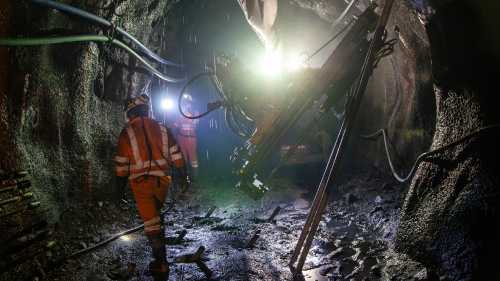
In hard rock mines, drilling and blasting techniques are used to break the rock and create the gallery. Holes are drilled into the rock and filled with explosives to fragment the material.
Rock Removal
After blasting, broken rock is removed using loaders, haulage vehicles, or conveyor systems.
Support Installation
Once the gallery is excavated, roof support systems such as rock bolts, steel arches, or timber supports are installed to prevent collapse.
Ventilation Setup
Ventilation systems are installed to supply fresh air and remove harmful gases generated during mining operations.
Support Systems Used in Mining Galleries
Underground galleries require strong support systems to maintain stability and ensure worker safety.
Timber Support
Timber supports were traditionally used in underground mining to support the roof and walls of galleries.
Steel Supports
Modern mines often use steel arches and frames to provide stronger and more durable structural support.
Rock Bolting
Rock bolts are long steel rods inserted into the rock mass to reinforce the roof and prevent rock falls.
Shotcrete
Shotcrete is sprayed concrete that forms a protective layer over the rock surface, improving stability.
Equipment Used in Gallery Development
Modern mining operations use various machines and tools to develop underground galleries efficiently.
| Equipment | Function |
|---|---|
| Drilling Machines | Create holes for blasting |
| Explosives | Break rock during blasting |
| Continuous Miner | Mechanically cuts rock or coal |
| Load-Haul-Dump Machines | Remove broken rock |
| Conveyor Belts | Transport mined material |
Importance of Galleries in Underground Mining
Galleries are essential for the efficient functioning of underground mines. Without properly designed galleries, mining operations would become extremely difficult and unsafe.
They allow miners to access different parts of the ore body while maintaining organized transportation systems.
Galleries also improve ventilation by creating airflow pathways that remove hazardous gases such as methane and carbon monoxide.
In addition, galleries play a key role in emergency evacuation, allowing workers to exit the mine quickly if dangerous situations occur.
Safety Challenges in Mining Galleries
Although galleries are essential for mining operations, they also present several safety challenges that must be carefully managed.
| Challenge | Description |
|---|---|
| Roof Collapse | Weak rock formations may cause roof failure |
| Gas Accumulation | Dangerous gases may build up without ventilation |
| Water Inflow | Underground water may flood galleries |
| Limited Space | Narrow passages can restrict equipment movement |
To reduce these risks, mining companies implement strict safety procedures and use modern monitoring systems.
Modern Technology in Gallery Construction
Advancements in mining technology have improved the efficiency and safety of gallery construction.
Tunnel Boring Machines
TBMs allow faster and more precise excavation of underground passages.
Digital Mine Mapping
Computer-based mapping systems help engineers design optimal gallery layouts.
Real-Time Monitoring
Sensors installed in galleries monitor rock pressure, gas levels, and structural stability.
Automated Ventilation Systems
Modern ventilation systems automatically regulate airflow to maintain safe working conditions.
Frequently Asked Questions
What is a gallery in mining?
What is the purpose of a gallery?
How are galleries supported?
Where are mining galleries used?
Conclusion
Galleries are essential components of underground mining infrastructure. These horizontal passages provide access to mineral deposits while enabling transportation, ventilation, and safe working conditions.
Proper planning, design, and support of galleries are crucial to ensure the efficiency and safety of mining operations. Modern technologies such as digital mine mapping, automated ventilation systems, and advanced excavation equipment have significantly improved gallery construction and management.
By understanding the role and importance of galleries, mining professionals can design safer and more productive underground mining systems.