
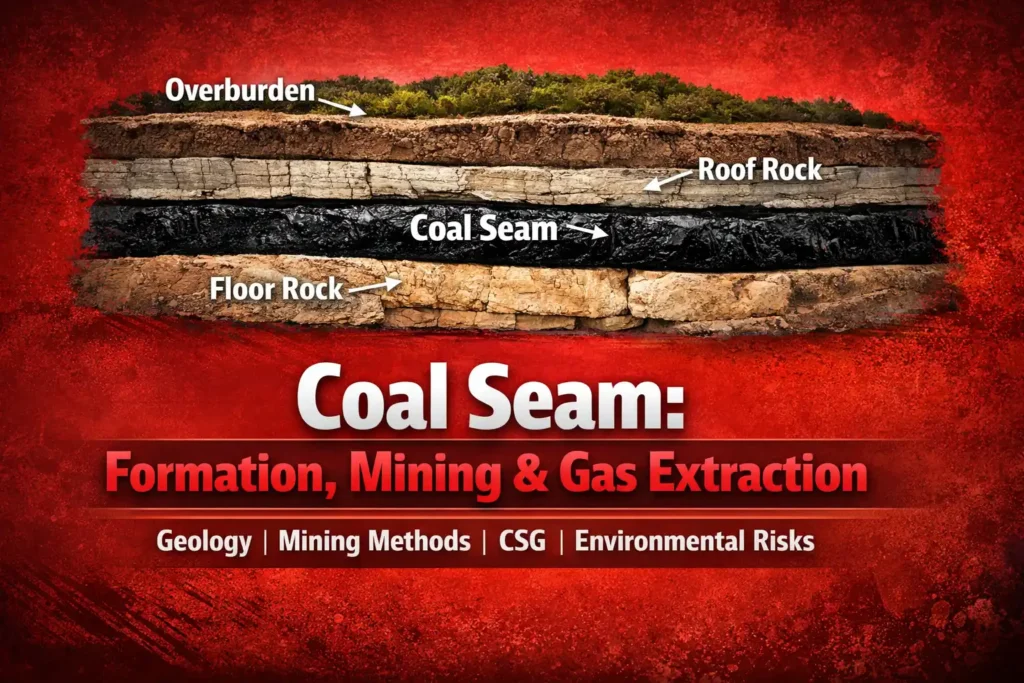
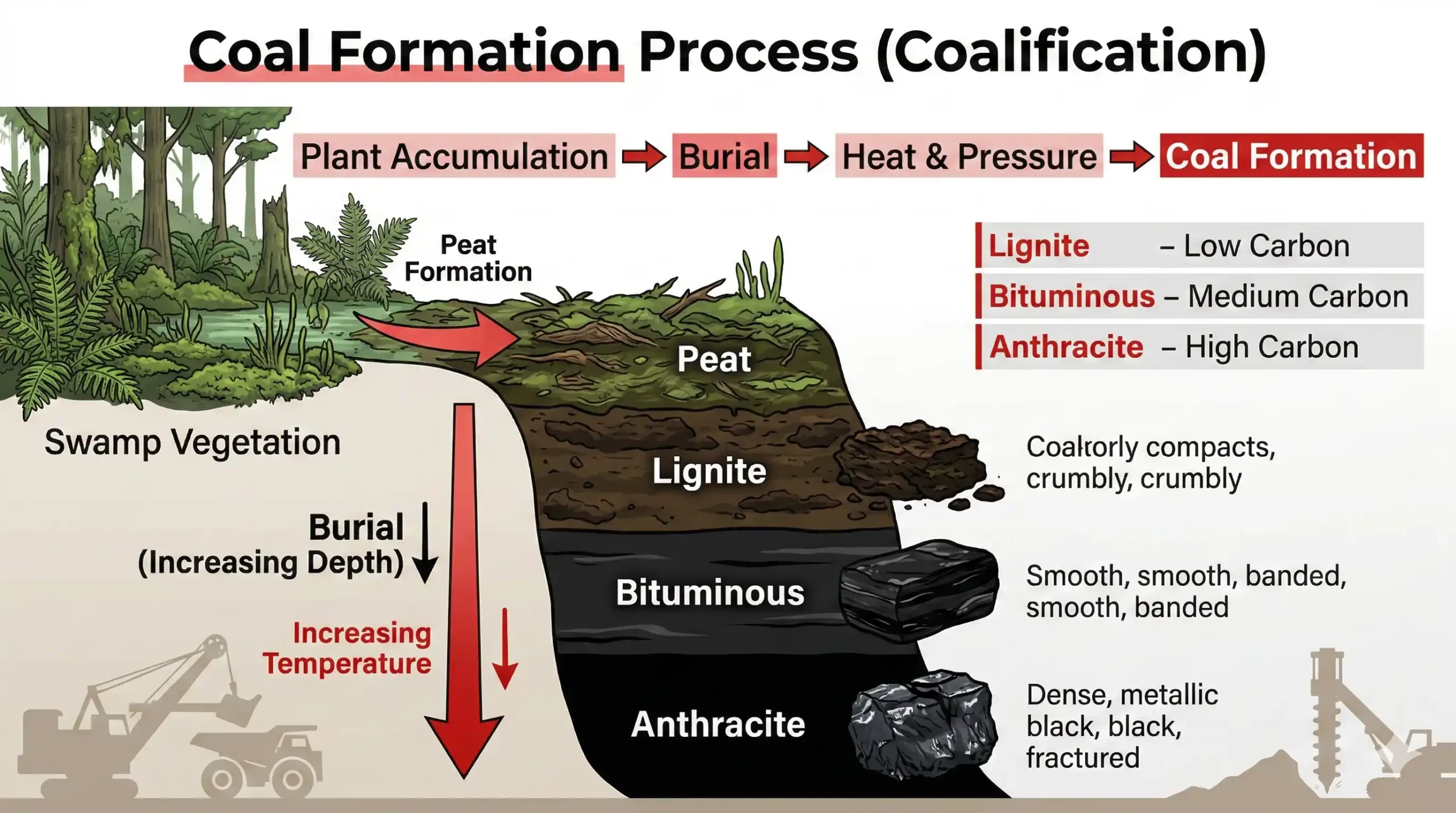
A coal seam is a black or dark brown layer of coal found between sedimentary rock strata. It forms from ancient plant material that accumulated in swampy environments and was buried under sediments. Over millions of years, heat and pressure converted this material into coal. These seams are the primary targets of coal mining operations worldwide.
Characteristics and Occurrence
| Parameter | Description |
|---|---|
| Color | Black to dark brown |
| Structure | Layered, banded |
| Location | Sedimentary basins |
| Associated Rocks | Shale, sandstone, limestone |
What is Coal?
Coal is a combustible sedimentary rock mainly composed of carbon . It is classified based on rank and carbon content. Higher rank coal has greater calorific value and lower moisture.
| Type | Carbon % | Heat Value |
|---|---|---|
| Lignite | Low | Low |
| Bituminous | Medium | High |
| Anthracite | High | Very High |
Coal Formation Process
Overburden and Roof Rocks
| Term | Meaning |
|---|---|
| Overburden | Rock/soil above coal seam |
| Roof Rock | Immediate rock layer above seam |
| Floor Rock | Layer below seam |
Seam Thickness and Quality
| Seam Type | Thickness |
|---|---|
| Thin | <1.2 m |
| Medium | 1.2–3.5 m |
| Thick | >3.5 m |
Coal quality depends on ash content, moisture, and calorific value .
Coal Mining Methods
Surface Mining Methods
| Method | Suitable Depth | Key Feature |
|---|---|---|
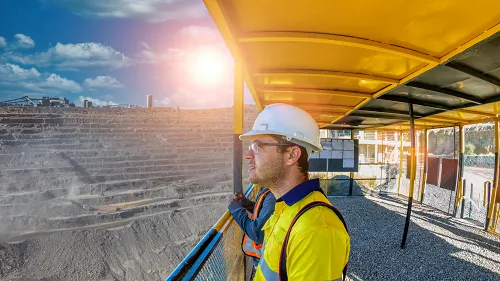
| Open Cast | Shallow | High production |
| Strip Mining | Horizontal seams | Layer removal |
| Mountaintop Removal | Hilly areas | Summit removal |
Underground Mining Methods
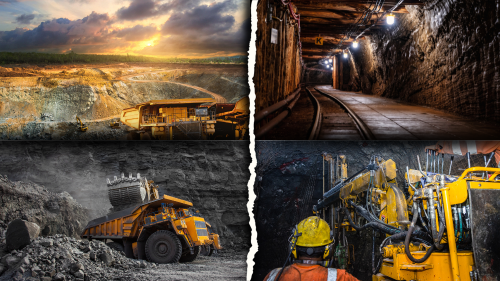
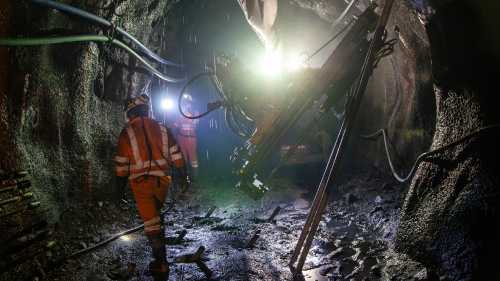
Underground mining is adopted for deeper coal seams. It reduces surface damage but requires strict safety controls. Ventilation and roof support are critical.
| Method | Description |
|---|---|
| Room & Pillar | Coal pillars support roof |
| Longwall | Full-face mechanized cutting |
Mining Methods for Thick Seams
Status and Prospects of Underground Thick Coal Seam Mining
Coal Seam Gas (CSG)
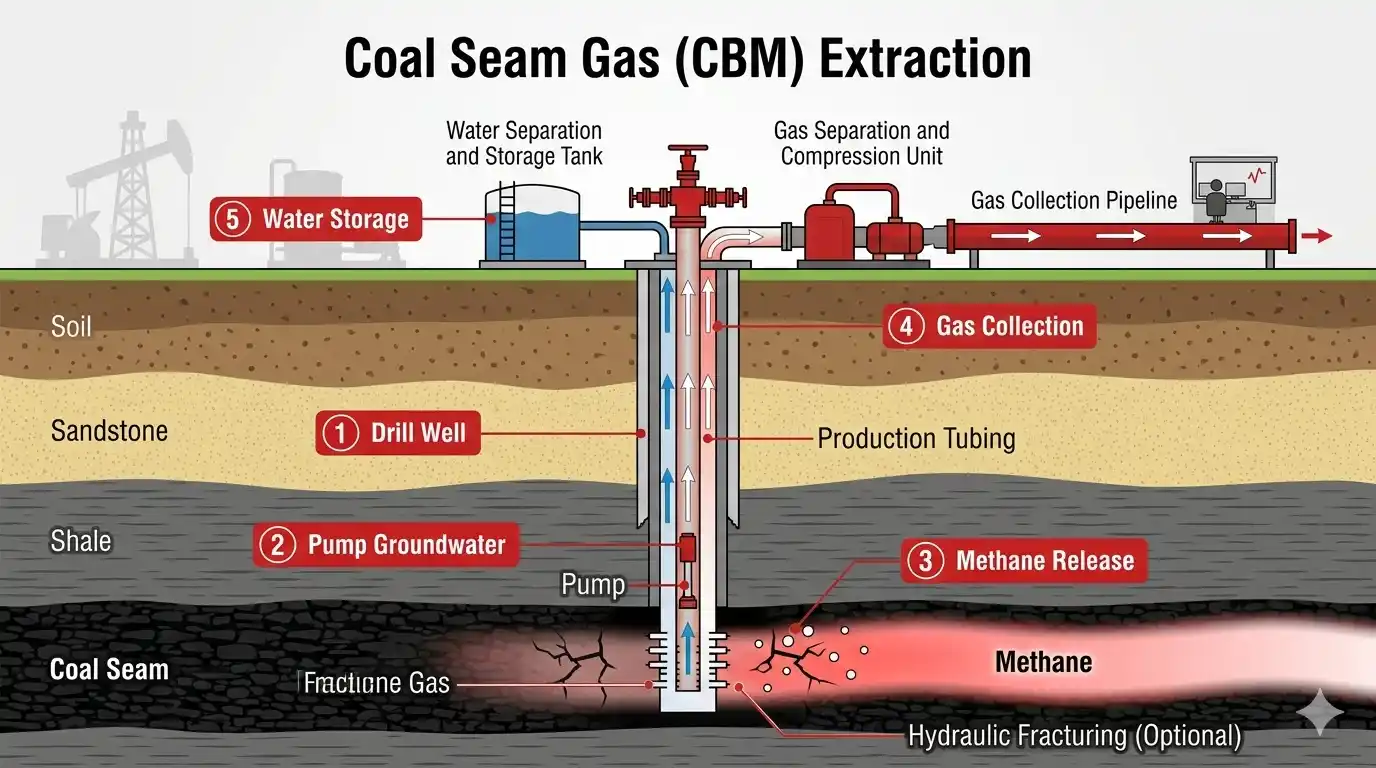
Coal Seam Gas is methane trapped inside coal seams. It is also called Coal Bed Methane (CBM) . Gas is adsorbed within coal pores and released when water pressure reduces.
CSG Extraction Process
| Step | Activity |
|---|---|
| 1 | Drill well into seam |
| 2 | Pump out groundwater |
| 3 | Methane release |
| 4 | Gas collection |
Hydraulic Fracturing
Environmental Issues & Risks
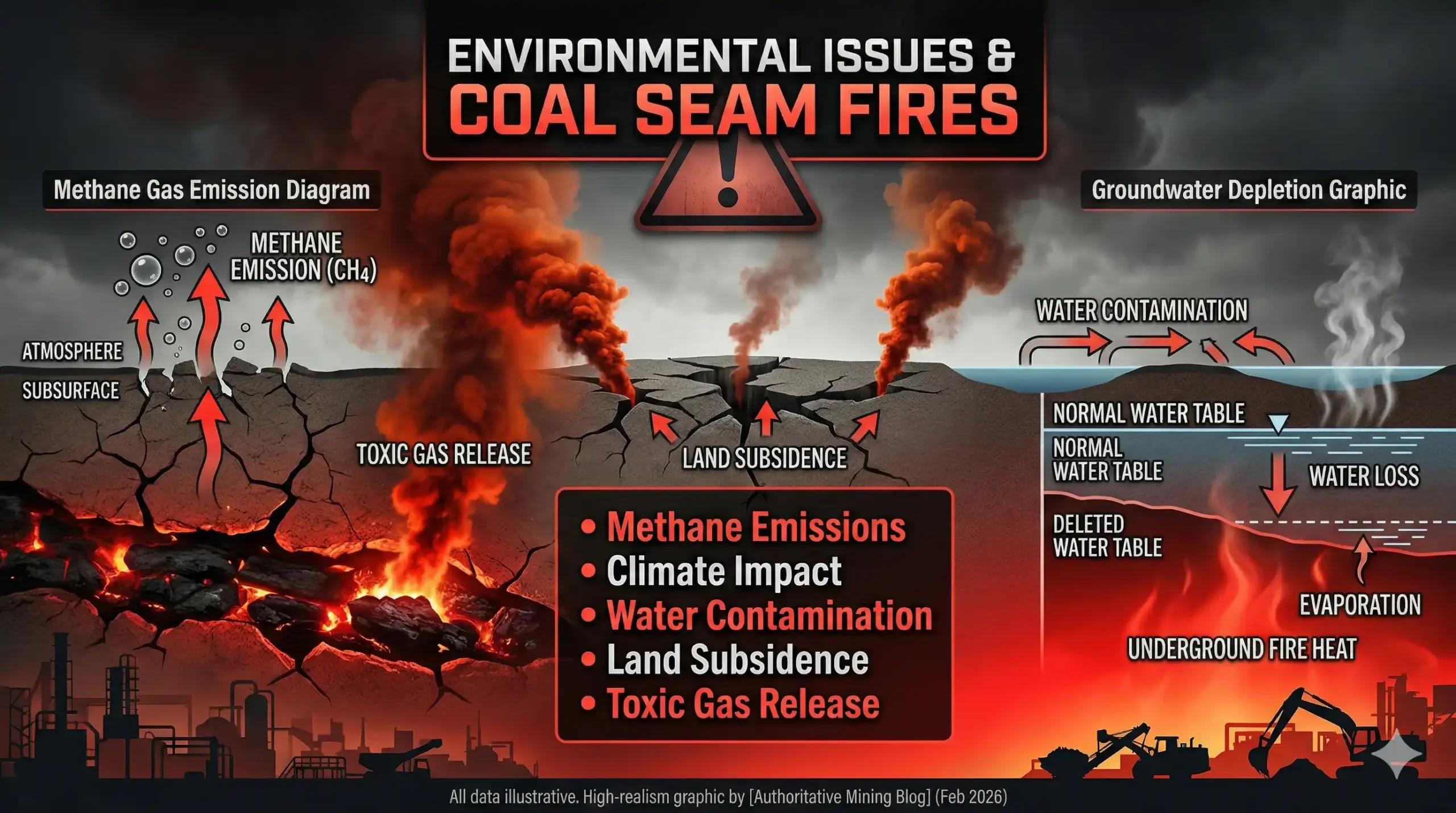
Methane Emissions and Climate Change
[su_alert style=”warning” icon=”icon: warning”]Methane is a strong greenhouse gas. Leakage during mining or CSG extraction contributes to climate change. Monitoring systems are essential to reduce emissions.[/su_alert]Water Depletion and Contamination
| Risk | Impact |
|---|---|
| Groundwater lowering | Agriculture loss |
| Chemical leakage | Water contamination |
| Produced water | Disposal challenges |
Health Impacts
Coal-Seam Fire
[su_alert style=”danger” icon=”icon: fire”]Coal seam fires occur when underground coal ignites. These fires may burn for decades. They cause land subsidence and toxic emissions.[/su_alert]Origins
| Cause | Explanation |
|---|---|
| Spontaneous Combustion | Self-heating of coal |
| Mining Activity | Exposure to oxygen |
| External Ignition | Lightning/forest fire |
Detection and Monitoring
Thermal imaging and gas monitoring are commonly used. Satellite surveys help identify underground heat zones. Continuous inspection prevents spread.
Environmental and Health Effects
[su_alert style=”danger” icon=”icon: exclamation-triangle”]Coal fires release carbon monoxide and other toxic gases. Land surface may collapse due to subsidence. Long-term soil and air damage occurs.[/su_alert]Top Coal Recovery Behavior and Parameter Optimization
Materials and Methods
| Method | Purpose |
|---|---|
| Numerical Modeling | Predict caving |
| Field Trials | Performance validation |
| Geomechanical Study | Stability analysis |



One Response